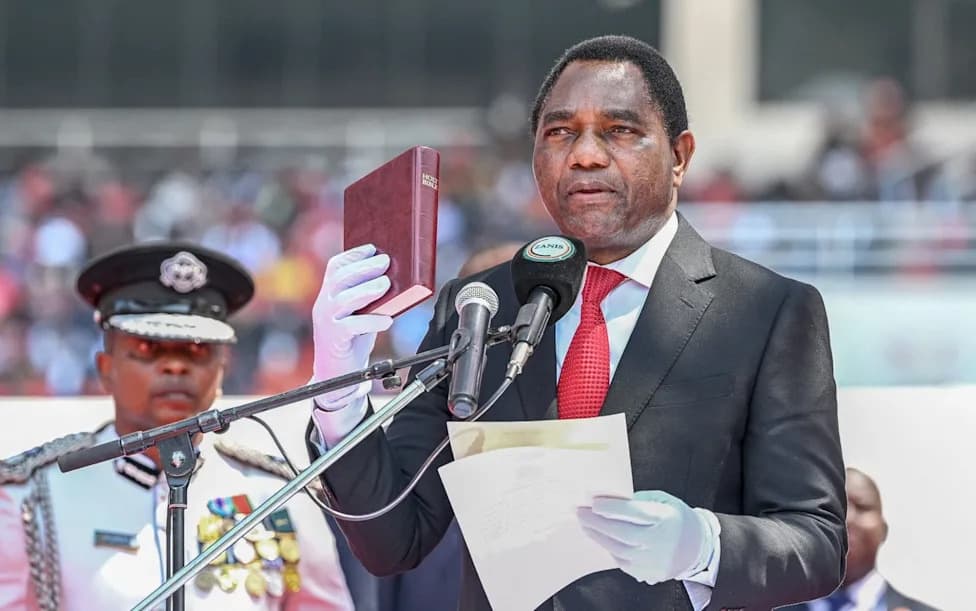
Zambia held general elections on Aug. 13 widely expected to return President Hakainde Hichilema for a second term, though voter frustration over living costs could reduce his margin. Hichilema campaigned on an economic rebound and debt restructuring after the 2020 default. His main challenger, Brian Mundubile, leads an opposition alliance whose internal divisions may blunt its challenge. Observers also raised concerns about restrictions facing opposition parties and the overall fairness of the campaign.
Zambia Election: Hichilema Favoured to Win Second Term Amid Economic Gains and Voter Frustration
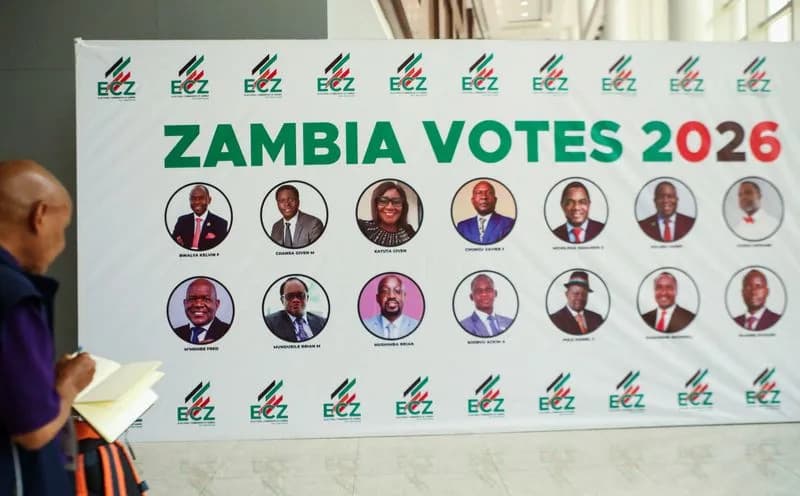
A person writes down names from a banner displaying candidates for Zambia's 2026 general election at the Mulungushi International Conference Centre ahead of the country's general election on August 13, in Lusaka, Zambia, August 12, 2026. REUTERS/Jean Mandela
LUSAKA, Aug 13 (Reuters) - Zambians went to the polls on Aug. 13 in a general election widely expected to return President Hakainde Hichilema for a second term, though frustration over the rising cost of living could shave some of his support.
Hichilema, who has led the southern African copper-producing nation since 2021, campaigned on an economic record that includes a sovereign debt restructuring and a macroeconomic rebound after Zambia's 2020 default. Supporters credit his administration with stabilising the economy and bringing down inflation, but many voters say those improvements have yet to translate into everyday relief.
His main challenger, Brian Mundubile, is a veteran member of parliament and the presidential standard-bearer for an opposition alliance that includes backers of the late former president Edgar Lungu. Despite strong crowds at some rallies, analysts say divisions within the opposition risk diluting its vote.
Opposition Weakened By Fragmentation
Parliamentary and local government contests were held alongside the presidential vote. Under Zambian election rules, a presidential candidate must secure more than 50% of valid votes to win outright; otherwise a run-off between the two leading contenders is required within 37 days.
"I am tempted to think the ruling party will carry the day despite the huge crowds we are seeing at the rallies for (Mundubile)," said historian and analyst Euston Chiputa, noting that opposition candidates from allied parties sometimes compete against each other in the same constituencies.
Investors and regional observers broadly expect Hichilema to prevail. The key question for many is whether the post-default recovery can be converted into widespread, job-creating growth during a second term.
Concerns About Fairness
The campaign period was clouded by allegations of political repression, which the government has denied. U.S. non-profit Freedom House classifies Zambia as "Partly Free," saying regular multi-party elections take place but opposition parties face "onerous legal and practical obstacles to fair competition."
Lee Habasonda, a political science lecturer at the University of Zambia, said the opposition retains pockets of support in urban centres such as Lusaka and the Copperbelt. "If the opposition had rallied behind one candidate earlier, this would have been one of the toughest elections for the ruling party," he said.
Polling stations were open from 6 a.m. to 6 p.m. local time (0400-1800 GMT). The Electoral Commission said provisional results were expected on Monday; if no presidential candidate achieves a majority, a run-off must be held within 37 days.
(Additional reporting and writing by Nellie Peyton; Editing by David Holmes)
Help us improve.