
President Trump signed two executive orders aimed at narrowing birthright citizenship, prompting a federal lawsuit filed in New Hampshire by the ACLU, the Legal Defense Fund, the Asian Law Caucus, and the Democracy Defenders Fund. One order directs agencies to reinterpret narrow exceptions under the 14th Amendment; the other targets so-called "birth tourism." The moves follow a 6–3 Supreme Court rejection in June of the administration’s earlier, broader attempt to end birthright citizenship.
Trump Issues New Orders Targeting Birthright Citizenship — Rights Groups Sue Weeks After Supreme Court Rejection
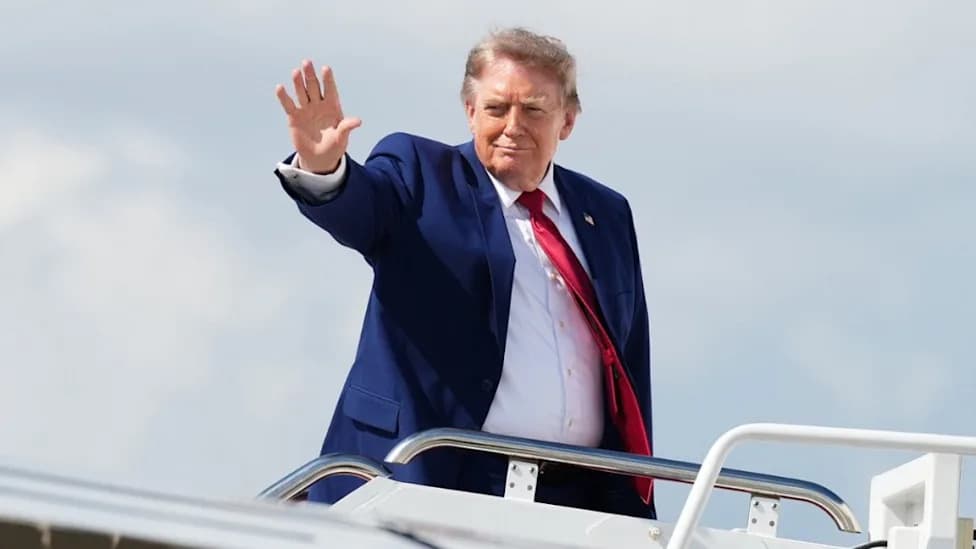
Photo by Eric Lee/Getty Images
President Donald Trump signed two executive orders aimed at narrowing birthright citizenship, prompting an immediate legal challenge from a coalition of civil-rights organizations.
The lawsuit was filed Tuesday in federal court in New Hampshire by the American Civil Liberties Union, the Legal Defense Fund, the Asian Law Caucus, and the Democracy Defenders Fund. The groups seek to block the pair of directives, which the administration announced after the Supreme Court rejected its earlier, broader effort to end automatic birthright citizenship.
One order directs federal agencies to interpret narrow, already-existing exceptions under the 14th Amendment more broadly so that certain groups would not automatically receive citizenship at birth. The second order instructs the Department of State and the Department of Homeland Security to pursue measures targeting so-called "birth tourism," meaning commercial arrangements that bring pregnant visitors to the United States to secure citizenship for their children.
The new directives also instruct agencies to deny U.S. citizenship documents to children of some foreign diplomatic personnel and to people the administration alleges are connected to terrorist organizations. Officials said the orders would also focus on persons who engage in commercial transactions to secure U.S. births and on some claims arising from births in U.S. territories.
“The Supreme Court could not have been more clear: President Trump’s attempt to redefine who is an American citizen through executive action was unconstitutional,” said Amia Trigg, deputy director of litigation at the Legal Defense Fund.
In June the Supreme Court issued a 6–3 decision rejecting the administration’s earlier and broader effort to curtail birthright citizenship. Chief Justice John Roberts wrote there was "scant evidence for this dramatically revisionist view," adding that the framers had extended citizenship to "every free-born person in this land." The administration allowed a July deadline to request reconsideration to lapse after that ruling.
Stephen Miller, a former senior policy adviser to Trump who had vowed to press the issue after the ruling, has been a leading advocate for citizenship restrictions. Civil-rights advocates argue the latest orders amount to an end-run around the Supreme Court ruling and will face immediate judicial scrutiny.
Aarti Kohli, executive director of the Asian Law Caucus, criticized the effort as scattershot. "The administration is throwing everything at the wall to see what sticks," she said. Supporters of the orders — and several Republican lawmakers — have framed the moves as part of a broader election-year focus on immigration ahead of November.
Original reporting on this story was filed by Vritti Johar for Mandatory.com; the piece also appeared on Reality Tea.
Help us improve.





















