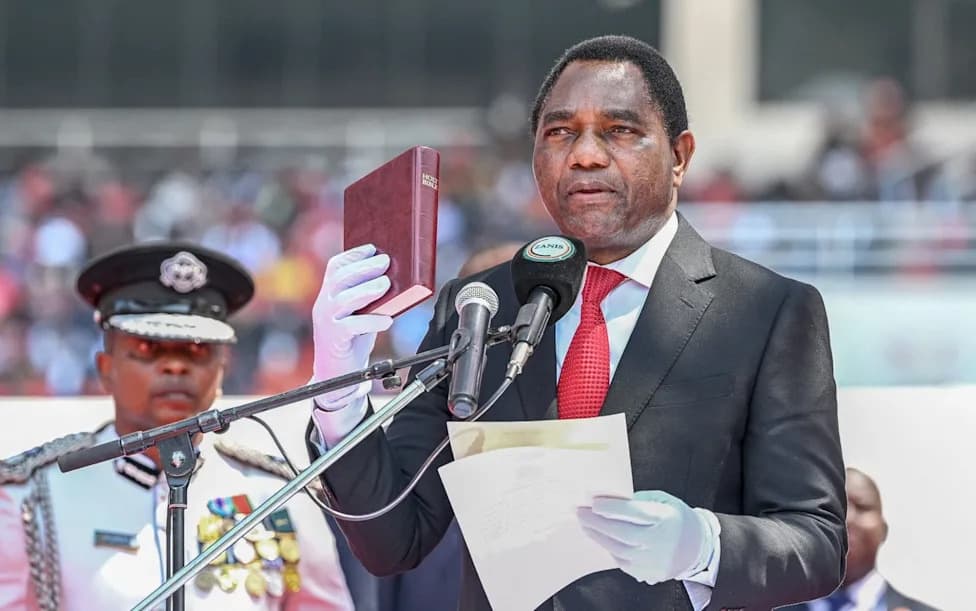
The unresolved burial of former president Edgar Lungu has emerged as a potent political symbol, boosting opposition support in northern regions and complicating President Hakainde Hichilema's re-election campaign. Economic pressures — from high staple prices to prolonged power outages after the 2024–25 drought — remain voters' central concern despite macroeconomic gains such as lower inflation and a major debt restructuring. Constitutional reforms expanding constituency seats and adding 40 proportional seats aim to increase representation for women and youth, while questions about electoral independence and a crowded presidential field make a runoff on 13 August a real possibility.
Burial Row Deepens Divisions As Zambia Heads To An Unpredictable Election
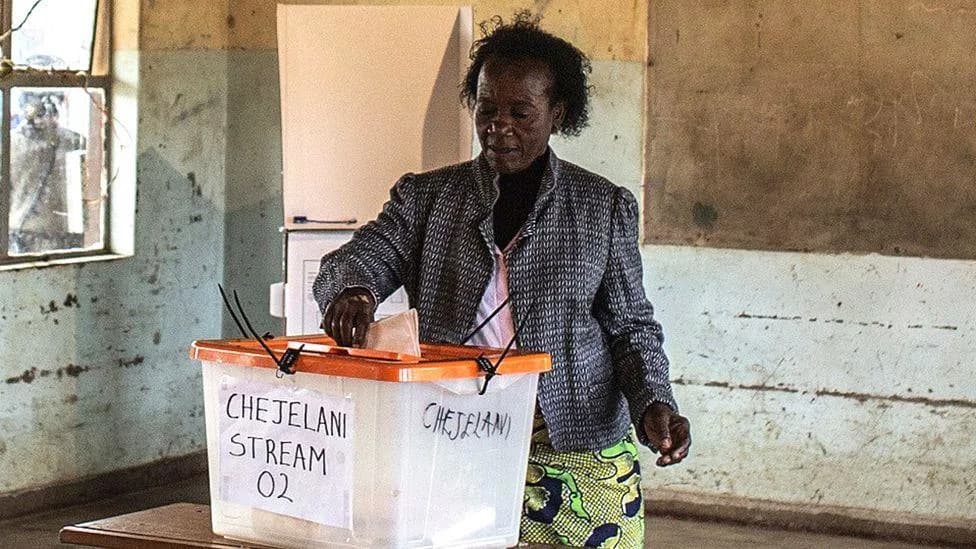
More than eight million registered voters have 14 presidential candidates to choose from [AFP via Getty Images]
A tense political climate has settled over Zambia as the unresolved burial of former president Edgar Lungu reshapes the contest for the presidency and parliament. What began as a family and state dispute has become a galvanising political symbol, energising opposition support in former Patriotic Front (PF) strongholds and complicating President Hakainde Hichilema's bid for a second term.
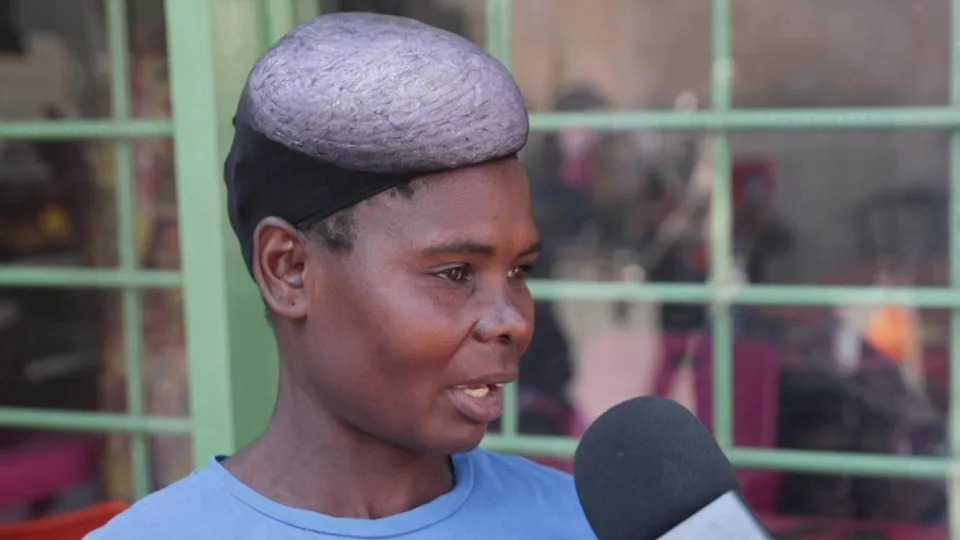
Street-food vendor Theresa Zulu said that money was hard to come by [BBC]
The Burial Dispute That Refuses To End
Although Edgar Lungu died in South Africa more than a year ago, disagreement between the Lungu family and President Hichilema over arrangements for his final resting place has left his body unburied. The standoff has amplified regional loyalties and been framed by some opposition leaders as evidence of disrespect toward the late president — a narrative that has helped consolidate voters in the north behind new opposition groupings.
[BBC]
Campaign Trail: Markets, Billboards And Campaign Songs
On Lusaka's streets, election posters and billboards vie for attention with campaign jingles and the everyday noise of markets. With more than eight million registered voters set to cast ballots on 13 August, political energy is high across urban and rural areas. Hichilema, whose core support is concentrated in the south, west and north-west, is seeking a second five-year term after a reform-focused victory in 2021.
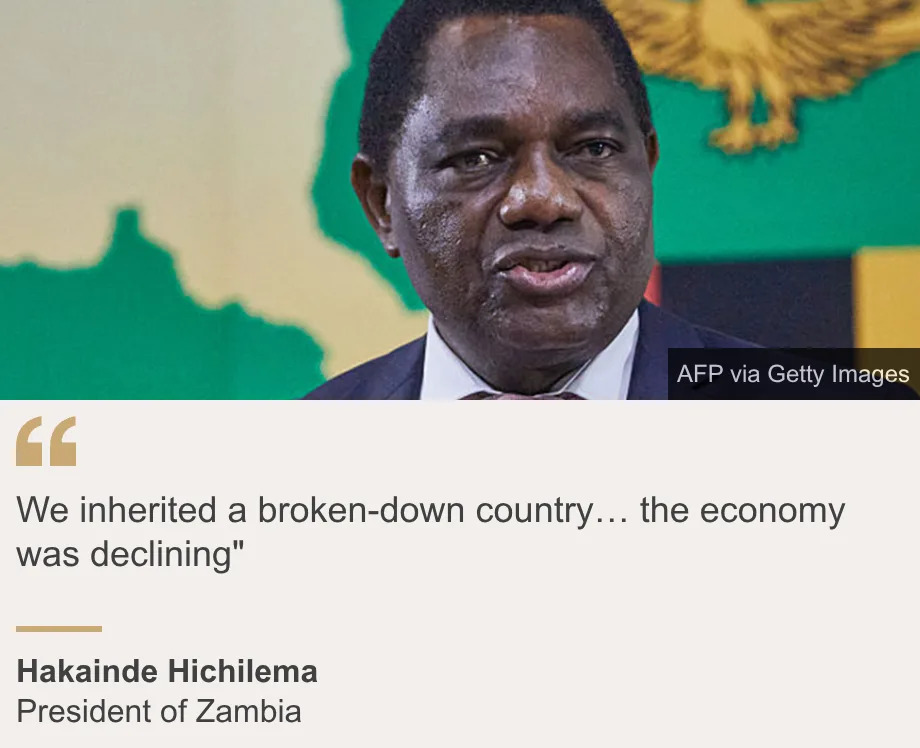
"We inherited a broken-down country… the economy was declining"", Source: Hakainde Hichilema, Source description: President of Zambia, Image: Head and shoulders image of Hakainde Hichilema
Economic Pressures Remain The Dominant Issue
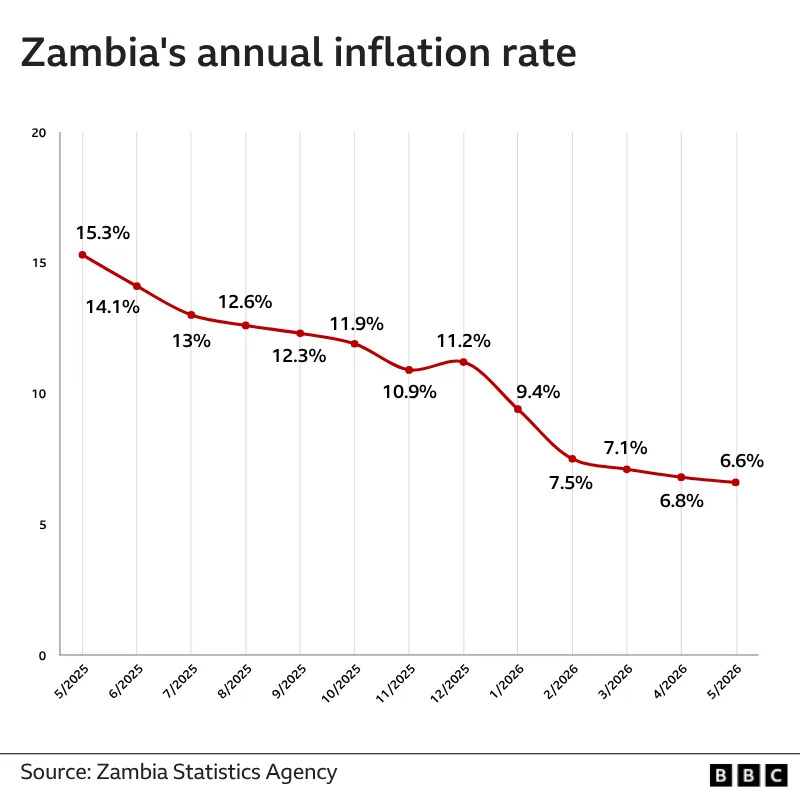
For many households, daily economic pressures outweigh macroeconomic indicators. Official annual inflation has eased to about 6.6%, and the kwacha has strengthened, but essentials remain expensive: cooking oil prices have climbed by more than 70% over five years. A severe drought in 2024–2025 drastically curtailed hydropower generation, producing power outages of up to 20 hours a day in some areas. The government increased electricity imports and accelerated solar projects to ease blackouts, but memories of prolonged outages and spoilage persist.
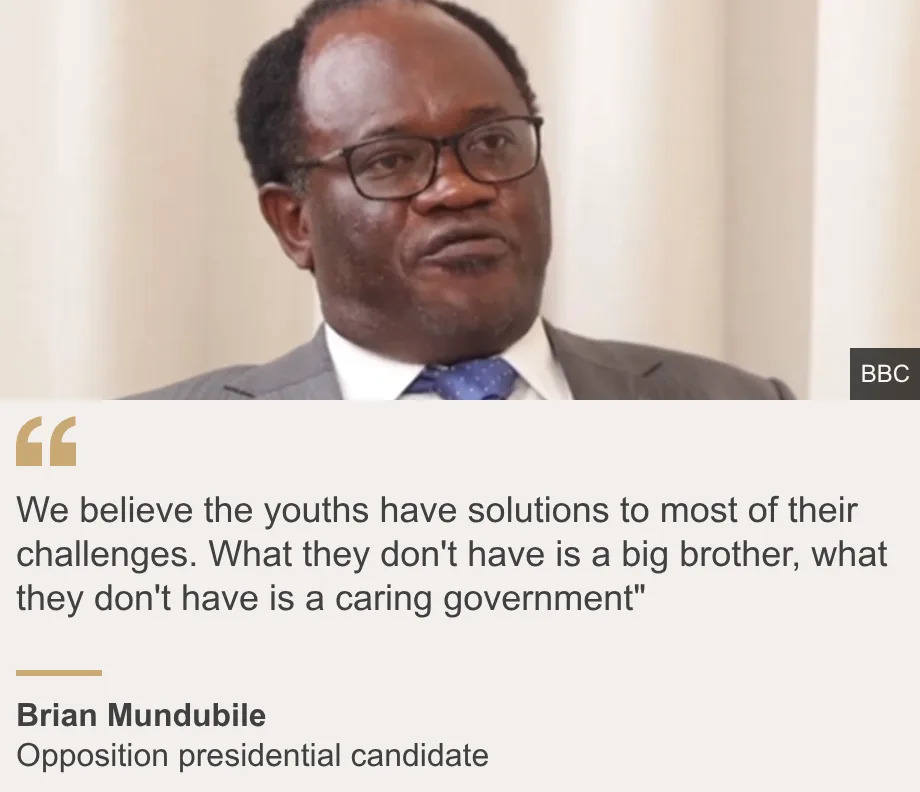
"We believe the youths have solutions to most of their challenges. What they don't have is a big brother, what they don't have is a caring government"", Source: Brian Mundubile, Source description: Opposition presidential candidate, Image: Brian Mundubile
"Money has become so hard to come by. We are trying to stay strong to survive, but things have become really hard for us," said Theresa Zulu, a street-food vendor.
President Hichilema’s Defence
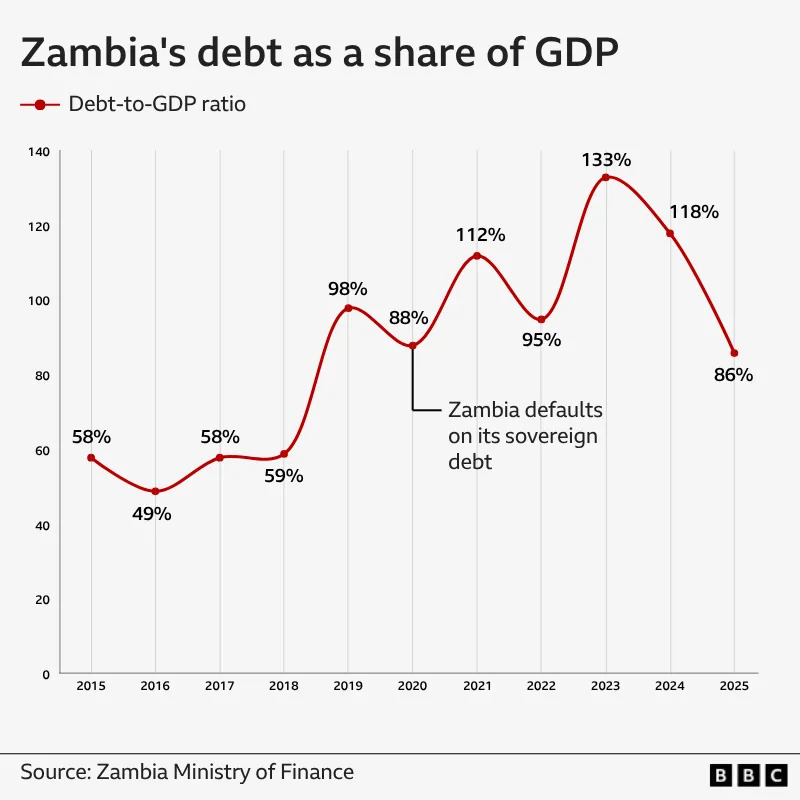
Hichilema argues his administration stabilised a country in crisis when he took office in 2021. The government restructured more than $13 billion in external debt, which officials say yields roughly $1.9 billion in annual savings redirected into public investment, including a free education programme for primary and secondary pupils.
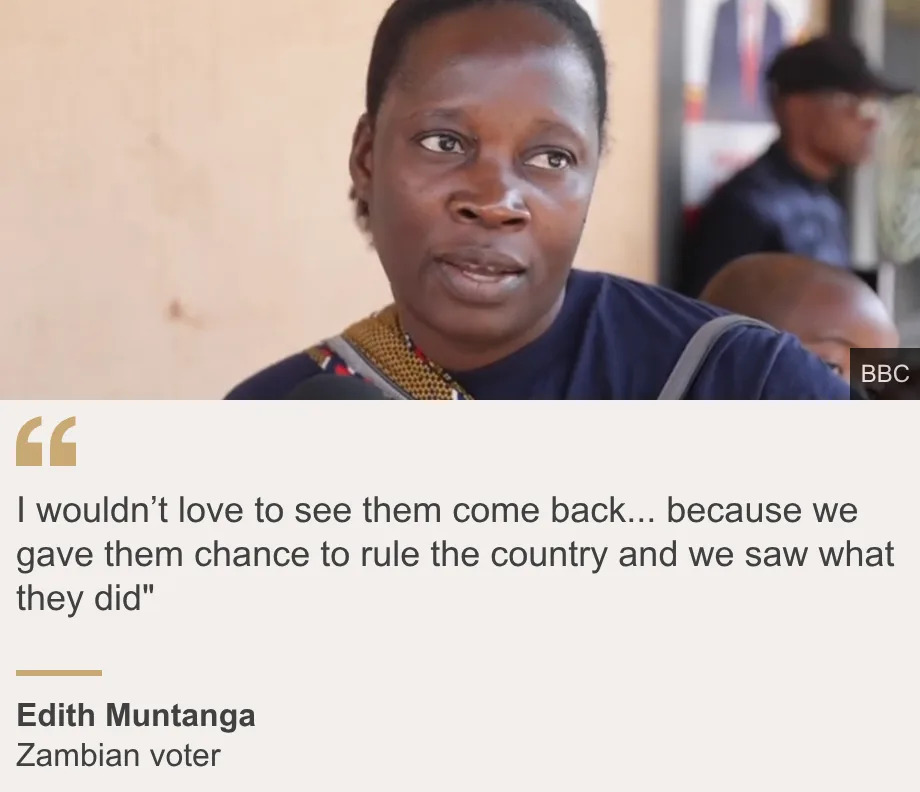
"I wouldn’t love to see them come back... because we gave them chance to rule the country and we saw what they did"", Source: Edith Muntanga, Source description: Zambian voter, Image: A head-and-shoulders image of Edith Muntanga
"We inherited a broken-down country… the economy was declining," Hichilema told the BBC in Lusaka.
The government points to increased teacher and health-worker hiring, recovering copper production, rising foreign-exchange reserves and improved investor confidence. Critics counter that benefits have not reached enough households and that restrictions on some opposition voices run counter to pledges of a more open democracy.
[BBC]
Opposition Surge And The Rise Of Brian Mundubile
After Lungu's death on 5 June last year, the PF fractured and some of its supporters gravitated to new opposition groupings. Brian Mundubile, a 55-year-old lawyer and former government chief whip under Lungu, quickly emerged as a unifying opposition candidate after filing nomination papers in May. Running under the Tonse-Pamodzi Alliance on the National Reconciliation Party for Unity and Prosperity (NRPUP) ticket, Mundubile has tapped into regional loyalties and frustrations over the cost of living. His running mate is Makebi Zulu, a lawyer associated with the Lungu family.

[BBC]
"We are moving the women and the youth from the margins to the centre of policy and economic transformation," Mundubile told the BBC, framing his campaign as generational and inclusive.
Constitutional Reforms And Electoral Concerns
This election is the first held under constitutional amendments enacted in late 2025 that introduced a mixed-member National Assembly. Constituency seats expanded from 156 to 226, and an additional 40 proportional seats will be allocated (20 for women, 15 for youth under 35, and five for persons with disabilities). The reforms are designed to boost representation for historically under-represented groups, though their practical impact remains to be seen.
Of the 14 presidential candidates cleared to run, only one is a woman: independent Given Katuta. To win outright, a candidate must secure more than 50% of votes; otherwise, a runoff will be held within 37 days — a distinct possibility given the fragmented field.
Civil society leaders, including former Law Association president Linda Kasonde, have voiced concern about the perceived political alignment of some electoral commission members. The commission rejects claims of bias and insists it adheres to constitutional duties and transparent procedures.
What To Watch
In the run-up to 13 August, watch for: how the burial dispute influences turnout and regional loyalties; whether economic pain points such as food and energy prices shift voting behavior; and how the new proportional seats affect representation of women and young people. Above all, trust in institutions and perceptions of fairness at the ballot box will shape whether Zambia’s long record of peaceful transfers of power continues.
Context Note: This article synthesises reported statements and public data from the campaign period, and highlights voices from markets, campaign events and civil society to reflect the issues most frequently raised by Zambian voters.
Help us improve.