
András Baka, a former Supreme Court chief and long-serving judge at the European Court of Human Rights, is set to be elected Hungary's president after being nominated by Prime Minister Peter Magyar. The vote comes after the contested removal of the previous president and amid criticism from Orbán's allies, who will boycott the ballot. Baka was ousted in 2012 for opposing a reduction in judges' retirement age; the ECHR later ruled his dismissal violated his rights. Magyar says Baka's appointment and a planned constitutional rewrite aim to restore the rule of law.
Hungary Set To Elect Orban-Critic András Baka As President — A Symbolic Return To Rule‑Of‑Law
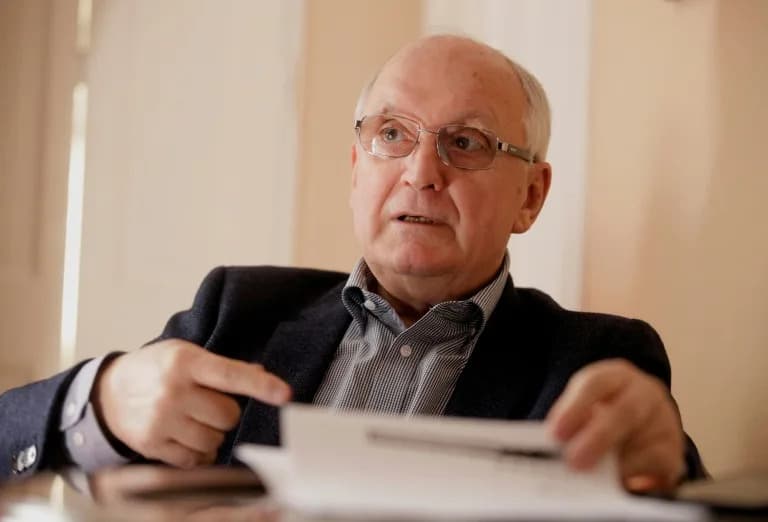
Andras Baka served 17 years as a judge on the European Court of Human Rights (Peter Kohalmi)
Hungarian lawmakers are set to vote on Tuesday to elect former Supreme Court chief András Baka as the country's next president, a nomination by Prime Minister Peter Magyar intended to reduce Viktor Orbán's lingering influence over state institutions. The largely ceremonial presidency became vacant after the contested removal last month of the previous officeholder, an ally of Orbán.
Nomination and Parliamentary Vote
Magyar's ruling Tisza party formally nominated Baka on Saturday. The 73-year-old, who served 17 years as Hungary's judge at the European Court of Human Rights (ECHR), is widely regarded as a figure who champions judicial independence. Tisza holds the two-thirds parliamentary majority required to elect Baka on the first round without opposition support. The parliamentary vote is scheduled to begin at 14:00 local time (12:00 GMT).
Controversy and Political Context
The presidency was vacated after a constitutional amendment shortened the mandate of the previous president, Tamas Sulyok — a move introduced during Magyar's reform drive. Rights groups criticised Sulyok's removal and compared the tactic to methods used under Orbán's so-called "illiberal" governance. Orbán's Fidesz party and its ally KDNP announced they would boycott the vote, denouncing the ouster as "tyrannical" and "illegitimate." The European Union and the United States previously criticized changes to the judiciary under Orbán's government.
Baka's Background
Baka's career is primarily judicial rather than political. After Hungary's democratic transition he briefly served as a lawmaker in 1990, but his most prominent role was as Hungary's judge at the Strasbourg-based ECHR from 1991 to 2008. He was nominated as head of Hungary's Supreme Court in 2009 and served until 2012, when he was removed after opposing a government decision to lower judges' mandatory retirement age from 70 to 62 — a change he called a judicial purge.
"In a country governed by the rule of law, such extraordinary measures cannot be used, but Hungary became a captured state under Orbán," Baka told AFP. He added that some senior appointments were made to "ensure the political survival of the former system even after an electoral defeat."
In 2016 the ECHR found that Baka's dismissal violated his freedom of expression, a ruling frequently cited by supporters of his nomination as a vindication of his stance on judicial independence.
What This Might Mean
Analysts say installing Baka as president would send a symbolic signal that Hungary's new leadership intends to prioritize restoring liberal democratic norms. Bulcsu Zsiga of the Centre for Fair Political Analysis described the move as a step toward guaranteeing a deliberate path to democratic restoration. Prime Minister Magyar has said the new president would serve the remainder of the term while a process to replace the Orban-era Basic Law with a constitution drafted through broad public consultation proceeds — a process Magyar estimates will take about one to one-and-a-half years.
International and domestic reactions will be watched closely as the vote proceeds: supporters view Baka's nomination as a restoration of judicial integrity, while critics say the manner of the previous president's removal raises questions about the new government's commitment to transparent, consensus-based reform.
Help us improve.





















