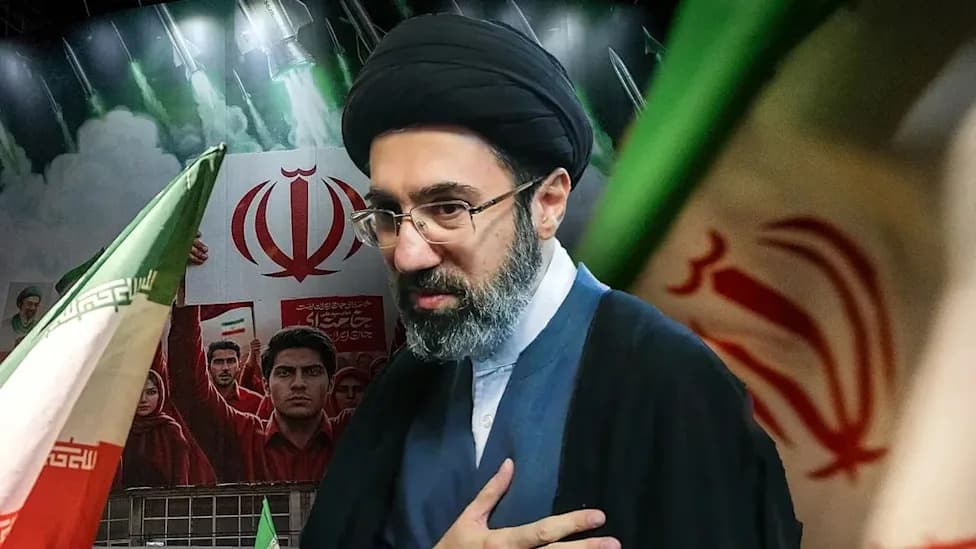
Iran's newly installed supreme leader, Mojtaba Khamenei, on Monday formally appointed six senior military figures in a wartime reshuffle that cements changes to Tehran's command structure after months of strikes attributed to the United States and Israel.
The appointments, announced by the supreme leader's office and posted in English on social media, fill key posts across the Armed Forces, the Islamic Revolutionary Guard Corps (IRGC) and the Basij paramilitary force. Counterterrorism expert Dr. Omar Mohammed said the timing and wording of the decrees indicate Tehran is preparing for a "prolonged confrontation" rather than seeking a quick negotiated settlement with Washington.
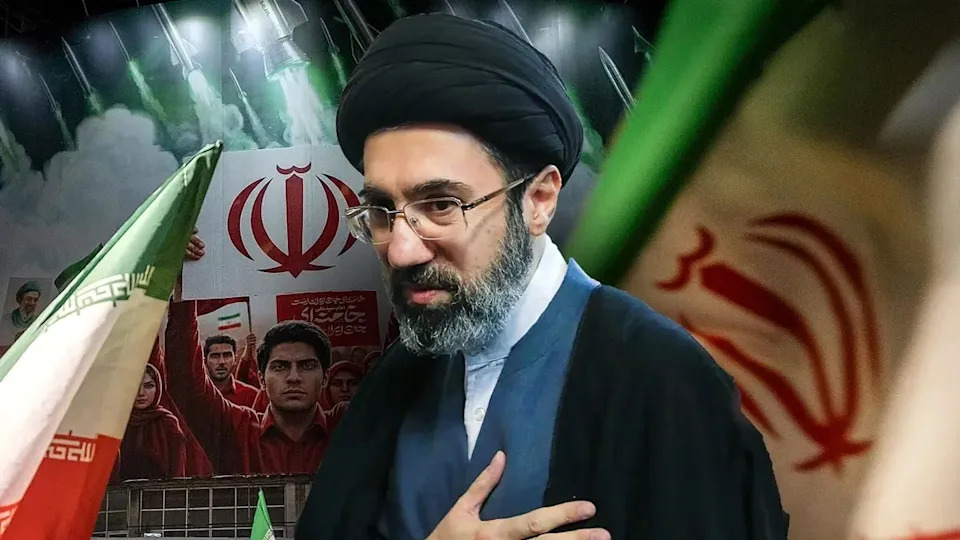
Iran's Supreme Leader Mojtaba Khamenei.
Key Appointments
Ali Abdollahi was named Chief of Staff of the Armed Forces, with Kioumars Heydari as his deputy. Ahmad Vahidi was appointed Commander-in-Chief of the IRGC and promoted to major general. Other appointments include Mostafa Izadi as deputy IRGC commander, Ali Azmaei as commander of the IRGC Navy, and Hossein Taeb as commander of the Basij.
Language, Timing and Intent
"Strategically, the announcements made were issued in English, on X, while Iranian and Omani negotiators finalize the coordinates of a proposed shipping route through Hormuz. Tehran is establishing its command structure as a fact on the ground before it signs anything." — Dr. Omar Mohammed
Dr. Mohammed also noted that the official decrees blamed the deaths of predecessors on the "Zionist-American enemy," language he said effectively codifies the United States as a co-belligerent and signals continued confrontation. The supreme leader reportedly instructed Vahidi to keep forces ready for "powerful offensive operations against the enemy," and tasked Abdollahi with integrating the General Staff into the Khatam al-Anbiya wartime joint command.
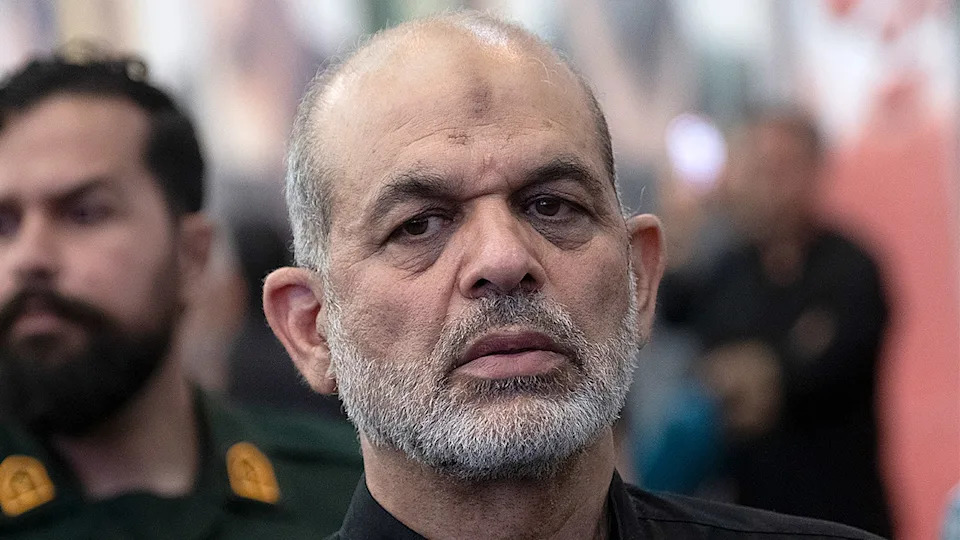
Former Iranian Interior Minister Ahmad Vahidi attends an event.
Sanctions, Allegations and Leadership Gaps
Several appointees already face international sanctions or allegations. Ahmad Vahidi is subject to an Interpol Red Notice requested by Argentina over an alleged role in the 1994 AMIA bombing in Buenos Aires that killed 85 people. Hossein Taeb is on the U.S. Treasury sanctions list for alleged human rights abuses, and Kioumars Heydari has been sanctioned by the U.S. and the EU for his role in suppressing protests.
Despite the military reshuffle, analysts note that Iran has not completed appointments in its intelligence and counterintelligence institutions. The IRGC Intelligence Organization and its counterintelligence arm have no announced chiefs, and Iran currently lacks permanent defense and intelligence ministers—gaps that raise questions about who will assume responsibility for the counterintelligence failures that preceded recent decapitation strikes.
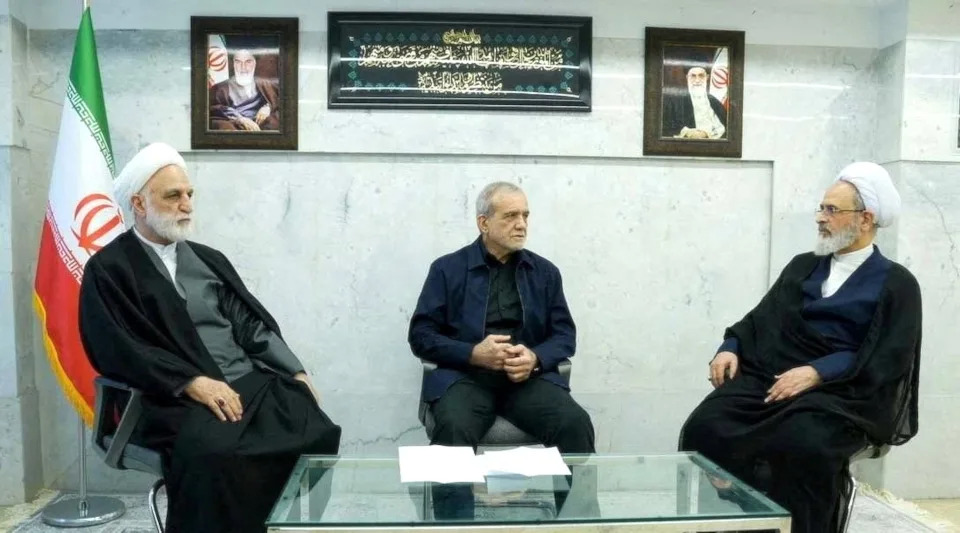
Iranian President Masoud Pezeshkian, Gholam-Hossein Mohseni-Eje'i, the head of the judiciary and Alireza Arafi, (right) deputy chairman of the Assembly of Experts, attend the meeting of the interim leadership council of Iran in an unknown location, amid the U.S.-Israel conflict with Iran, in Iran, March 1, 2026.
Background: Leadership Losses and Reconstruction
The reshuffle follows a series of strikes that killed several senior Iranian figures. According to the reporting timeline, Ayatollah Ali Khamenei — who had served as supreme leader since 1989 — was killed in a Feb. 28 strike that precipitated the current war and led to Mojtaba Khamenei's selection in March. Other senior officials killed in subsequent strikes included Ali Larijani and Gholamreza Soleimani.
The appointments arrive amid continuing questions about Mojtaba Khamenei's health and public absence. President Masoud Pezeshkian said he recently held a nearly seven-hour meeting with the supreme leader, during which they discussed economic conditions, sanctions and the need for national unity.
What This Means
The new leadership structure appears intended to institutionalize wartime command arrangements rather than dismantle them, signaling that Tehran is organizing for sustained military operations. The unresolved leadership of Iran's intelligence and counterintelligence institutions, however, leaves a critical gap that could determine whether the supreme leader's inner circle or the IRGC's institutional leadership ultimately consolidates real control.
Note: This article synthesizes reporting and expert commentary on the appointments and their likely implications for Iran's military posture and internal power dynamics.