
Summary: A Long March 7A rocket launched by China’s CASC from Wenchang on Aug. 10 exploded roughly 85 seconds after liftoff, producing a large fireball and debris while still in the atmosphere. The mission, which carried the Zhongxing‑4B communications satellite bound for GTO, appears to be a total loss. The vehicle failed well before first‑stage separation; investigators have not yet released a cause. The mishap could affect upcoming missions, including a Zhuque‑3 launch and routine Tiangong resupply flights, while authorities probe the failure.
Long March 7A Explodes About 85 Seconds After Liftoff, Destroying Zhongxing‑4B
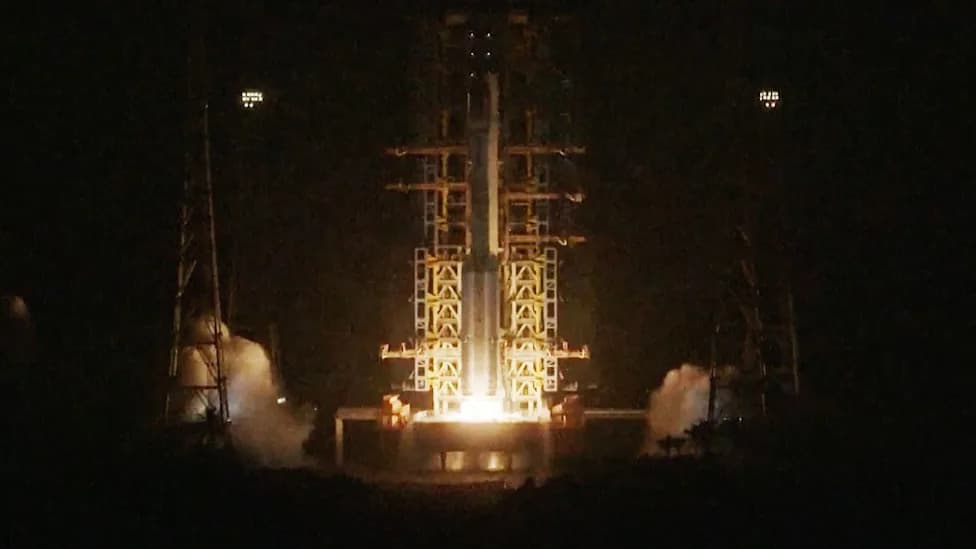
A Long March 7A rocket carrying the Zhongxing-1E satellite launches from China's Wenchang Space Launch Site on Sept. 13, 2022. .
China’s latest orbital launch ended in failure on Aug. 10 when a Long March 7A rocket exploded about 85 seconds after liftoff, producing a large fireball and scattering debris while still in the atmosphere.
Credit: CCTV
What Happened
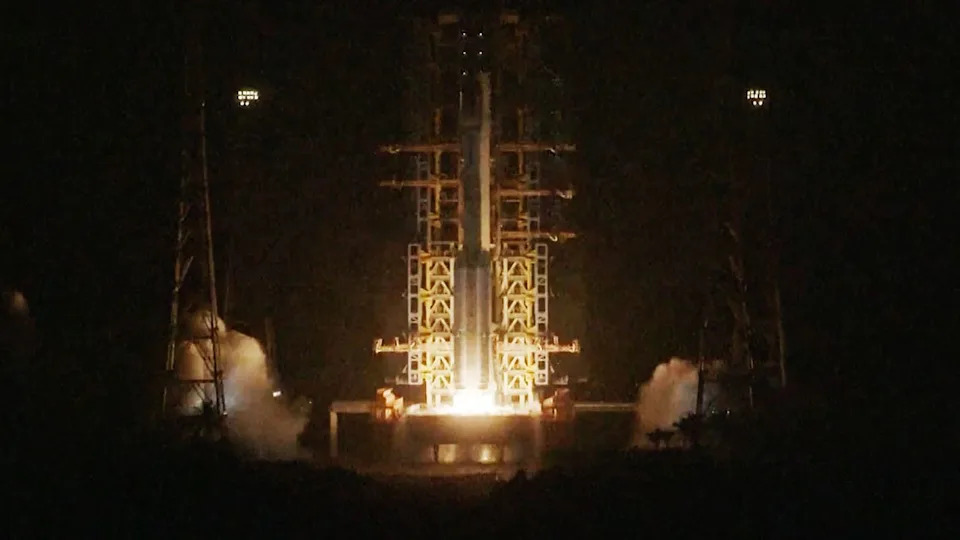
The state-owned China Aerospace Science and Technology Corporation (CASC) launched the Long March 7A from the Wenchang Space Launch Site on Hainan island just after 8:00 a.m. EDT (1200 GMT; 8:02 p.m. local time). Approximately 85 seconds into flight the vehicle detonated, generating a massive plume of smoke, flame and debris while still climbing through Earth's atmosphere.
Video clips reposted on social media show onlookers reacting in alarm at the moment the rocket burst into flames. By the time of reporting CASC had not issued an official statement. Based on available footage and telemetry summaries, the mission is almost certainly a total loss, with both vehicle and payload destroyed.
Vehicle Details and Flight Profile
The Long March 7A is a variant of the Long March 7 family. It stands about 197 feet (60 meters) tall and pairs the first two Long March 7 stages with a hydrolox (liquid hydrogen/liquid oxygen) third stage. That third stage is rated to deliver roughly 7 metric tons to geostationary transfer orbit (GTO).
Credit: CCTV
The 7A uses a cluster design in which four strap-on boosters and the core stage separate together during first-stage separation, an event that normally occurs just under three minutes after liftoff. Because today’s failure occurred at about 85 seconds, the vehicle was still in the main stage’s initial engine-burn phase and had not reached stage separation.
Payload
China National Radio reported that the flight carried the Zhongxing‑4B communications satellite, believed to be destined for GTO. The Zhongxing (ChinaSat) series provides commercial telecommunications and broadband services and is also thought to include assets that support military communications.
Context And Possible Impact
Today’s mission was the 18th Long March 7A flight since the type’s first launch in 2020, whose maiden flight also ended in an in‑flight breakup. Chinese investigators previously attributed that earlier accident to an engine fault shortly after first-stage separation; this morning’s failure occurred much earlier in the ascent and appears to be a different mode of failure.
It is not yet clear how this accident will affect upcoming launches. A Zhuque‑3 mission scheduled to lift off from Jiuquan roughly 1,500 miles (about 2,415 kilometers) from Wenchang is planned for the coming days and is expected to include a first-stage landing attempt. CASC also regularly flies the standard Long March 7 (which shares the same core stage as the 7A) to resupply China’s Tiangong space station every ~eight months; the most recent resupply launched in May, suggesting the next could be due around January 2027. Depending on investigators’ findings, that cadence and other missions could be delayed while the cause is determined.
Investigation Underway
Chinese authorities and CASC will investigate the mishap. Until an official report is released, details about the root cause remain speculative. International observers will watch for telemetry releases, investigation updates and any subsequent grounding or changes to launch schedules.
Help us improve.





















