
The “space jellyfish” is an atmospheric display created when rocket exhaust (water vapor and CO2) freezes into tiny ice crystals high in the atmosphere, forming a bell-shaped plume with trailing tendrils. Twilight launches can produce vivid iridescent colors when sunlight strikes those crystals at the right angle; daytime or nighttime launches are less conspicuous. Recent sightings followed SpaceX Falcon 9 Starlink missions, including events over Central Florida and Vandenberg in 2025–2026.
What Is the 'Space Jellyfish'? How Rocket Exhaust Creates Colorful Night-Sky Plumes
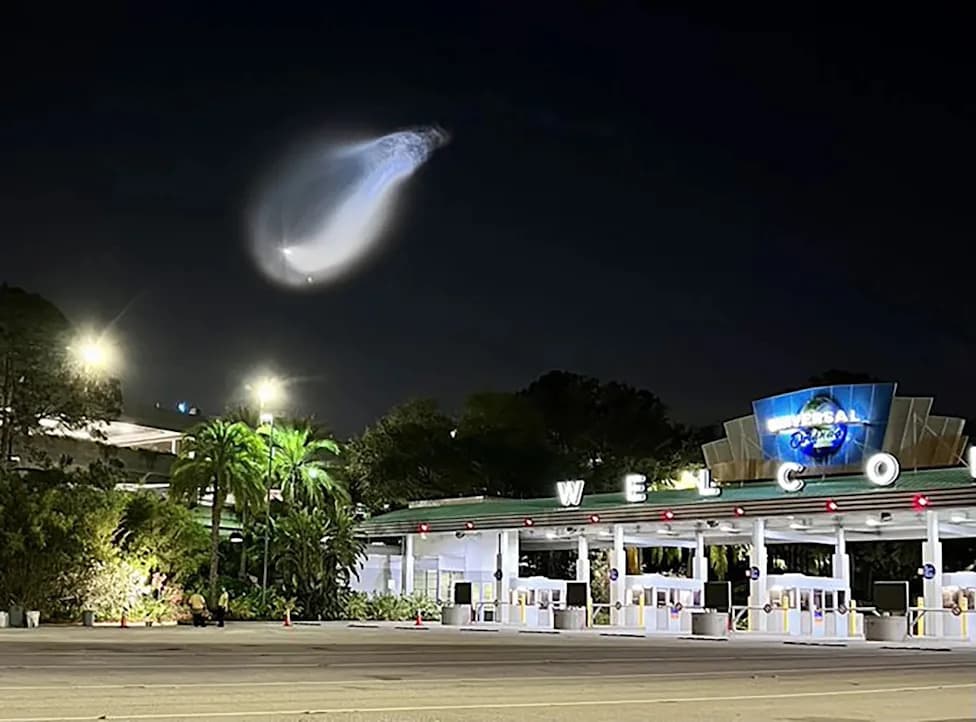
A space jellyfish was seen over Central Florida after SpaceX's launch of another batch of Starlink satellites.
“Space jellyfish” is a popular nickname for a striking atmospheric display sometimes seen after rocket launches. From the ground it looks like a glowing, bell-shaped head with trailing tendrils — a shape that readily evokes a jellyfish — but it’s an optical effect produced by rocket exhaust interacting with cold, thin air high above the Earth.
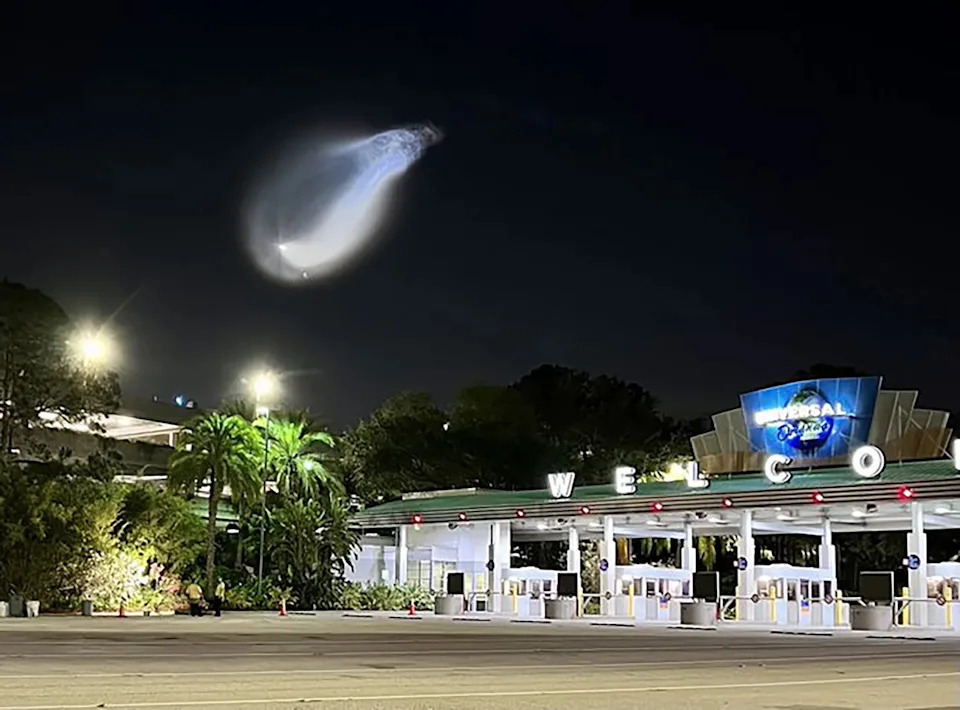
A space jellyfish was seen over Central Florida after SpaceX's launch of another batch of Starlink satellites.
What Causes the Space Jellyfish?
Rocket exhaust (especially from SpaceX Falcon 9 missions) contains large amounts of water vapor and carbon dioxide. As the rocket climbs into much thinner, much colder layers of the atmosphere, that water vapor can freeze rapidly into tiny ice crystals. Those crystals scatter sunlight and form a diffuse cloud that trails the vehicle, producing the characteristic jellyfish silhouette.
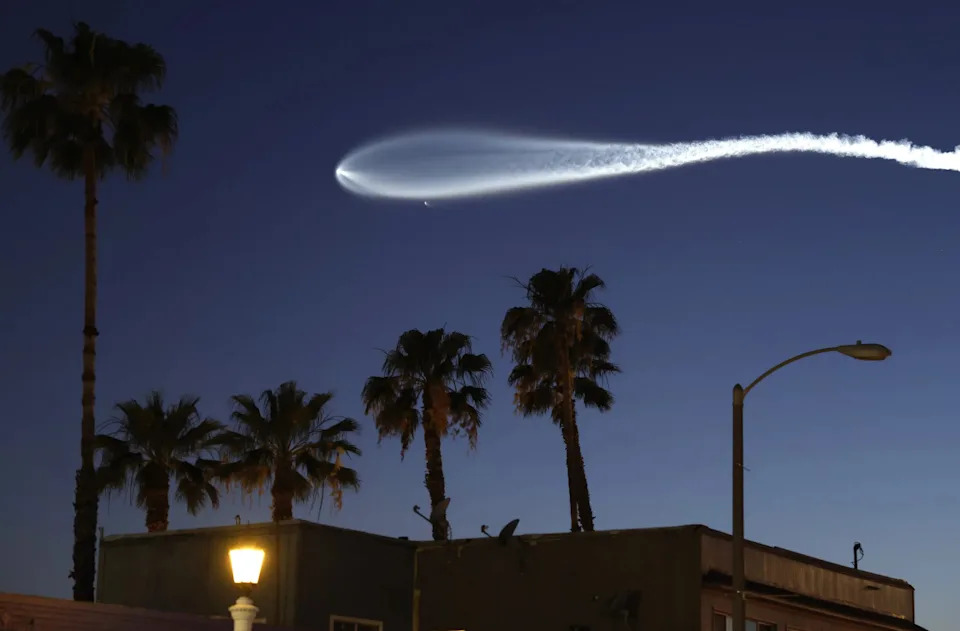
PASADENA, CALIFORNIA - APRIL 06: A SpaceX Falcon 9 rocket rises after launching from Vandenberg Space Force Base carrying 25 Starlink internet satellites on April 6, 2026 as seen from Pasadena, California.
Why Twilight Launches Look So Colorful
If a launch occurs around twilight, sunlight from below the horizon can strike the ice particles at an angle that produces vivid iridescence or rainbow-like colors. In full daylight or complete darkness the frozen plume is usually fainter or invisible because the lighting geometry isn’t right.
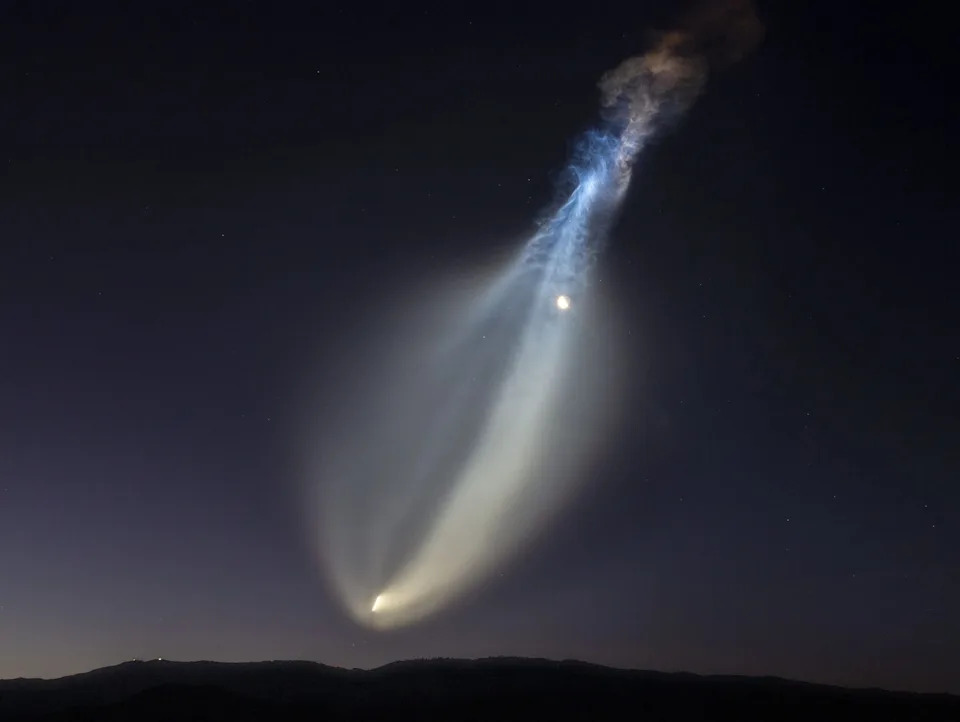
LOMPOC, CA - JANUARY 24: SpaceX, an American aerospace manufacturer, successfully launches a pre-dawn (under a crescent moon) a Falcon 9 rocket with multiple Starlink satellites from Vandenberg Space Force Base on January 24, 2025, in Lompoc, California.
When and Where You Can See It
The effect is most commonly reported after Falcon 9 launches because those missions burn hydrocarbon fuel (producing water vapor and CO2) and are flown frequently to deploy Starlink and other payloads. Launches are concentrated at sites in California and Florida; with SpaceX’s high cadence, residents near the flight corridors may see the phenomenon periodically — especially during launches near dusk or dawn.
Recent examples: Observers reported a space-jellyfish display over Central Florida following a Starlink launch, and photographers captured bright plumes during Falcon 9 flights from Vandenberg Space Force Base on April 6, 2026 (25 Starlink satellites) and a pre-dawn liftoff on January 24, 2025.
Is It Dangerous?
No. The space jellyfish is an optical and atmospheric phenomenon — visually dramatic but harmless. It’s a good reminder of how human activity can create unexpected and beautiful effects in Earth’s upper atmosphere.
How To Spot One
To increase your chances of seeing a space jellyfish: check upcoming launch schedules, watch for launches near twilight, and position yourself with a clear view of the horizon and higher sky. Photographers often capture the best images shortly after liftoff, when the plume is illuminated against a darkening or brightening sky.
Source note: The basic physics of the effect (water vapor freezing into ice crystals and scattering sunlight) is described by Space.com and by observational reports from recent Falcon 9 launches.
Help us improve.





















