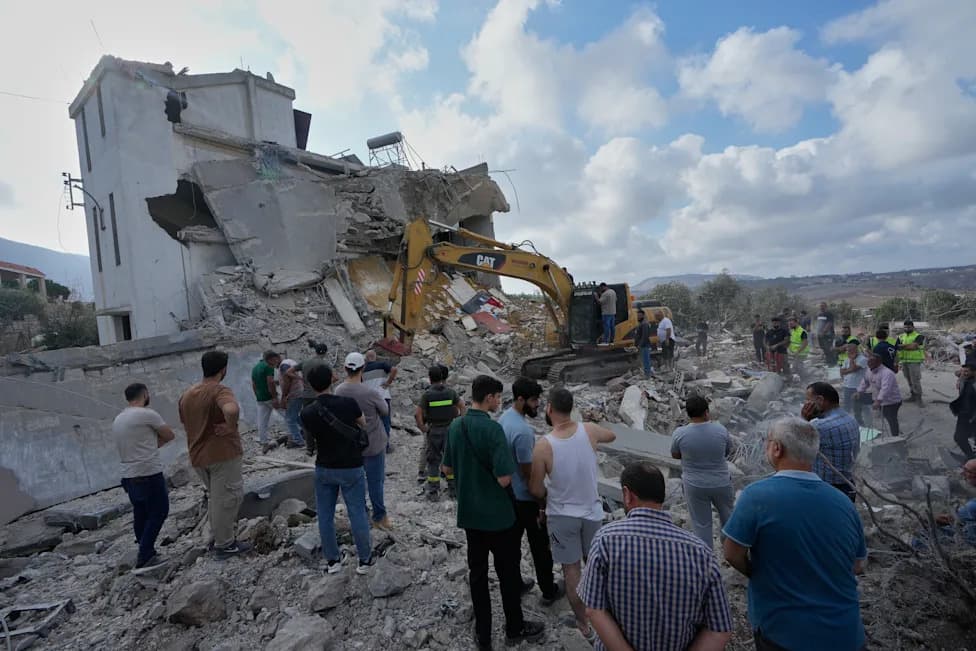
Israeli air strikes and shelling near Tyre wounded eight people as Lebanon and Israel held US‑mediated talks in Rome. Drones struck Burj al‑Shemali and further impacts were reported around al‑Mansouri and Majdal Zoun, where a booby‑trap earlier killed two Israeli soldiers. Lebanon says 4,333 people have been killed and over 12,000 injured since the escalation began on March 2; UNIFIL recorded 113 projectiles fired into southern Lebanon on Wednesday. Negotiations addressed Hezbollah's disarmament, proposed model areas for phased Israeli withdrawal and a ceasefire, with US officials reporting technical progress but no major breakthrough.
Israeli Strikes Wound Eight Near Tyre Amid US‑Brokered Rome Talks
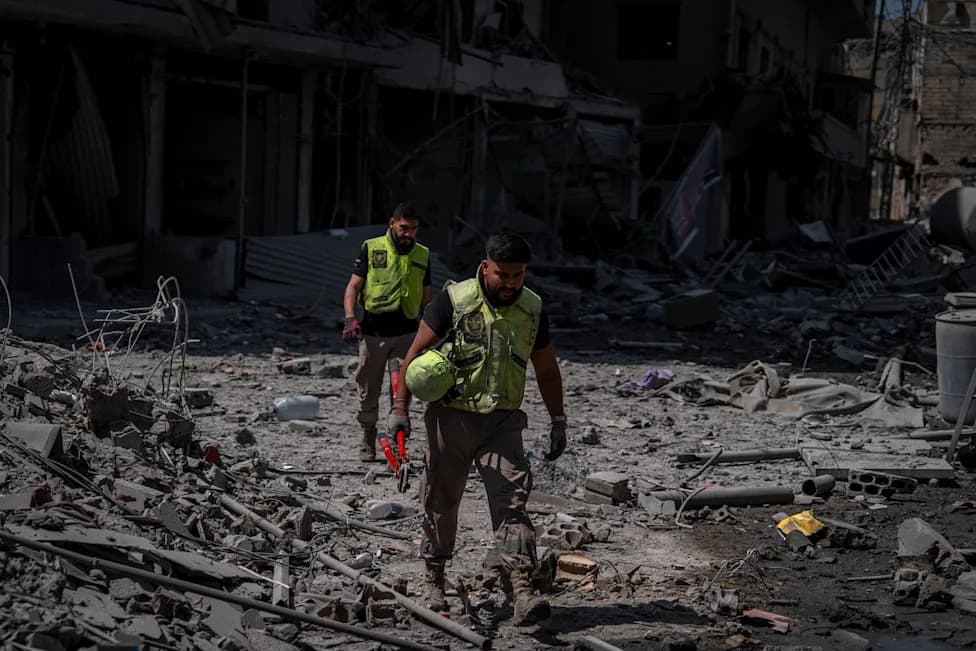
Civil defence workers clear debris following an Israeli air strike on Tyre, Lebanon [File: Adri Salido/Getty Images]
Israeli air strikes and shelling on towns in southern Lebanon's Tyre district wounded eight people on Thursday, Lebanese authorities said, even as Beirut and Tel Aviv took part in a US‑mediated round of direct negotiations in Rome.
Location and damage: The Lebanese Health Ministry, cited by state media, said the strikes that hit the town of Burj al‑Shemali (also written Burj Shemali) injured eight people. Military sources and local reporters said Israeli drones struck the al‑Malaab neighbourhood within the Burj al‑Shemali municipality, roughly 5 km from the city of Tyre. Separate strikes were reported between the southern towns of al‑Mansouri and Majdal Zoun; local reporters recorded three impacts in that area. Al Jazeera's Lebanon correspondent Zeina Khodr reported that one strike destroyed a civilian house.
Earlier fatalities: A booby‑trapped device in Majdal Zoun on Wednesday killed two Israeli soldiers and wounded four others during a search operation inside a civilian home — the first Israeli military fatalities since a declared truce two months earlier, Lebanese and Israeli sources said.
Wider toll and military activity: Lebanon's Health Ministry says the latest round of hostilities that began on March 2 has killed 4,333 people and injured more than 12,000. The United Nations Interim Force in Lebanon (UNIFIL) reported that the Israeli army fired 113 projectiles into southern Lebanon on Wednesday — the highest daily total recorded since June 21.
Access, restrictions and heritage concerns: The Lebanese army said it deployed forces into al‑Mansouri to reopen roads, but the mission was halted by the Lebanese‑Israeli "Mechanism Committee," which village mayor Haidar Madihli and others say operates under terms heavily influenced by Israeli control over the border. The Israeli military considers the village a "restricted military zone." In recent weeks, Israeli forces detonated explosives near Beaufort Castle, a UNESCO‑listed site; Israeli officials said the strikes targeted tunnel networks they allege were linked to Hezbollah infiltration plans, but publicly verifiable evidence has not been provided.
Rome negotiations: The latest exchanges came on the third and final day of the seventh round of US‑brokered, direct talks between Lebanon and Israel in Rome. Negotiators discussed Hezbollah's disarmament, proposed "model areas" for a phased Israeli withdrawal, and Lebanon's demand for a renewed, fully implemented ceasefire. After the sessions, US State Department spokesman Tommy Pigott described the talks as "fruitful" at the technical level, saying the parties were "much closer to reaching an agreement on advancing and expanding the pilot zones process."
A senior Lebanese official speaking anonymously to Anadolu said the meetings opened about an hour late and were conducted across three parallel tracks — military, political/legal/border matters, and prisoners. The military track focused on technical drafting issues and terminology, while the political track looked in detail at proposed model areas and ceasefire arrangements. The official added that the recent Israeli escalation in southern Lebanon was not discussed directly in Rome but handled via a mechanism established on October 27.
Outlook: With limited leverage, Lebanese officials and some observers remain skeptical that the Rome talks will secure major new Israeli withdrawals. Al Jazeera's Zeina Khodr, reporting from Nabatieh, said the session is unlikely to produce immediate large‑scale pullbacks, noting that Israeli authorities have repeatedly signalled reluctance to make further concessions.
Note: Casualty figures and incident counts are drawn from Lebanese Health Ministry and UNIFIL reports cited by news organisations. Some claims, including alleged tunnel networks near Beaufort Castle, have been asserted by Israeli officials but not independently verified in public reports.
Help us improve.