
The South Carolina Supreme Court on Aug. 5 refused the state GOP's emergency request to remove Danny Lee Ford II from Republican primary ballots after a Richland County judge had reinstated him for the Aug. 11 primary. The dispute centered on a new party rule requiring candidates to have voted in two of the last three Republican primaries; the circuit judge found the rule vague and potentially unconstitutional. The high court concluded that removing Ford's name after ballots were printed and votes cast would unduly disrupt the election. Ford remains on the ballot and will continue campaigning despite uneven recognition from party organizers.
S.C. Supreme Court Refuses GOP Request To Remove Danny Lee Ford II From Ballot Amid Early Voting
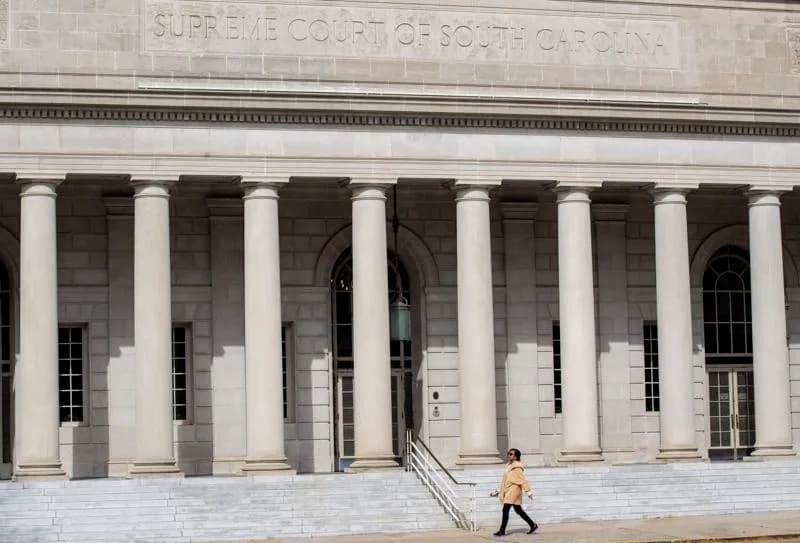
A person walks by the front of the Supreme Court of South Carolina in Columbia. File/Henry Taylor/Staff
The South Carolina Supreme Court on Aug. 5 declined a last-minute bid by the state Republican Party to remove Danny Lee Ford II — a U.S. Senate candidate who had previously been disqualified — from Republican primary ballots as the first day of early voting concluded.
Court Ruling and Timeline
The court's four-page decision followed a Richland County circuit court judge's earlier ruling that reinstated Ford on the Aug. 11 primary ballot to fill the seat vacated by the late U.S. Sen. Lindsey Graham. Ford had initially been disqualified under a newly adopted state GOP rule requiring candidates to have voted in at least two of the last three Republican primaries.
Richland County Judge Daniel Coble found that the party rule was overly vague and could expose Ford to constitutional harms. The state Republican Party argued that its own First Amendment rights were implicated and that it may set internal standards to certify candidates and ensure nominees are bona fide, active participants in the party.
Emergency Appeal And Practical Concerns
The GOP appealed to the state Supreme Court on Aug. 4, a day before early voting began, contending that Judge Coble erred by ordering the party to recognize Ford after nearly 2,000 military and absentee ballots had already been mailed without his name. The party sought an emergency stay to prevent Ford from appearing as the 10th Republican candidate on the ballot.
“If we were to grant a stay of the preliminary injunction and require the Commission to now remove Ford's name from the ballots, the current election process would be thrust into even further disarray,” the court wrote.
The high court said it could not grant the requested relief after ballots had already been printed statewide and Ford's name appeared on voting materials by Aug. 5. Several thousand voters had already cast ballots that included Ford, and the court concluded that removing his name from machines and printed ballots in all 46 counties would create excessive disruption to the election process.
Aftermath
Ford will remain on the Aug. 11 primary ballot and will continue to campaign. However, the state GOP has shown mixed recognition: Ford was omitted from the speaker list at a planned Charleston stump event on Aug. 6, and it remains unclear whether he will be permitted to speak at another party-sanctioned event scheduled in Florence later in the week.
The dispute highlights tensions between party autonomy in setting candidate qualifications and judicial oversight when party rules may affect voters' rights or candidates' constitutional protections. Election officials and party leaders must now proceed with the printed ballots and early-voting returns already underway.
Help us improve.





















