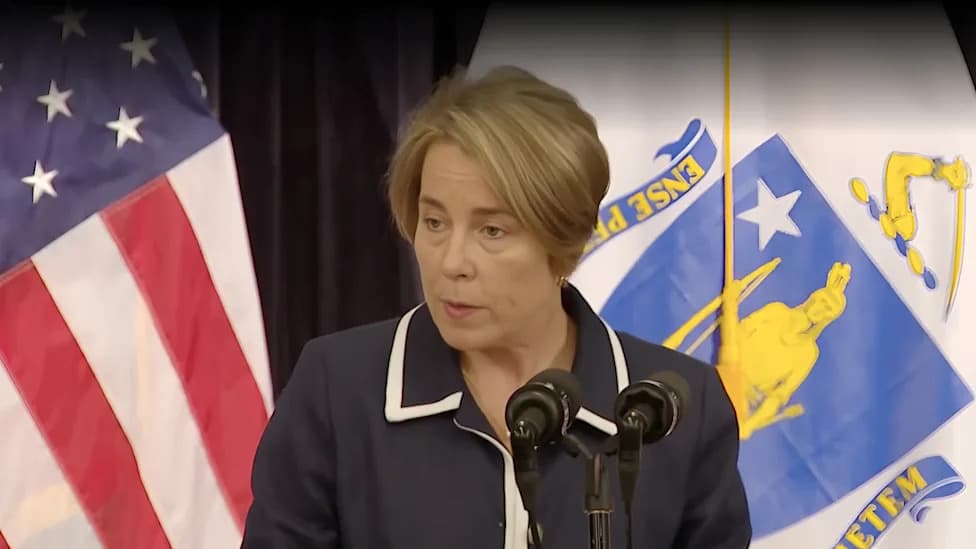
Massachusetts Gov. Maura Healey signed the PROTECT Act on Aug. 6, immediately restricting local cooperation with ICE and expanding civil protections for immigrants. The law bars warrantless arrests at sensitive sites, prevents formal local partnerships with ICE, and allows lawsuits for constitutional-rights violations. Supporters say it preserves community trust and public safety, while DHS criticized the move as undermining federal enforcement.
Massachusetts Signs PROTECT Act, Immediately Restricting ICE Enforcement Across the Commonwealth
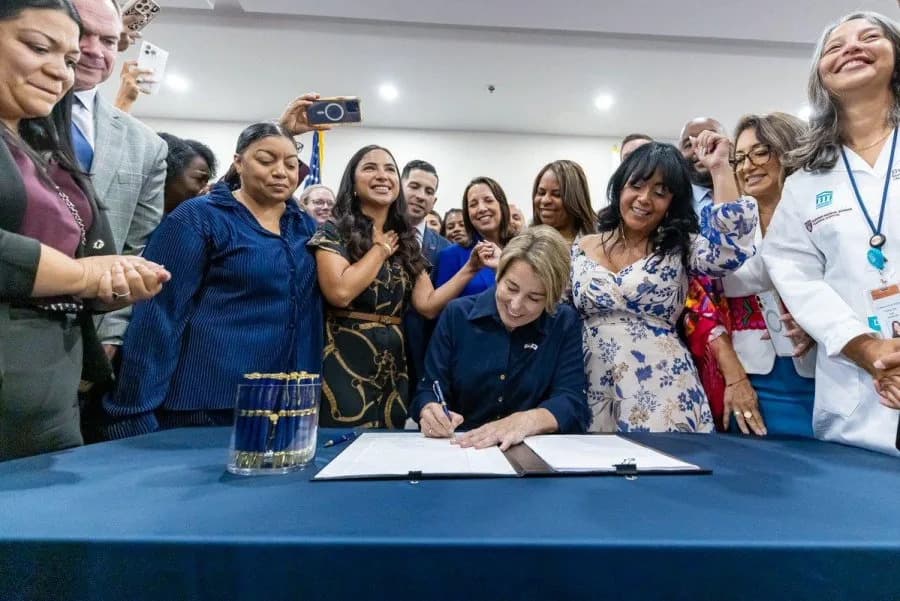
Massachusetts Gov. Maura Healey (C) signs the Protect Act into law on Wednesday at La Colaborativa, a Latina-led nonprofit economic development agency in Chelsea, Mass. Photo courtesy Massachusetts Gov. Maura Healey/X
Aug. 6 — Massachusetts Gov. Maura Healey on Wednesday signed the PROTECT Act, landmark legislation her administration and supporters say creates some of the nation's strongest limits on Immigration and Customs Enforcement (ICE) actions. The signing took place at La Colaborativa, a Latina-led economic development nonprofit in Chelsea, where Healey was joined by immigrants, advocates and law-enforcement representatives.
"This is what makes Massachusetts special: It's our people. And today, we, the people of Massachusetts, are standing up and fighting back because we know what we need to do," Healey said. "We know that what ICE is doing is wrong and it needs to stop."
What the PROTECT Act Does
Effective immediately, the PROTECT Act sharply limits local cooperation with federal immigration authorities while expanding legal protections and remedies for people who are detained, deported or otherwise affected by ICE actions. Key provisions include:
- Prohibiting warrantless immigration arrests at designated "sensitive locations," such as courthouses, schools, childcare centers and health-care facilities (including hospitals).
- Barring state and municipal law-enforcement agencies from entering formal partnerships with ICE and from participating in federal immigration enforcement programs.
- Preserving the authority of state and local police to investigate and prosecute crimes while restricting their role in federal immigration operations.
- Allowing individuals to bring civil claims against government officials for violations of constitutional rights and strengthening protections for people held in state or county correctional facilities.
Legislative Background and Context
The bill originated as H.5158, was enacted as H.5620 and was introduced on Jan. 28. Lawmakers cited recent, high-profile fatal shootings involving federal agents in Minneapolis — the deaths of Alex Pretti and Renee Nicole Good — and the federal policy of family separations as part of the impetus for the measure. Massachusetts House Speaker Ronald Mariano highlighted those incidents when the House approved the legislation in March.
"That's why this legislation is so important, as it takes steps to ensure that all residents in Massachusetts are treated equally under state law, and to protect our communities through practical, thoughtful measures," Mariano said in a statement.
Reactions
Supporters argue the law is needed to preserve trust between immigrant communities and local law enforcement, which they say is essential for public safety. Public Safety and Security Secretary Gina Kwon praised the bill for helping to maintain community trust that officials and organizations rely on to protect victims and investigate crimes.
"The PROTECT Act helps preserve the trust that law enforcement, prosecutors and community organizations rely on to protect victims, investigate crimes and keep neighborhoods safe. When people feel safe, our commonwealth is stronger," Kwon said in a statement.
The Department of Homeland Security, which oversees ICE, criticized the law in a statement, saying "sanctuary politicians must stop putting politics above public safety." DHS added that when local officials bar cooperation with federal authorities, federal officers must increase their visible presence to locate and apprehend individuals released from jails and living in communities, according to a statement to WJAR.
Implications
The PROTECT Act places Massachusetts among states taking legal and policy steps to limit cooperation with federal immigration enforcement. The law is likely to prompt legal and political debate over the balance between state authority, local public-safety priorities and federal immigration enforcement powers.
Help us improve.