
NASA Administrator Jared Isaacman says the odds of finding extraterrestrial life are "pretty high," and he argues that the search shapes many of the agency's flagship programs. Plans for a lunar base at the Moon's south pole, upcoming Artemis missions and Mars sample returns all play roles in the hunt for life. Isaacman stressed he has seen no evidence of visitors, but points to the universe's vast scale as a reason for optimism, and framed exploration as both scientific priority and strategic insurance.
NASA Chief Says Odds Of Finding Alien Life Are 'Pretty High' — How Artemis, Mars Samples And A Lunar Base Could Help
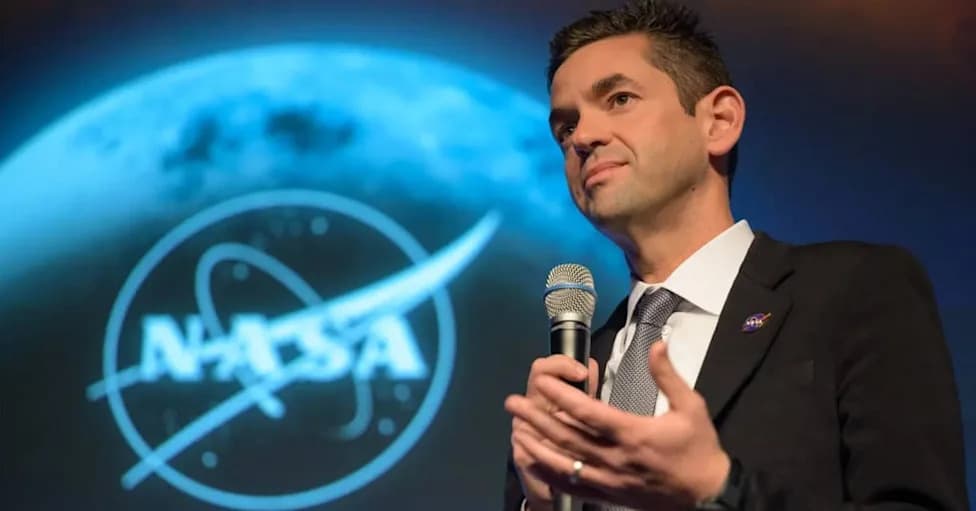
Are we alone? NASA says the search for extraterrestrial life is shaping future missions to the Moon, Mars, and distant worlds. | ©Image Credit: NASA/Bill Ingalls
NASA Administrator Jared Isaacman says the chances of discovering extraterrestrial life are "pretty high," and he argues that the search for life beyond Earth drives much of the agency’s exploration agenda. As NASA accelerates plans for the Moon, Mars and beyond, Isaacman believes the next decade of missions could bring one of humanity’s most consequential discoveries.
Why the Search Matters
Isaacman told CNN's Meet the Press that investigating whether life exists elsewhere is not merely curiosity—it's a central objective that shapes NASA's science and exploration programs.
"Investigating the existence of alien life goes to the heart of many things that we do at NASA," Isaacman said. "Our job here is to go out and try and unlock the secrets of the universe."
He emphasized that the question "Are we alone?" is woven into nearly every scientific and exploration activity the agency undertakes, from telescopes and robotic probes to human missions.
Moon, Mars And Beyond
Isaacman pointed to plans for a permanent base near the Moon’s south pole as an example of how infrastructure could extend the search for life. Telescopes and instruments placed at a stable lunar outpost could enable new observations and support missions that probe promising worlds.
The Artemis program is central to this vision. Following Artemis II, NASA is preparing a busy manifest of missions, including Artemis III, which aims to advance commercial lunar landing systems and deploy robotic landers and rovers to the Moon’s south pole in preparation for a sustained human presence.
Isaacman also highlighted Mars as a likely place for a major discovery. He said there is "a very good chance" that samples returned from the Red Planet within the next decade could reveal evidence that microbial life once existed there. Scientists are likewise focused on several of Saturn’s icy moons—worlds considered among the most promising locations in the solar system to search for signs of life.
Scope, Strategy And Survival
While optimistic, Isaacman was clear he has not seen evidence of extraterrestrial visitors. Having flown to space twice, he quipped that he "didn't encounter any aliens up there" and added, "I have not seen anything to suggest that we have been visited by any intelligent life forms out there."
Still, he argued the universe’s vastness makes discovery plausible: "When you think about it, we got 2tn galaxies out there. Who knows how many star systems within each of it? I would say the odds that we will find something at some point to suggest that we are not alone are pretty high."
Beyond science, Isaacman framed exploration as strategic. He said the U.S. is competing with China in a modern space race and insisted America has no intention of falling behind. He also described expanded space activity as a form of planetary insurance—reducing humanity’s "massive concentration risk on Earth" by building the ability to live and work beyond our planet.
Technology And The Road Ahead
Many enabling technologies remain under development. NASA plans to demonstrate how astronauts could extract water ice from the lunar surface and convert it into oxygen, hydrogen and rocket fuel—capabilities that would make future exploration more self-sufficient. Isaacman acknowledged the work is ongoing and joked about who might be first to try a "glass of moon water."
As NASA moves forward, the agency will balance scientific goals with investments in commercial partnerships, nuclear propulsion concepts and sustained human missions aimed at uncovering whether life exists beyond Earth.
Sources: CNN, New York Post
Help us improve.





















