U.S. District Judge Brian Murphy ordered the federal government to pay just over $450,000 in attorney fees to the Association of American Universities after blocking a Department of Defense policy that would have capped reimbursements for indirect research costs at 15%. Murphy found the Defense Department's position was not "substantially justified," noting that similar NIH and DOE caps had also been blocked by other judges. The AAU funded the litigation itself, spending more than $2 million, and the judge reduced an initial $530,000 fee request as excessive. The award was granted under the Equal Access to Justice Act.
Judge Orders U.S. To Pay $450K+ To University Group After Blocking 15% Pentagon Research Reimbursement Cap
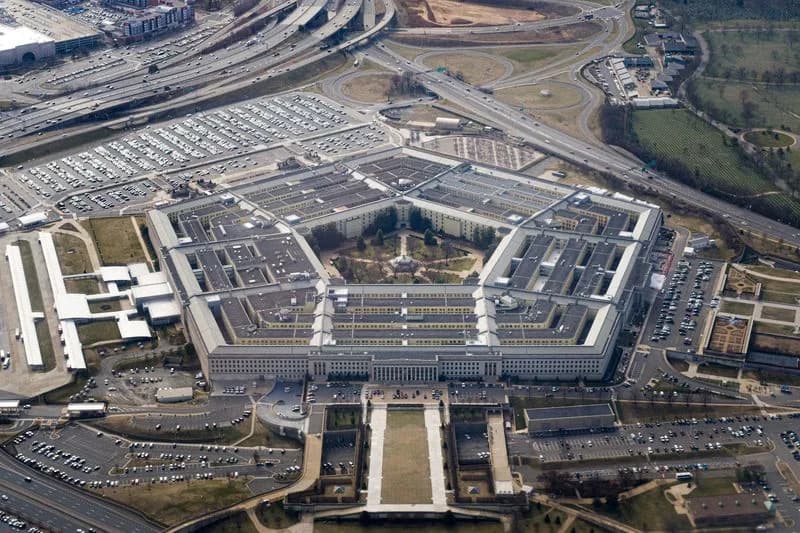
FILE PHOTO: The Pentagon in Arlington, Virginia, is seen from the air on March 3, 2022, REUTERS/Joshua Roberts/File Photo
A federal judge on Wednesday directed the U.S. government to pay more than $450,000 in legal fees to the Association of American Universities (AAU) after the group successfully challenged a Pentagon policy that would have capped reimbursements for indirect research costs at 15%.
U.S. District Judge Brian Murphy of the District of Massachusetts awarded the fees under the Equal Access to Justice Act (EAJA), a 1980 federal statute that allows prevailing parties in certain civil cases to recover legal costs from the government when the government's position is not "substantially justified."
Background
In May 2025, twelve universities and three academic trade organizations, including the AAU, sued the U.S. Department of Defense (DoD) after the department announced it would limit reimbursements for "indirect costs"—expenses such as shared facilities, equipment and research staff who support multiple projects—to 15% of certain research grants. The plaintiffs argued the policy was unlawful and threatened the financial structure of university research programs.
Judge Murphy issued a temporary restraining order in June 2025 that blocked the 15% cap, and in December 2025 he entered judgment for the AAU and the other plaintiffs. The Justice Department initially appealed but later withdrew the appeal, clearing the way for a final judgment and a fee award.
Reasoning And Fee Award
Murphy concluded the DoD's position was not "substantially justified," noting that the department had relied on similar caps announced by the National Institutes of Health (NIH) and the Department of Energy (DOE) even though those caps had also been blocked by other federal judges. In a pointed line, Murphy wrote that ignoring those decisions was like "the ostrich burying his head in the sand."
"The ostrich burying his head in the sand is manifestly unreasonable," Murphy wrote.
The judge rejected the Justice Department's argument that the AAU was ineligible for fees because many of its member institutions have large endowments. Murphy found the AAU independently financed the litigation, spending more than $2 million on the case, and he trimmed the AAU's initial fee request of $530,000 as "slightly excessive," arriving at the award of just over $450,000.
Responses And Implications
Spokespersons for the AAU and the Department of Defense declined to comment. Two of the AAU's attorneys — Paul Clement of Clement & Murphy and Lindsay Harrison of Jenner & Block — did not immediately respond to requests for comment. The Justice Department also did not immediately comment.
The award underscores the limits on aggressive regulatory changes affecting federally funded research, particularly when agencies adopt policies modeled on other agencies' measures that have themselves been enjoined by courts. It also highlights the role of the EAJA as a mechanism for organizations to recover legal costs when they successfully challenge government actions.
Several other parties have sought EAJA awards after winning challenges to policies from the prior administration; this decision adds to a pattern of judges scrutinizing agency justifications for sweeping changes to research funding rules.
Help us improve.