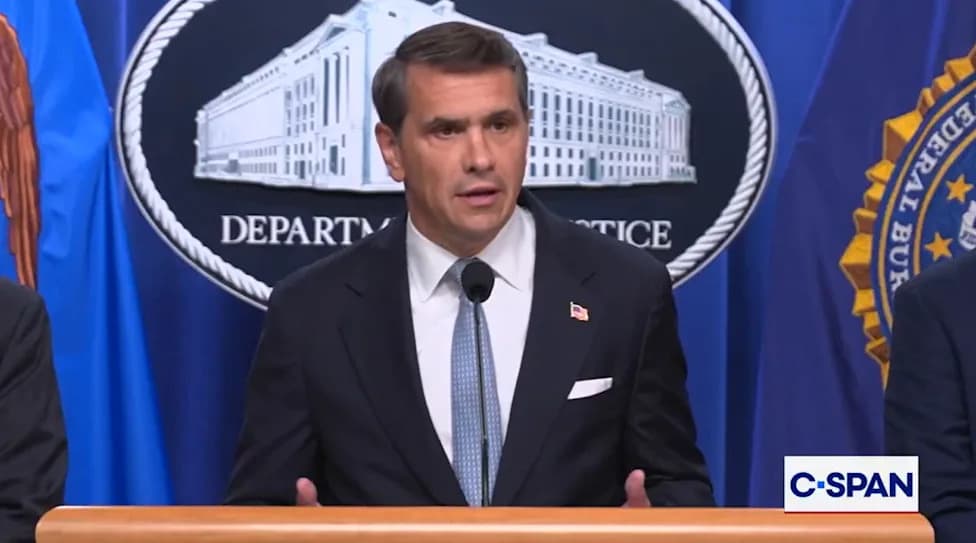
Key Takeaway: The Justice Department withdrew a proposed $1.8 billion "Anti-Weaponization Fund," easing Todd Blanche's path to confirmation, but left intact a May 19 order that shields President Trump, his sons and the Trump Organization from IRS audits of returns filed before that date. Legal experts and the NYU Tax Law Center say the clarification does not change the substance of the immunity and question Blanche's authority to preserve it. A federal judge described the lawsuit as self-dealing, and Trump has appealed.
Blanche Drops $1.8B Fund but Preserves Trump’s Tax-Audit Shield That Could Void $100M Liability
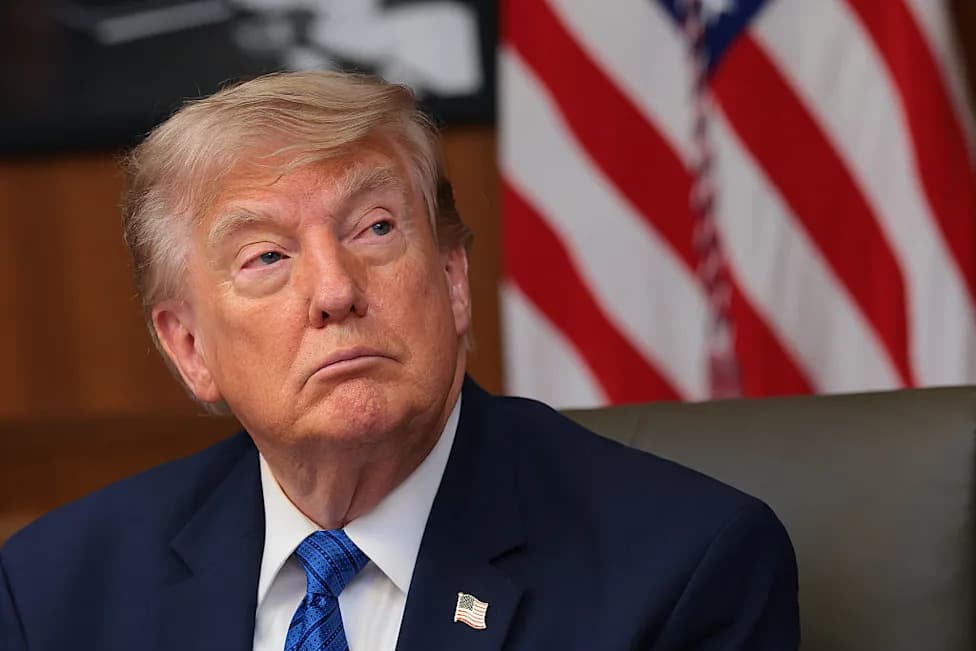
President Donald Trump listens to questions from reporters during a Cabinet meeting at Camp David, the presidential retreat, in Camp David, Maryland, on July 31, 2026. —Anna Moneymaker—Getty Images
Acting Attorney General Todd Blanche formally withdrew the Justice Department’s proposed $1.8 billion "Anti-Weaponization Fund," clearing a key obstacle to his confirmation. But a separate provision in the May 19 settlement — an audit-immunity clause that could shield President Donald Trump, his sons and the Trump Organization from IRS audits of returns filed before that date — remains in place, drawing criticism from legal experts and lawmakers.
What the Order Says
The Justice Department’s May 19 document describes an agreement that, according to the text, bars audits of tax returns filed prior to that date for the named plaintiffs in the underlying lawsuit. That lawsuit, filed in January, sought up to $10 billion from the IRS and Treasury over the leak of Trump’s tax returns by a former contractor.
Political Fallout And Confirmation
Senators John Cornyn (R-Texas) and Thom Tillis (R-N.C.) had threatened to withhold support for Blanche’s confirmation unless the Justice Department rescinded the proposed fund. The senators agreed to back Blanche after the department provided written confirmation withdrawing the $1.8 billion proposal. Blanche then posted a document on X stating the audit protection applies only to the parties named in the lawsuit and is retroactive only — covering prior returns but not returns filed after May 19.
Legal And Expert Objections
Legal scholars and advocates say the clarification does not change the substance of the immunity and question whether Blanche had the authority to create or preserve it in this privacy litigation. In a statement, NYU Tax Law Center Policy Director Brandon DeBot called the document "not worth the paper it's written on," saying it does not diminish an ongoing concern that the order gives unauthorized protection from tax audits.
"It basically means that if [Trump] underpaid taxes or made misleading statements in his returns prior to the day of the deal, he gets a free pass," said David Super, a professor at Georgetown Law, in an interview with TIME.
Potential Financial Stakes
The scale of tax liabilities potentially affected by the immunity is uncertain because IRS audits are generally confidential. Reporting by The New York Times and ProPublica in 2024 indicated that Trump could owe more than $100 million if a protracted dispute over tax breaks for his Chicago skyscraper were resolved against him. It is unclear whether that particular audit remains active.
Judicial Review And Next Steps
A federal judge last month characterized the underlying lawsuit as an exercise in self-dealing and questioned the legitimacy of the process that produced the audit immunity, though she did not explicitly void the provision. The President has appealed. The NYU Tax Law Center has also raised doubts about whether the Justice Department — and Blanche specifically — had authority in this forum to resolve tax-return disputes rather than the privacy claims at issue.
In response to inquiries, the Justice Department told TIME that Blanche "restated and incorporated testimony he gave under oath that the May 19th Order has effect only on plaintiffs and defendants, and that the release is retroactive only." The White House, IRS and Treasury did not immediately respond to requests for comment.
Help us improve.