BOB, a 6–7 m ichthyosaur discovered in Queensland in 2019, preserved fragments of a pterosaur jaw plus fish and cephalopod remains in its abdominal cavity. Advanced neutron imaging allowed scientists to identify the stomach contents without damaging the fossil. The skeleton's crushing injuries and missing ribs suggest a possible attack by the large pliosaur Kronosaurus queenslandicus, offering the first confirmed evidence that ichthyosaurs ate pterosaurs and a rare glimpse into Eromanga Sea food webs.
Rare Australian Fossil Shows Ichthyosaur Swallowed a Pterosaur — Then May Have Been Killed by a Giant Pliosaur
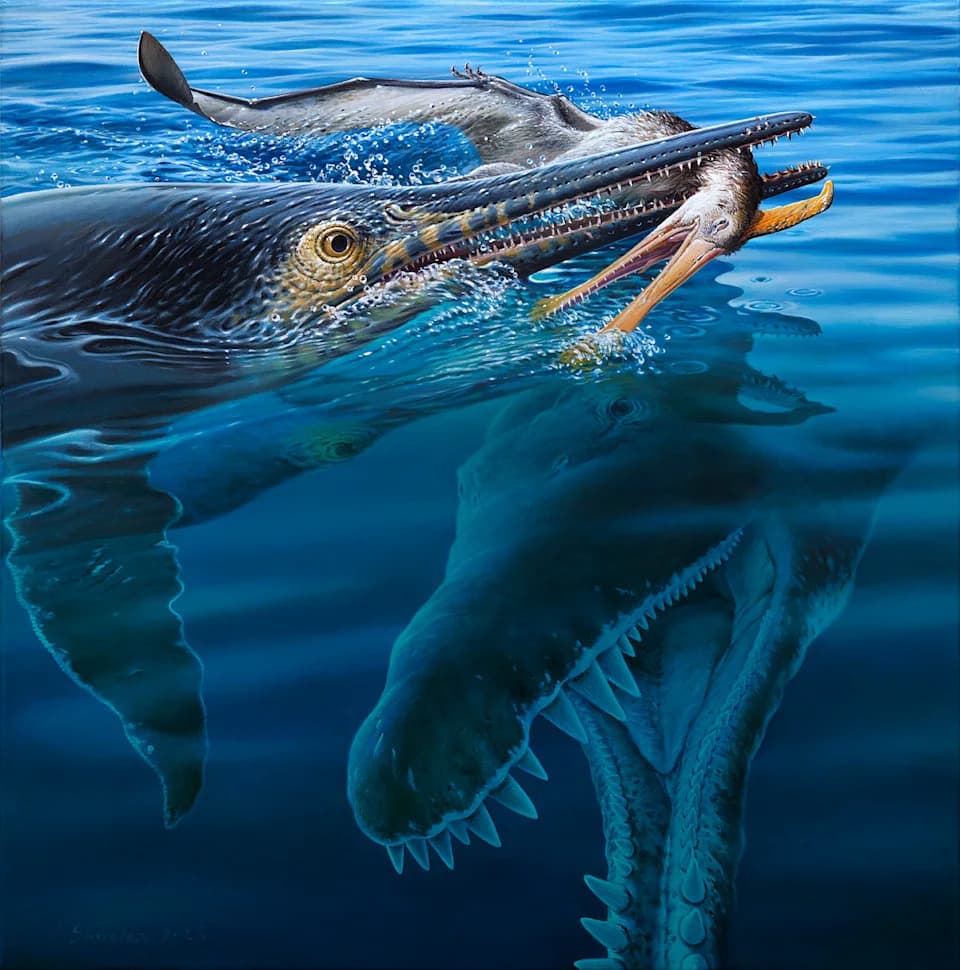
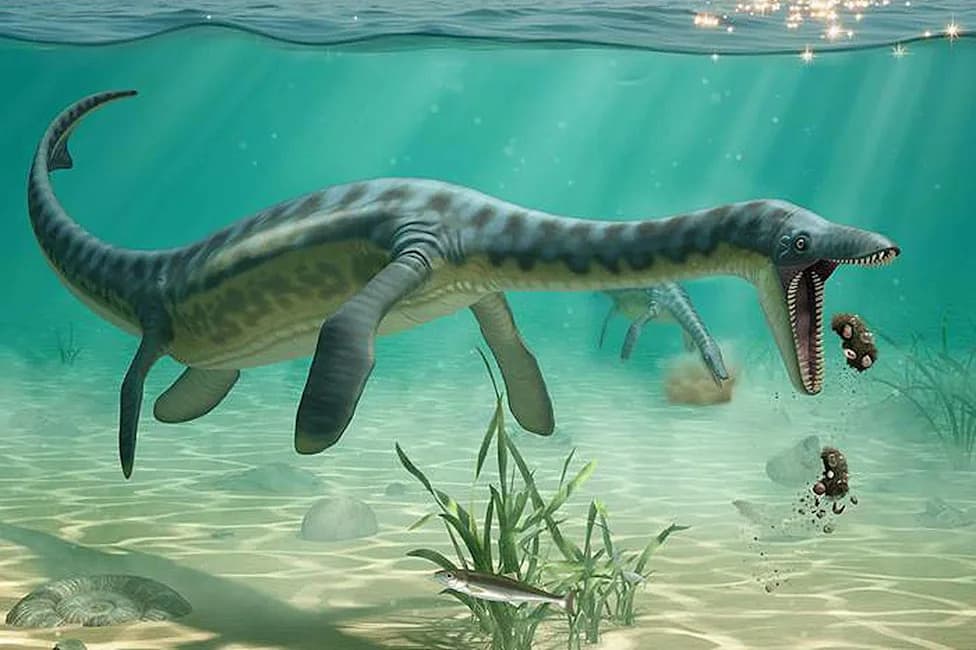
An illustration of an ichthyosaur eating a pterosaur, while a pliosaur lurks beneath. | Credit: Peter Trusler
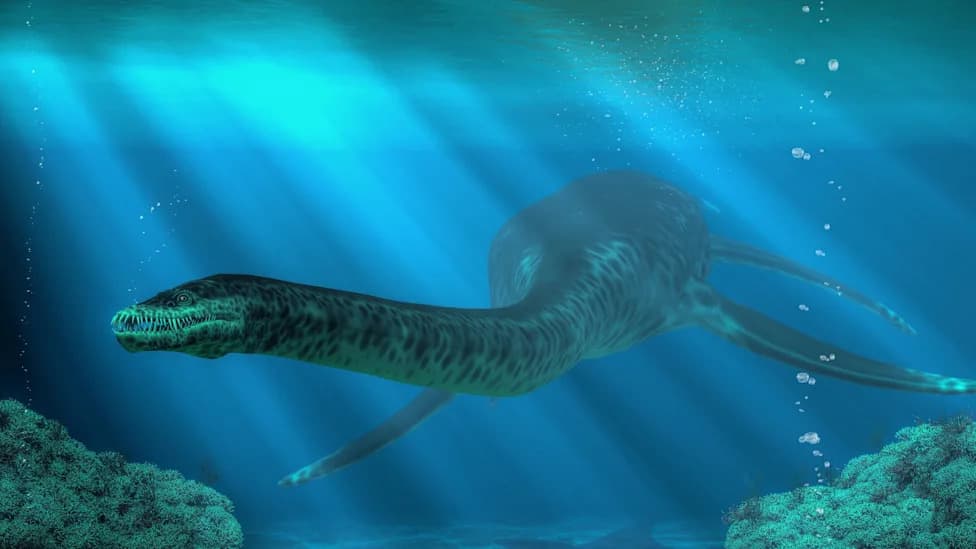
A remarkably preserved ichthyosaur skeleton from Queensland appears to capture a dramatic food-chain snapshot from the early Cretaceous: the marine reptile had swallowed a pterosaur and then shows injuries consistent with an attack by a much larger predator.
The Find
The specimen, nicknamed "BOB" (short for "Bag of Bones"), was discovered in Queensland's outback in 2019 and represents a 6–7 meter (20–23 ft) ichthyosaur. In a study published July 28 in Gondwana Research, researchers report they found fragments of a pterosaur jaw, together with fish and cephalopod remains, preserved within the ichthyosaur's abdominal cavity.
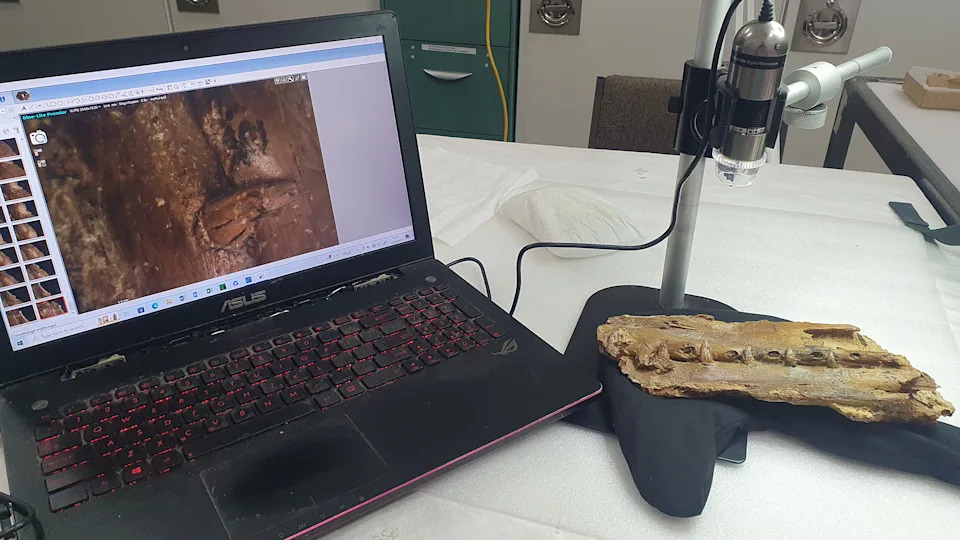
The ichthyosaur fossil set "BOB" gets scanned. | Credit: Kronosaurus Korner Museum Queensland Australia
Stomach Contents and Rarity of Preservation
Fossilized stomach contents are exceptionally rare because they require rapid burial to prevent decay and scattering. As study co-author Matt White, a research associate at the University of New England, explained:
"Rapid burial after death is essential to prevent decay and scattering of remains. The animal must have died soon after its last meal so stomach acids don't fully digest the prey."
Researchers used advanced neutron imaging to peer inside BOB without damaging the fossil. The scans revealed hidden bones and helped confirm that the embedded fragments were likely stomach contents rather than random sediment or later intrusions.
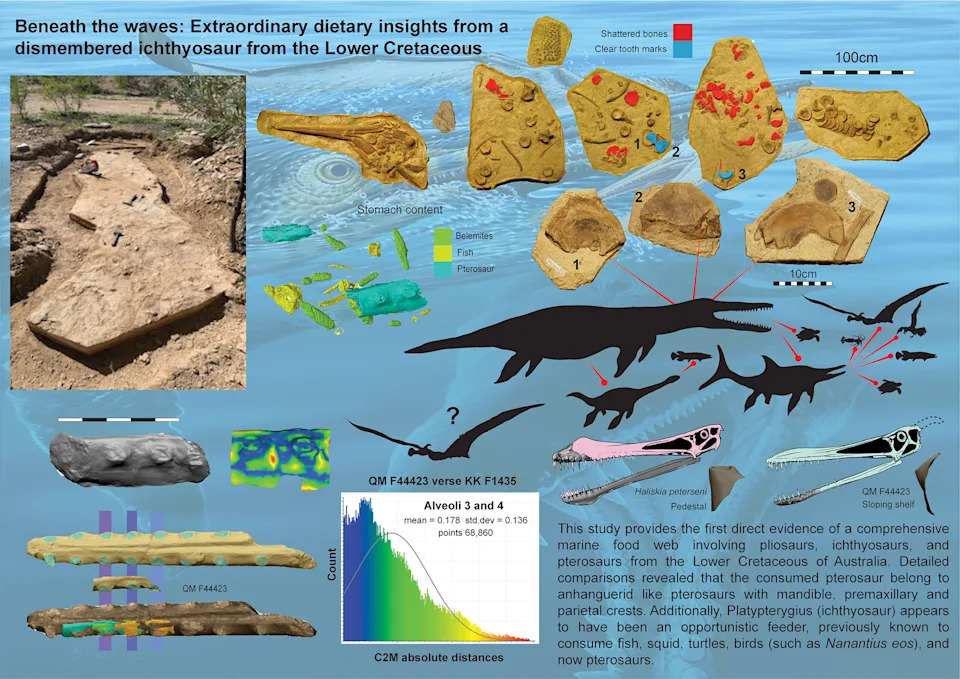
A graphical abstract of the research showing the complex food web of Cretaceous Australia. | Credit: White et al. (2026)
How the Ichthyosaur May Have Died
BOB's skeleton displays shattered bones, missing ribs and large crushing injuries. The research team suggests these catastrophic wounds may have been inflicted by Kronosaurus queenslandicus, a large pliosaur that lived in the ancient Eromanga Sea roughly 120–100 million years ago. The distribution of the pterosaur fragments — nearer the front of the body cavity than expected for fully digested prey — led the authors to propose that the ichthyosaur struck the seafloor rostrum-first shortly after its last meal, shifting some stomach contents forward as it sank.
"We believe the animal died in the water column — perhaps from a pliosaur (Kronosaurus) attack or natural causes — and then sank," White said. "It impacted the seafloor with its rostrum, and connected soft tissues kept most of the body in sequence."
Why This Matters
This is the first confirmed record indicating ichthyosaurs consumed pterosaurs, demonstrating a previously undocumented predator–prey interaction. The specimen provides a rare, direct window into trophic links in the early Cretaceous Eromanga Sea, showing that ichthyosaurs could scavenge or prey on flying reptiles that landed on the water or floated at the surface.
Methods and Future Work
Non-destructive imaging such as neutron scanning is increasingly revealing internal details that traditional preparation would miss. These methods can map hidden bones, reveal soft-tissue shapes and clarify internal anatomy, helping paleontologists reconstruct ancient ecosystems with greater confidence.
Credits: Illustration credit: Peter Trusler. Fossil scans and specimen work credited to the Kronosaurus Korner Museum and the study authors.
Help us improve.