
The Dynamic Eclipse Broadcast (DEB) Initiative is a volunteer network led by Southern Illinois University Carbondale and supported in part by NASA and the NSF. DEB combines public livestreams of total solar eclipses with coordinated scientific observations of the sun's corona using portable telescope rigs (about $1,800 each). After deploying 80+ teams during the 2024 eclipse and contributing to peer-reviewed research, DEB will field two teams for the Aug. 12 eclipse in León and Valoria la Buena, Spain, streaming real-time data to public and NASA broadcasts. The campaign also serves as a rehearsal for a larger, redundancy-focused effort planned for the Aug. 2, 2027 eclipse across Northern Africa.
Citizen Scientists to Stream and Study the Aug. 12 Total Solar Eclipse with DEB
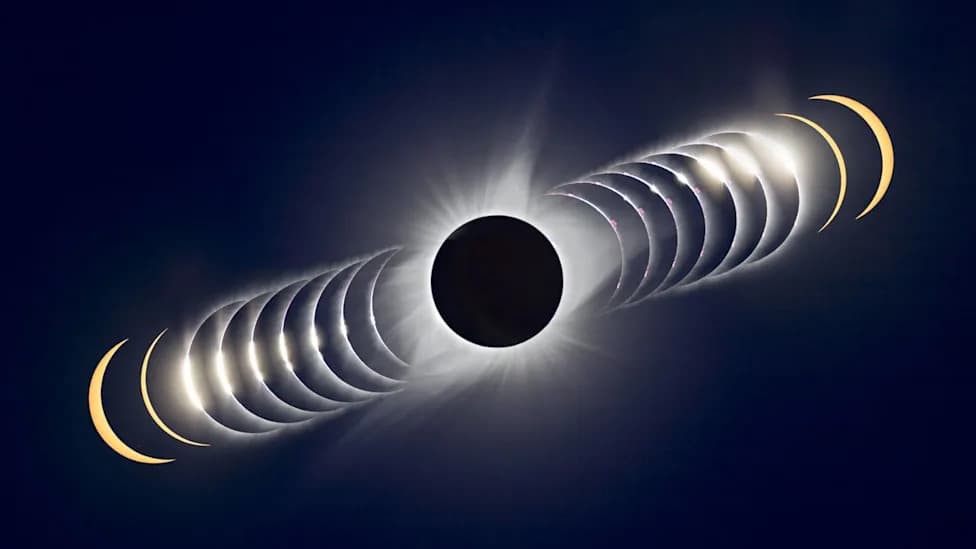
A composite image showing totality as the lunar disk hides the face of the sun. Images are stacked diagonally either side showing the moon and sun just before and after totality.
Meet the Dynamic Eclipse Broadcast (DEB) Initiative, a volunteer-driven citizen science network that pairs live public coverage of total solar eclipses with coordinated scientific observations of the sun's outer atmosphere, the corona.
At the center of our solar system, the sun is a gargantuan ball of superheated gas whose light and gravity sustain life on Earth. Despite centuries of study, many questions remain about how the sun's atmosphere behaves and how it influences the wider solar system. DEB brings together volunteers and professional astronomers to capture rare moments of totality and collect high-value data for research.
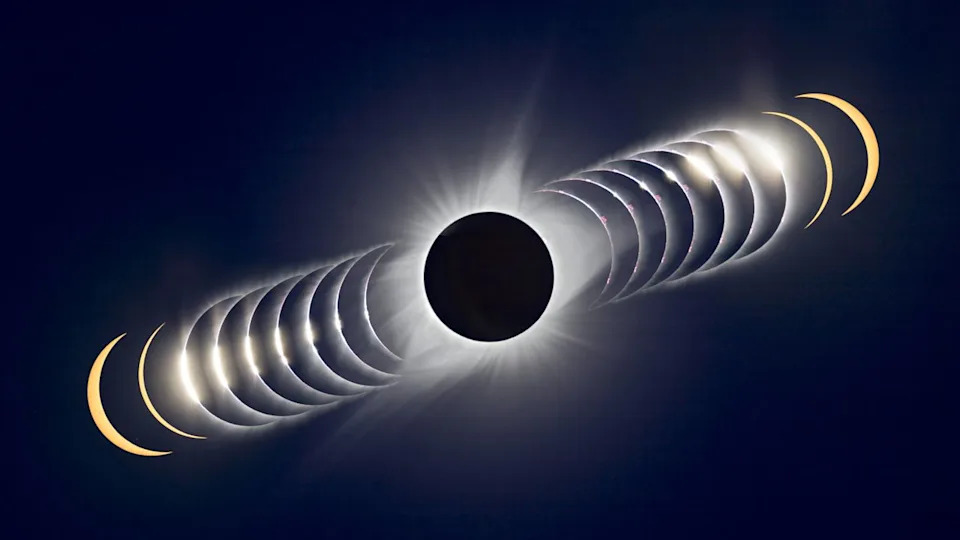
A composite photo showing the sun disappearing behind and emerging from the back of the back of the moon around totality. | Credit: Photo by: Alan Dyer/VW Pics/UIG via Getty Images
"We came up with a setup that's portable, that's relatively cheap," said Associate Scientist Bob Baer of Southern Illinois University Carbondale, a co-principal investigator of DEB. "They're about $1,800 once you factor in everything, like the computer, the mount, the telescope, the camera."
During the 2024 Great American Eclipse, more than 80 DEB teams deployed identical telescope rigs along the path of totality across the continental United States. Trained over months, volunteers focused on the crucial minutes of totality when the moon's silhouette reveals the sun's dynamic corona. Telescope feeds were uploaded nearly in real time and incorporated into livestreams that brought the event to global audiences — an effort that helped team members earn Emmy Awards for broadcast coverage.
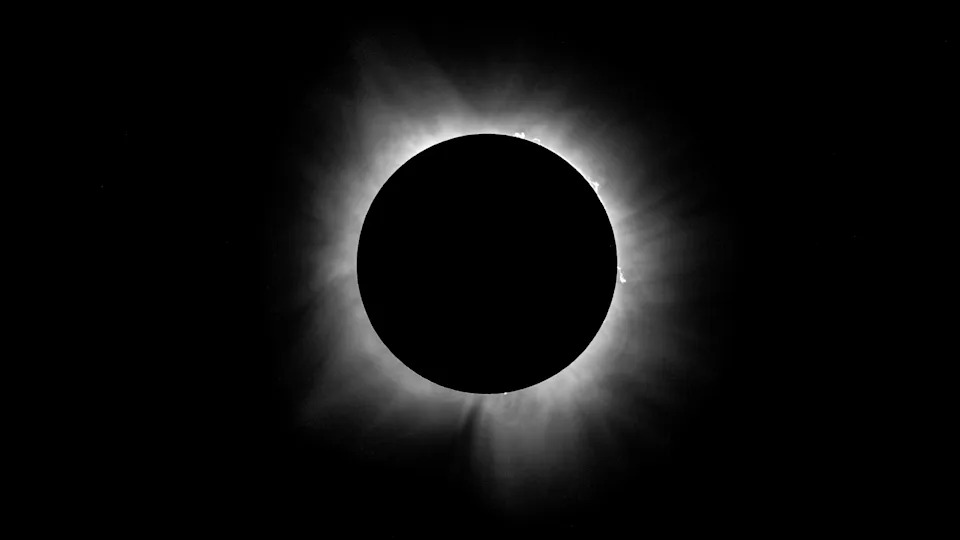
The sun's corona shines from behind the lunar disk at totality during the 2024 eclipse. | Credit: Photo by Brandon Bell/Getty Images
DEB contributions extended beyond outreach. Several volunteers coauthored a paper accepted to Astrophysical Journal Letters that tracked the structure and evolving dynamics of the corona from 11 DEB sites over 49 minutes. When not observing eclipses, DEB telescopes are used to track asteroids, monitor solar oscillations and flares, and measure exoplanet transits, demonstrating the network's versatility.
Why a distributed network matters: a geographically spread set of identical instruments provides redundancy and continuous coverage, increasing the chance of capturing transient events and enabling scientists to compare observations across many vantage points. "It's the network of telescopes that is the strength of the project," Baer said. "It's not just one scope."
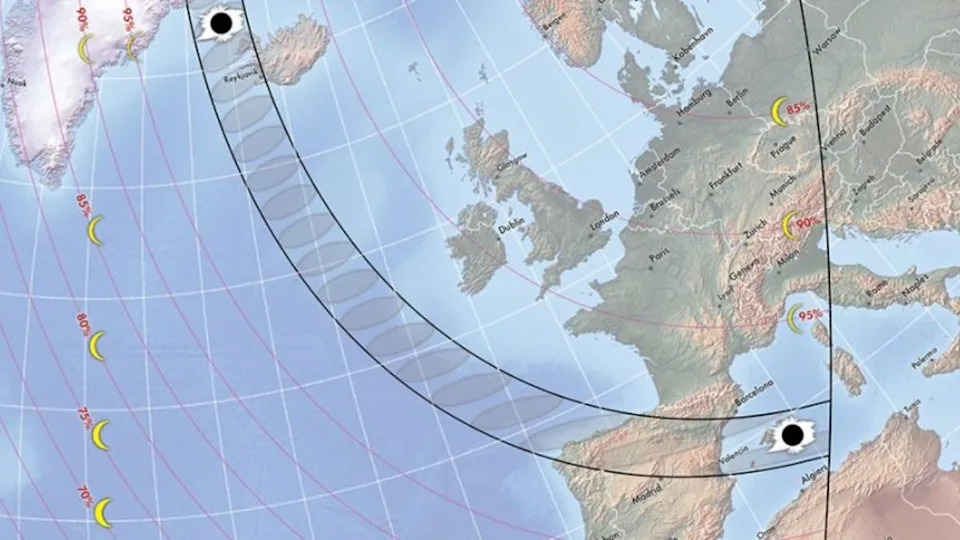
A map of the 2026 total solar eclipse. | Credit: Michael Zeiler/EclipseAtlas.com
A spectacular total solar eclipse will occur on Aug. 12, with totality sweeping across a roughly 182-mile-wide (293-kilometer) path that crosses parts of Greenland, Iceland and Spain. For this event, DEB will deploy two teams inside the path of totality: one in León (northwestern Spain) and a second near the Castilian village of Valoria la Buena, about 93 miles (150 kilometers) southeast of León. The DEB volunteers will upload observational data in real time to a central server and feed multiple livestreams, including NASA coverage.
Citizen scientist Charles Greenwald has been instrumental in preparing his team for the Spanish expedition, traveling repeatedly to train volunteers and test software updates that control telescope operations. The DEB campaign in Spain also serves as a rehearsal for a much larger planned effort in 2027.
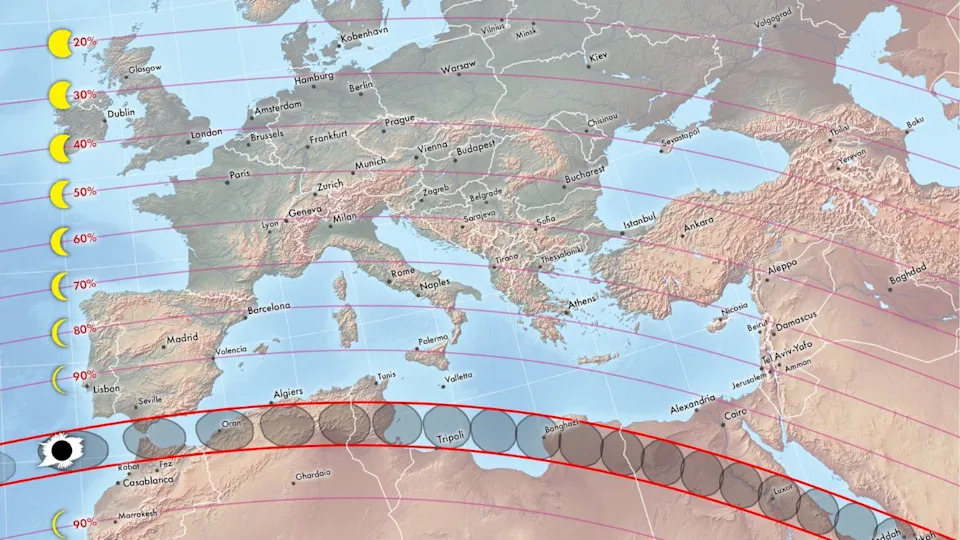
A map of the 2027 total solar eclipse. | Credit: Michael Zeiler/EclipseAtlas.com
Organizers are already planning for the Aug. 2, 2027 eclipse — sometimes called "the eclipse of the century" — which will sweep across Northern Africa and could produce up to 6 minutes and 23 seconds of totality. DEB leadership envisions a more ambitious 2027 campaign with as many as 27 teams composed of U.S. groups and local observers. The goal is to build double redundancy across the eclipse path to ensure uninterrupted data if a site is clouded out or loses connectivity. Achieving this will require logistics, funding, and recruiting volunteers both from the U.S. and North Africa; DEB plans to begin recruitment for 2027 in the fall.
How you can follow or join: during the Aug. 12 event, Space.com will host live reporting from Skywatching Editor Daisy Dobrijevic, observing from the deck of an HX Expeditions cruise ship off eastern Greenland, while the article's author reports from Valoria la Buena in Spain. To learn about volunteering or to sign up for future DEB campaigns, check the Initiative's website for announcements and recruitment details.
If you would like to share eclipse photos with Space.com's readers, send images, comments, and your name and location to [email protected].
Help us improve.





















