
Colombian ex-combatants who disarmed two months ago fear their agreement with outgoing President Gustavo Petro will be overturned by incoming hard-right president Abelardo de la Espriella. Ninety-nine former fighters are sheltering in a special Putumayo zone and seeking to rebuild civilian lives, while De la Espriella has vowed to abandon negotiations, demand surrenders and dismantle parts of the 2016 peace framework. Negotiators warn that removing protections could push demobilised fighters back into violence and worsen Colombia's security crisis.
Colombian Ex-Guerrillas Fear For Safety As Hard-Right President Prepares To Take Office
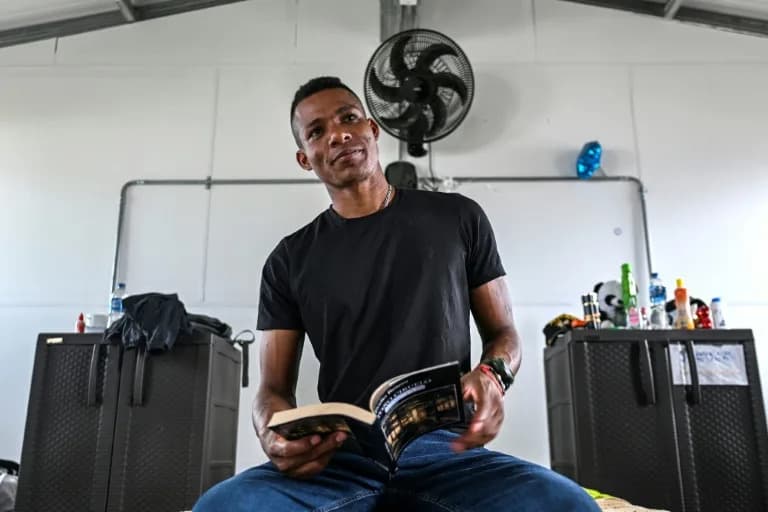
Darwin says he is a 'little nervous' about Colombia's incoming government (Luis ACOSTA)
Derlis Aizama and Daniel Paredes, a young couple who recently laid down their arms to begin civilian lives and start a family, say their fragile progress could be undone as Colombia prepares to welcome a hard-right president. The two are among 99 former fighters who reached an agreement with outgoing President Gustavo Petro just two months ago to disarm and reintegrate.
Uncertainty After A Fragile Accord
With president-elect Abelardo de la Espriella—widely described as US-backed—set to assume office on Friday, the future of that pact is now in doubt. De la Espriella has pledged to abandon Petro's policy of negotiating with armed groups and instead pursue a security-first approach, calling for surrenders and tougher enforcement.
Lives On Hold In Putumayo
Speaking from a special reintegration zone in the southern Putumayo region, 24-year-old Aizama said she feels exposed. "We are here because we want to rebuild our lives, to create a home," she told reporters. The former fighters live in a legal and institutional limbo as they take steps such as finishing school, building small businesses and adapting to civilian routines.
Aizama and Paredes met while fighting with the National Coordinating Committee of the Bolivarian Army, a group active in coca-producing corridors near the Ecuador border. Others in the zone, including a former combatant who gave his name as Darwin, say De la Espriella has demanded surrenders by Friday or warned combatants they will face "death or prison." Many former fighters insist they do not want to return to armed struggle.
Political Stakes And Legal Protections
Petro—Colombia's first leftist president—had promoted a "total peace" strategy to negotiate with a range of armed groups, building on the 2016 peace deal with the FARC. De la Espriella has proposed dismantling the special court created under the 2016 agreement, which tries the gravest crimes of the conflict, and abolishing the government office that negotiates with armed groups.
"International humanitarian law treats these ex-combatants as 'subjects in a state of defenselessness,'" said Armando Novoa, the government negotiator who brokered the June accord. "It would be institutional suicide to ignore this reality and throw 99 people back into the arms of violence and weapons."
Small initiatives in the zone, such as a makeshift gym built by former fighter Mauricio Zambrano and literacy efforts by others, underscore the human side of demobilization and the stakes of potential policy reversal. As the handover approaches, former combatants, negotiators and rights advocates are calling for clarity and durable safeguards to prevent renewed bloodshed.
What’s Next: The incoming administration's actions in its opening days will determine whether the June agreement's protections hold or whether disarmament efforts face renewed threats amid Colombia's escalating violence.
Help us improve.





















