Researchers investigating the deaths of more than 160 black skimmer chicks in Texas during summers 2022 and 2023 discovered two previously undocumented Eimeria parasites after observing tiny white kidney lesions and performing genetic tests on kidney, cloaca and small-intestine tissue. The team has not determined that the parasites alone caused the die-offs and notes other pressures — including denser nesting on dredged artificial islands and elevated heavy-metal exposure — that could compound risk. Ongoing monitoring, banding data from 2018 and further sampling aim to clarify transmission, adult carrier status and conservation implications.
Scientists Identify Two Previously Undocumented Eimeria Parasites After Mass Black Skimmer Chick Deaths in Texas
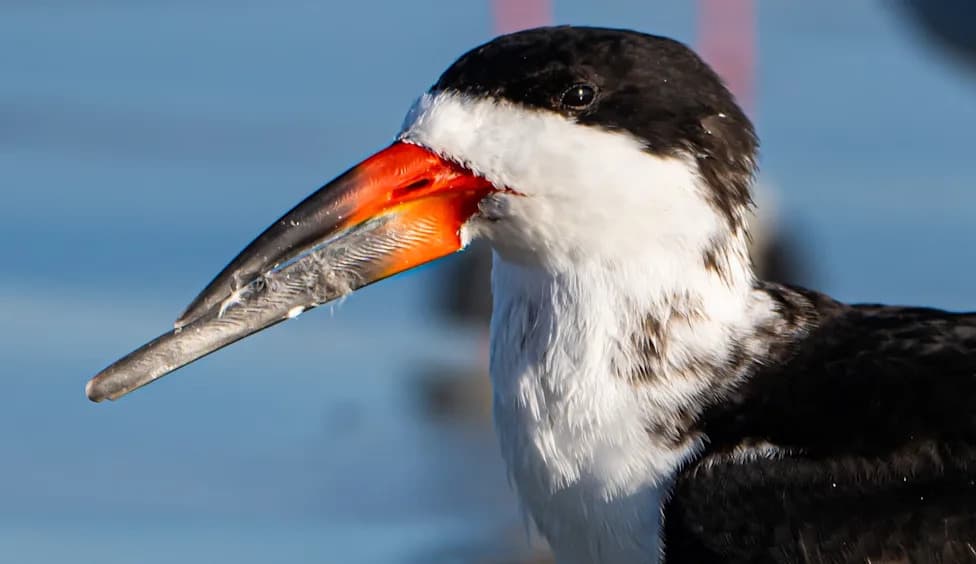
Photo Credit: iStock
More than 160 black skimmer chicks died at Texas nesting colonies during the summers of 2022 and 2023. A multidisciplinary research team investigating the repeated losses discovered two previously undocumented forms of an Eimeria parasite in the birds, offering a new lead into the mystery of the die-offs.
What Researchers Found
Researchers from Texas A&M University, the Gulf Coast Bird Observatory and other collaborators published their findings in PLOS One and were summarized in Phys.org. The team noticed tiny white lesions on the kidneys of several chicks and performed genetic testing on tissue from the kidneys, cloaca and small intestine. That testing revealed two Eimeria parasite types not previously reported in black skimmers and possibly not yet formally described by science.
“To the best of our knowledge, this is the first report of Eimeria infection in black skimmers,” said Dr. Laura Bryan, a clinical associate professor in the Texas A&M College of Veterinary Medicine and Biomedical Sciences.
Investigators stress that the parasite has not been proven to be the sole cause of the deaths. As Dr. Jacquelyn Grace of Texas A&M’s Department of Ecology and Conservation Biology noted, "It's really hard to tell what caused the death because these are wild birds with a lot happening at once." Multiple environmental and biological stressors could be interacting.
Why This Matters
The discovery raises concern for a species already in decline. If substantial numbers of chicks die before fledging, colonies may struggle to replenish, with potential knock-on effects for coastal ecosystems that support recreation, tourism and local fisheries.
Researchers are also examining habitat and contamination factors. Black skimmers increasingly nest on artificial islands made from dredged sediment near shipping channels rather than on a broader set of natural sites; these denser aggregations may facilitate disease transmission. The team has also observed elevated heavy-metal levels in some birds, which could weaken immune responses and increase vulnerability to infections.
Ongoing Work and Next Steps
Monitoring and banding efforts that began in 2018 continue. Those efforts revealed that some chicks that looked well fed still failed to fledge, suggesting hidden health issues. Parasitologist Dr. Guilherme Verocai noted that younger birds may be particularly susceptible because their immune systems are still developing.
The research team is seeking additional samples and funding to determine how the parasite spreads, whether adult black skimmers can carry it asymptomatically, and what role environmental stressors may play. As Dr. Verocai said, "Parasitism is a successful lifestyle in nature. If we can figure out whether something in the environment is contributing to the disease, that might be easier to modify than trying to treat a whole bunch of birds."
Further targeted studies are needed to clarify the parasite's role in the mortality events and to inform conservation and management strategies for the species.
Help us improve.