Researchers found subtle epigenetic differences linked to sponge‑foraging dolphins in Shark Bay. Skin biopsies from 96 dolphins (23 spongers, 73 non‑spongers) were analyzed at nearly 30,000 methylation sites; a machine‑learning model identified a distributed signal across 21 sites rather than a single marker. The study shows a possible biological fingerprint of a culturally transmitted behavior but cannot yet determine whether methylation causes, results from, or co‑varies with sponging. Results were published in Philosophical Transactions B.
Dolphins' Sponge Foraging Leaves a Subtle Epigenetic Signature, Study Finds

A Shark Bay dolphin using a sponge as a foraging tool. (Stephanie King/University of Bristol)
A small group of Indo‑Pacific bottlenose dolphins in Shark Bay, Australia, that wear marine sponges on their rostrums while foraging show subtle, distributed differences in DNA methylation compared with nearby non‑sponging dolphins. Researchers report that this culturally transmitted behavior — learned from mothers and mostly practiced by females — may leave a detectable biological fingerprint, although causality remains unresolved.
What Is Sponging?
Sponging is a foraging technique in which a dolphin places a marine sponge over its snout before probing the seabed for fish hidden beneath a thin layer of sand. The sponge protects the rostrum from abrasive sediment, increases the sweep area, and enables feeding in slightly deeper patches. The behavior is energetically costly, interferes with echolocation, and is transmitted vertically from mothers to calves.

YouTube Thumbnail
The New Study
Led by evolutionary biologist Michael Krützen (University of Zurich), the team analyzed skin biopsies collected over two decades from 96 Shark Bay dolphins (23 confirmed spongers and 73 neighboring non‑spongers). They surveyed nearly 30,000 genomic sites where DNA methylation — a common epigenetic modification — can occur, then trained a machine‑learning classifier to test whether methylation profiles could distinguish spongers from non‑spongers.
Key Findings
No single methylation site remained statistically significant after correcting for the large number of comparisons. Instead, the predictive signal was distributed: the final model relied on methylation patterns at 21 DNA sites rather than one dominant marker. The classifier performed above chance but only moderately well, suggesting many small epigenetic differences rather than a single strong effect.
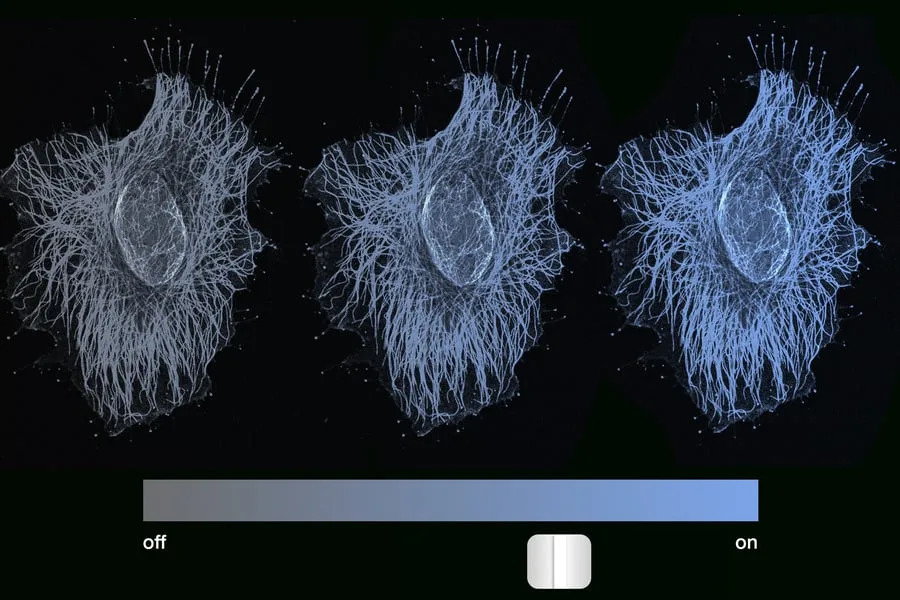
Scientists have traditionally thought thatepigenetic changesswitch genes either "on" or "off", but research shows those changes can also 'dial down' gene expression in a graded way. (Christine Daniloff, MIT; NIH)
Interpretation and Limitations
The results raise a "chicken‑and‑egg" question about cause and effect. Sponging changes diet, social interactions, energy budgets, and environmental exposure — all factors that can reshape methylation over an individual's lifetime. Conversely, experimental work in other organisms shows some epigenetic changes can be inherited. The study cannot yet determine whether epigenetic differences predispose individuals to adopt sponging, whether learning and lifestyle alter methylation, or whether both are driven by other correlated factors.
Methodological and ethical constraints also limit interpretation: only skin tissue can be sampled safely from wild dolphins, and methylation patterns in skin may not reflect changes in neural tissue or organs more directly involved in behavior.

Subscribe to ScienceAlert's free fact-checked newsletter
Why This Matters
The work highlights an emerging intersection between culture and biology. While evolutionary processes can shape genes over many generations (for example, the spread of lactose tolerance in humans), epigenetic mechanisms could provide a faster, reversible way for lifestyles and environments to leave biological marks. This study offers a compelling example that culturally transmitted behaviors may be associated with subtle, distributed epigenetic differences in a wild mammal.
Publication and Credits
The findings were published in Philosophical Transactions B (The Royal Society Publishing). The study was led by Michael Krützen and colleagues. The original reporting of this research was fact‑checked by Rachel Garner and edited by Clare Watson.
Help us improve.