
The author argues that reversing positions during a fast-moving pandemic is an expected and necessary part of science, not a sign of failure. Peer skepticism and ongoing revision strengthen findings, as illustrated by the long debate over HIV and the decades-long development of climate science. Pandemic response differs because officials must act with patchy, rapidly changing data — for example, Covid-19 case definitions were updated repeatedly in the first ten weeks. Punishing experts for updating conclusions risks reducing transparency and making future responses worse.
Fauci’s Diaries: Why Changing Your Mind Is How Science Protects Us
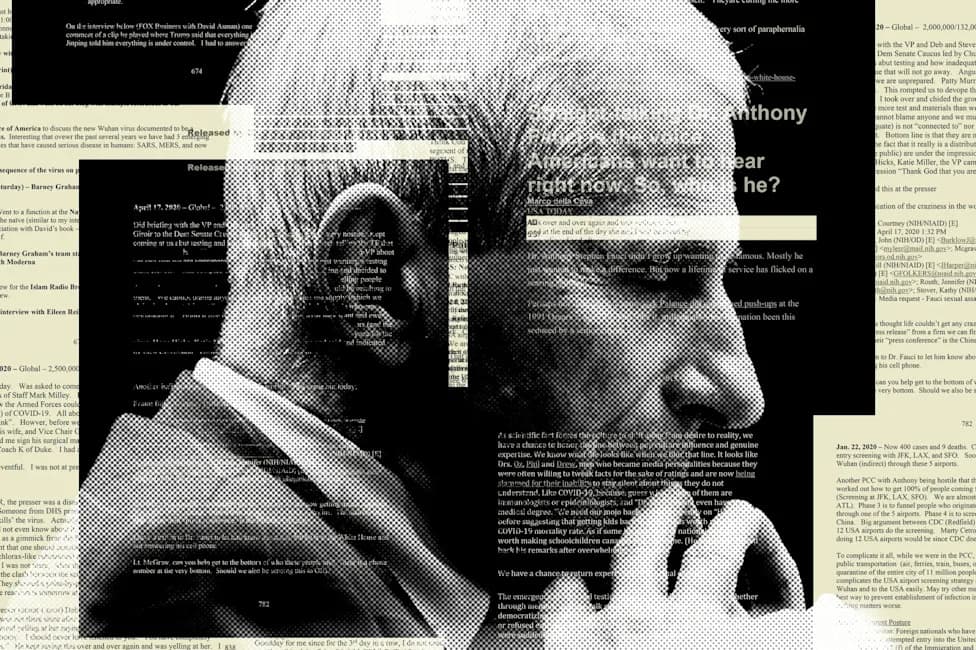
Dr. Anthony Fauci
I was not surprised to see Republican senators press Dr. Anthony Fauci last week; I was disappointed by the tone and objective of the proceedings. The hearing focused on cataloguing errors and assigning blame rather than understanding how science actually works during a fast-moving crisis.
Skepticism and revision are central to scientific progress. When researchers report new findings, peers immediately test and challenge those conclusions. That push-and-pull strengthens results that survive scrutiny and discards those that do not. During the Covid-19 pandemic, experts at the Centers for Disease Control and Prevention experienced this normal professional skepticism — yet political commentary too often portrayed it as evidence of failure.
Science Is Messy — And That’s Okay
Science rarely unfolds in a straight, linear path. Discoveries that later become accepted facts can be debated for months or years; equally, once-accepted ideas can be overturned by new evidence. Consider the identification of HIV: Dr. Luc Montagnier and colleagues at the Pasteur Institute reported isolating the virus in 1983; their claim was disputed and then confirmed by Dr. Robert Gallo and others in 1984. That disagreement was part of the process, not proof of incompetence.
Climate science offers another contrast. Climate researchers faced public scrutiny, but they had decades of data and theory to draw on before broad public debate began. Pandemic responders, by contrast, are asked to advise within days or weeks of a novel pathogen’s emergence, with very limited data.
Why Early Pandemic Guidance Changes
When a new infectious disease appears, early surveillance is incomplete: many cases are missed, tests may not yet exist, and initial reports are error-prone. As systems shift into emergency response, data collection becomes more systematic and early assumptions can be overturned. For Covid-19, the case definition was revised repeatedly during the first ten weeks — an expected response to rapidly evolving information.
Harsh hindsight and blame discourage the kind of honest, public learning we need. One of the greatest public goods in a pandemic is having experts who will admit uncertainties and update guidance as evidence accumulates.
Monday-morning quarterbacking is easy. Advising governments while the scientific ground is shifting is hard. If we punish public-health officials for changing positions in response to new data, we risk making future experts less forthcoming — and that will make future crises worse.
Rather than treating reversals as failures, policymakers and the public should create systems that expect—and accommodate—learning. That means protecting experts who share evolving evidence, encouraging robust peer review, and designing communication strategies that explain uncertainty to the public.
In short: Changing your mind in the face of new, better evidence is not a moral failing; it is how science protects lives. We should reward transparency and learning, not assign blame for it.
Originally published on MS NOW.
Help us improve.





















