
This Week In Space Episode 221 has Tariq Malik and guest Rick Jenet reviewing major recent developments in spaceflight. Highlights include SpaceX's Flight 13 — whose Starship surprisingly remained afloat after reentry — questions about current heat-shield approaches, NASA's Roman Space Telescope fuelled for its Aug. 30 launch, and a troubled rescue attempt for the Swift observatory. The hosts also discuss Boeing's Starliner delays and Skyroot's Vikram-1, India's first private orbital launcher.
This Week In Space — Ep. 221: Did Starship Really Float? Flight 13, Roman Telescope, Swift Rescue and More
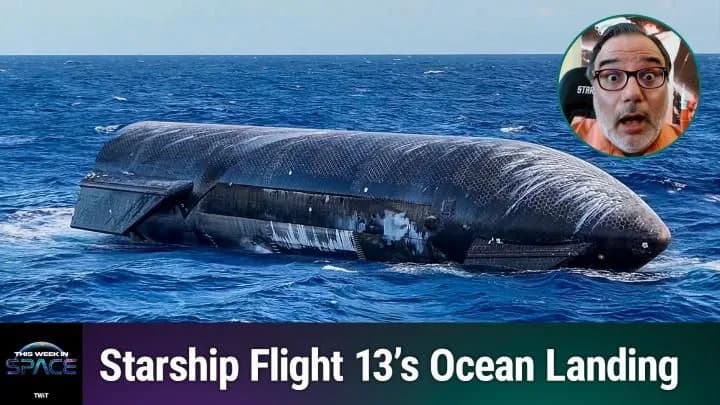
Credit: TWiT
This Week In Space Episode 221 brings host Tariq Malik and guest host Rick Jenet (National Space Society) together to unpack a week of surprising developments across commercial and scientific spaceflight.
SpaceX Starship Flight 13: An Unexpected Float
SpaceX's Starship Flight 13 successfully deployed a batch of next-generation Starlink V3 satellites and then produced an unexpected outcome: the vehicle survived reentry well enough to remain afloat in the Indian Ocean for days. Recovery teams have continued to gather imagery while the ship remains on the water. Commentators note the unusually soft splashdown, but some engineers caution that the current heat-shield approach may be a "dead end" for fast, routine reuse despite this promising recovery footage.
Related SpaceX Developments
The episode also covers reports that SpaceX secured about $1.6 billion in launch orders for military satellite networks. Malik and Jenet discuss what Flight 13's outcome could mean for operational procedures, military customers, and the future pace of reusable Starship flights.
(Image credit: Celestron)
NASA's Roman Space Telescope Approaches Launch
NASA's Nancy Grace Roman Space Telescope is now in final preparations and has been fuelled ahead of its scheduled launch on Aug. 30. The hosts summarize the mission's science goals and what astronomers expect the observatory to deliver once on station.
Swift Observatory Rescue Attempt Hits Snags
An in-progress emergency effort to restore the aging Swift Space Observatory using a planned servicing spacecraft has run into technical trouble: the servicing vehicle itself developed anomalies during the recovery attempt, complicating an already time-sensitive operation and narrowing the recovery window.
Commercial Crew, Launchers, and New Players
Malik and Jenet review ongoing delays for Boeing's CST-100 Starliner, weighing whether the program could still achieve a flight this year despite setbacks. They also highlight a milestone for India's private space sector: Skyroot Aerospace's Vikram-1 completed India's first successful private orbital launch — a development many call the "dawn of a new space era."
Short Items of Note
- Debate over where Artemis IV astronauts should land: near the lunar south pole or closer to the equator for operational flexibility.
- A controversial report that astronomers may have detected a candidate exomoon — though alternative, stranger explanations remain possible.
- An intentional impact of a decommissioned SpaceX rocket on the Moon is scheduled for next week, and scientists are uncertain about the scientific outcomes.
- Upcoming skywatching events: an "almost blood moon" lunar eclipse on Aug. 27 (the most notable until the end of 2028) and the Perseid meteor shower in 2026 — with practical tips on when and where to look.
Throughout the episode, the hosts balance technical detail with broader implications for commercial access to orbit and scientific discovery. Listeners are reminded that This Week In Space provides weekly deep dives into the rapidly changing space landscape, and are encouraged to subscribe on their preferred podcast platforms.
Help us improve.





















