Tennessee's new law requires data centers drawing at least 50 megawatts to pay for necessary grid upgrades to avoid shifting costs onto residential ratepayers. However, an exemption allows on‑site generation — including gas turbines — to operate without state or local review, raising concerns about pollution, noise, and limited oversight. Several stronger bills addressing permitting and reporting failed this year, and the EPA has not set federal standards for data centers.
Tennessee Orders Data Centers To Fund Grid Upgrades — Gas‑Turbine Exemption Draws Criticism

Photo Credit: iStock
Tennessee has adopted a new law requiring large data centers to shoulder the cost of necessary electric grid upgrades — a move aimed at preventing households from subsidizing the surging power needs of massive computing facilities. Critics, however, warn that an exception for on‑site generation, including gas‑fired turbines, could bring increased pollution, continuous noise, and limited oversight to nearby communities, according to reporting by Raw Story.
What The Law Does
The statute mandates that data centers with peak power demands of at least 50 megawatts pay for the grid upgrades required to serve them. Sen. Brent Taylor (R‑Shelby County), who sponsored the measure in the Senate, said the goal is to prevent ordinary customers from seeing higher electric bills to cover infrastructure built primarily for commercial tech users.
The Gas‑Turbine Loophole
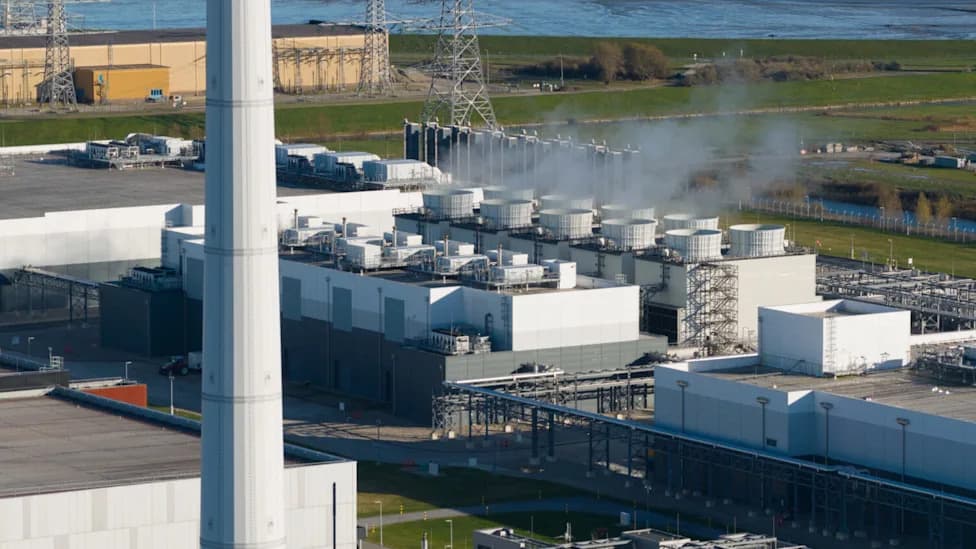
Despite the new fee allocation, the law contains an explicit exception for on‑site power generation: data centers may install and operate equipment such as gas‑fired turbines without state or local review. Environmental and community groups warn that allowing unreviewed on‑site generation could result in elevated local air pollution, prolonged noise exposure, and minimal community oversight.
Local And Legislative Responses
Lawmakers considered several tougher proposals this year — including bills that would have imposed registration, permitting, and mandatory reporting of water, electricity, and fuel use — but those measures did not pass. Raw Story noted six separate proposals that would have added stricter guardrails failed to move through the legislature.
National Context And Public Opinion
Gov. Bill Lee joined 22 other Republican governors in signing the White House's voluntary "Ratepayer Protection Pledge," which states that companies rather than residential customers should cover data‑center infrastructure costs. The pledge is nonbinding. At a July infrastructure summit, Sarah Hunt, president and CEO of the Rainey Center, said just 9% of voters polled had heard of the pledge but that 61% of respondents, once informed, wanted Congress to make it legally binding.
"America's continued economic and technological leadership depends on reliable, large-scale data center infrastructure built here at home," the pledge says.
Regulatory Gaps And Next Steps
The Environmental Protection Agency has not implemented nationwide environmental standards specifically for data centers, leaving oversight largely to states and local governments. Some Tennessee localities have paused approvals for new data center projects while they develop local regulations to manage the industry's rapid growth. Supporters argue the law balances economic development with consumer protection; opponents say the turbine exemption undermines community health and environmental safeguards.
Source: Raw Story reporting.
Help us improve.