Scientists at UC Davis and UC Riverside discovered a genetic marker, SDMYB, that predicts whether an avocado seedling will follow the A- or B-type flowering schedule years before it blooms. The finding, published in PNAS, came from combining detailed, hour-by-hour flower monitoring with genetic analysis. Early DNA-based identification lets breeders sort seedlings immediately, improving orchard efficiency and accelerating development of commercially useful varieties like higher-quality B-types such as Luna. Gene editing to change flower type remains a longer-term possibility.
Genetic Shortcut for Avocado Breeders: SDMYB Predicts A or B Flowering Type Years Before Bloom
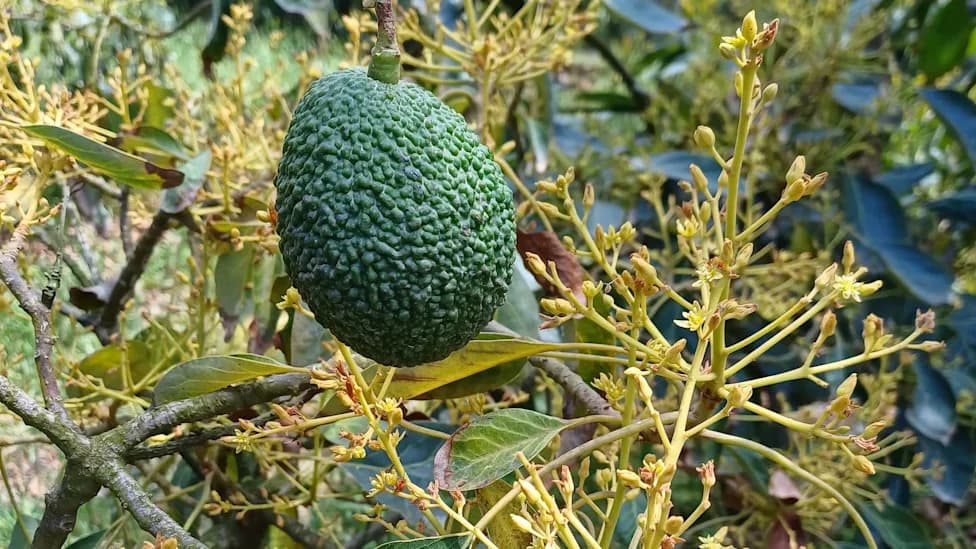
Photo Credit: iStock
Researchers at the University of California, Davis, with experimental support from UC Riverside, have identified a gene that can reveal whether a young avocado tree will follow the A- or B-type flowering schedule years before it produces its first flowers. The gene, named SDMYB, is linked to the pollination behavior of avocado blossoms and was reported in the Proceedings of the National Academy of Sciences.
What the Study Found
Members of the UC Riverside team monitored hundreds of genetically diverse avocado trees and recorded thousands of flower-opening and -closing events—often tracking timing hour by hour—because ambient temperature can shift those cycles. Combining that detailed phenology with genetic analysis allowed the researchers to associate the A/B flowering pattern with the SDMYB marker.
Why It Matters
Until now, breeders typically had to wait about five to ten years for a seedling to mature before they could determine its flowering type. With a DNA test for SDMYB, breeders can identify floral type almost immediately and sort seedlings much earlier, saving years and valuable orchard space. Early selection can speed development of commercially useful varieties and make orchards more efficient.
Practical Benefits and Limits
Many California growers dedicate roughly 10% of an orchard to B-type pollinizer trees—varieties such as Luna—because their complementary flowering schedules help A-type trees like Hass set more fruit. While B-type trees sometimes produce fruit with lower market value, using the SDMYB marker to develop higher-quality B-types could improve yields and reduce production inefficiencies that raise costs.
"This gives us a shortcut we've never had before," said Eric Focht, staff research associate in UC Riverside's Department of Botany and Plant Sciences and a co-author of the study. Jeffrey Groh, the paper's first author, added: "Our study provides a genetic explanation for a century-old mystery of avocado pollination."
Researchers emphasized that breeders can start using the SDMYB marker now for early selection, while gene editing to change a tree's flower type remains a longer-term prospect. Beyond production, the work has consumer relevance: avocados are central to many plant-forward diets and, according to Harvard's Nutrition Source, contribute fiber and vitamins to healthy eating patterns.
Source: Proceedings of the National Academy of Sciences; research led by UC Davis with experimental contributions from UC Riverside.
Help us improve.