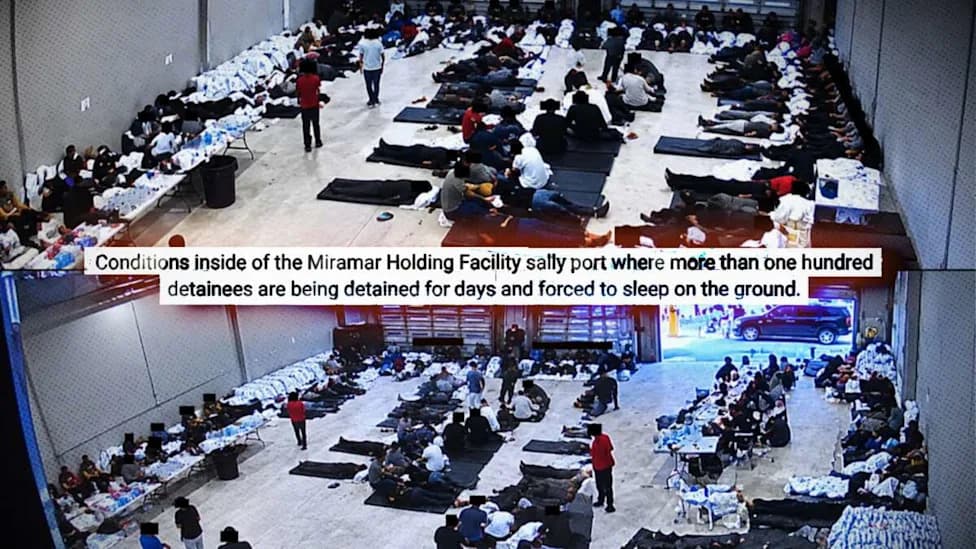
The Senate Judiciary Committee released a report alleging severe mistreatment and inadequate medical care at the South Texas Family Residential Center in Dilley, Texas, based on interviews with about 20 family units and 40 women. The document accuses staff of a "top-down culture of cruelty," including disrupting children's sleep, taunting minors, and providing contaminated or inedible food. It highlights urgent medical neglect, insufficient education for children, restricted access to counsel, and claims that DHS limited congressional oversight. Senator Durbin is urging Judiciary hearings and warned the conditions could lead to more deaths in custody.
Senate Report Alleges 'Top-Down Culture Of Cruelty' At Dilley ICE Center, Urges Judiciary Hearings

A new Senate report from Democratic Whip Sen. Dick Durbin (D-IL) details alarming allegations about conditions at the South Texas Family Residential Center in Dilley, Texas. The document summarizes interviews Judiciary Committee staff conducted with roughly 20 family units and about 40 women held in the facility's adult unit as part of an ongoing probe into medical and mental health care in immigration detention.
Key Allegations
Durbin said the accounts point to what he called a "top-down culture of cruelty" among Dilley staff. Families and detainees described guards deliberately disrupting children's sleep, entering rooms without knocking, taunting minors (for example, by eating candy or pizza in front of children who were offered food they considered inedible), and generally demeaning behavior toward residents.
"Children and their parents described a top-down culture of cruelty among Dilley staff," the report states.
Medical Care, Food, And Education
The report identifies substandard medical care as the most urgent concern. Detainees described a range of untreated or worsening conditions, reports of being denied treatment for extreme pain, and even refusals to provide blankets despite "extremely cold temperatures" in housing units. Investigators also documented multiple instances in which chronic medical issues were not addressed.
Families reported food-safety problems, including finding worms and a fingernail in meals, and several children who refused facility food entirely. Judiciary staff also found "no evidence that the facility was meeting … basic education standards," quoting a 16-year-old who said the center's instruction consisted of "drawing in coloring books," which he said was inappropriate for his age.
Access, Oversight, And Potential Legal Violations
Durbin's report said detainees faced barriers to contacting family and legal counsel, and many described themselves as long-time U.S. residents with pending immigration cases who did not understand why they were detained. The report also alleges that Department of Homeland Security officials imposed an "arbitrary two-hour time limit" on the committee's visit, which Durbin called an attempt to curtail congressional oversight. Other lawmakers have similarly accused DHS and ICE of obstructing oversight, a practice that previously prompted a successful federal lawsuit.
The staff report suggests some observed practices may violate the Flores Settlement Agreement, the court ruling that governs standards for the treatment of migrant children in detention. Durbin urged the Senate Judiciary Committee to hold hearings on the findings.
Responses And Context
CoreCivic, the private prison company that operates the Dilley center, did not immediately respond to requests for comment. Immigration and Customs Enforcement and the Department of Homeland Security also did not immediately reply to inquiries; the White House referred questions to ICE when contacted.
Durbin partly attributes the conditions to federal policies, saying the Trump Administration's immigration directives and enforcement goals have driven more aggressive detention practices. The report warns that inadequate medical care in detention could be fatal and cites mortality data to underscore the risk: "Thirty-two people died in ICE custody in 2025—the highest number in more than two decades. Twenty-two people have already died in ICE custody thus far in 2026."
What Comes Next
Durbin called for formal Judiciary Committee hearings to examine medical and mental health care, access to counsel, solitary confinement practices, and other conditions in immigration detention. The report's allegations, if substantiated, could prompt further investigations, oversight actions, and potential policy or legal responses.
Help us improve.