
The July 29, 2026 Senate hearing in which Dr. Anthony Fauci invoked the Fifth Amendment more than 100 times highlights how COVID-origin conspiracy theories migrated from online fringes into mainstream politics. Over several years, Republican lawmakers, media figures and activist networks amplified claims linking U.S.-funded research and Fauci to a Wuhan lab leak; those claims were further energized by anti-vaccine and extremist communities. While scientists continue to investigate SARS-CoV-2's origin and the WHO has said spillover remains most likely but a lab incident cannot be ruled out, the hearing shows the political power of conspiratorial narratives when endorsed by institutions.
Fauci Hearing Shows How COVID Conspiracy Theories Became Political Weapons
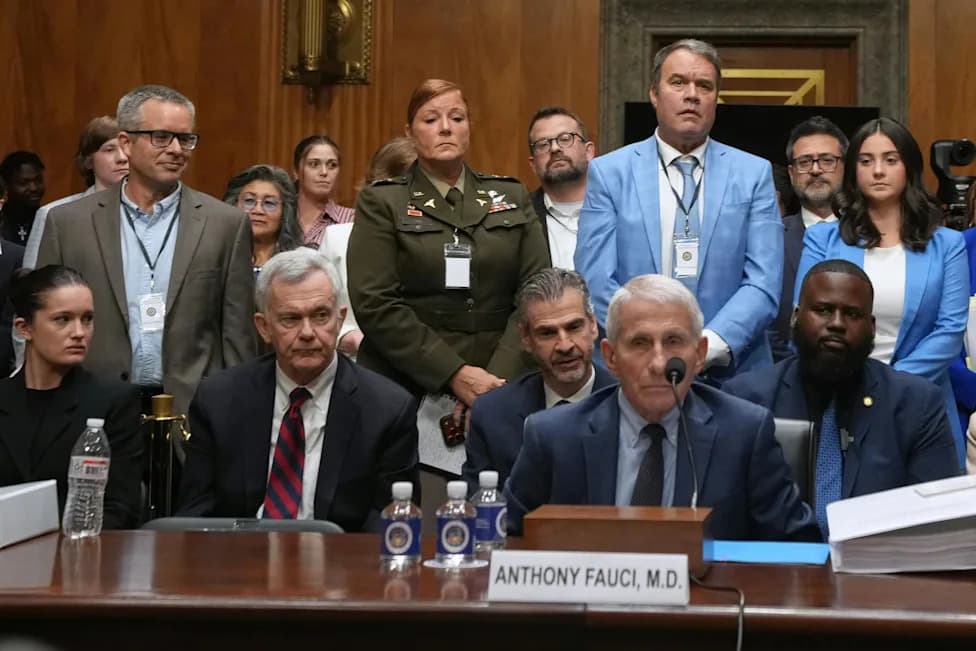
Dr. Anthony Fauci appears before the Senate Homeland Security and Governmental Affairs Committee on July 29, 2026.AP Photo/Allison Robbert
Dr. Anthony Fauci invoked the Fifth Amendment and declined to answer questions more than 100 times during a Senate Homeland Security and Governmental Affairs Committee hearing on July 29, 2026. The Republican-led session, convened to examine Fauci's pandemic-era role and probes into COVID-19's origins, marked the latest stage in a political saga that began in 2020 when fear, uncertainty and frustration with institutions intersected with emerging conspiracy theories.
From Fringe Forums to the Halls of Power
Over the past six years, theories that began in obscure corners of the internet migrated into mainstream Republican politics, the MAGA movement, anti-vaccine communities and even white-nationalist extremist networks. Conspiracy narratives do more than explain events: they identify villains. Because Fauci was a visible public figure throughout the pandemic—advising presidents, briefing the public and appearing frequently on television—he became a natural focal point for those narratives.
Core Allegations and Partisan Inquiry
The central allegation circulating among critics is that U.S.-funded research contributed to a laboratory-related incident in Wuhan and that Fauci participated in a coordinated cover-up with government and scientific partners—misleading Congress and suppressing the lab-leak hypothesis. Senator Rand Paul and other Republican lawmakers have repeatedly urged criminal investigations; in January 2025 President Joe Biden issued Fauci a preemptive pardon for potential federal offenses connected to his government service since 2014. Critics framed the pardon as suspicious, while Fauci has denied wrongdoing and has testified to Congress on multiple occasions.
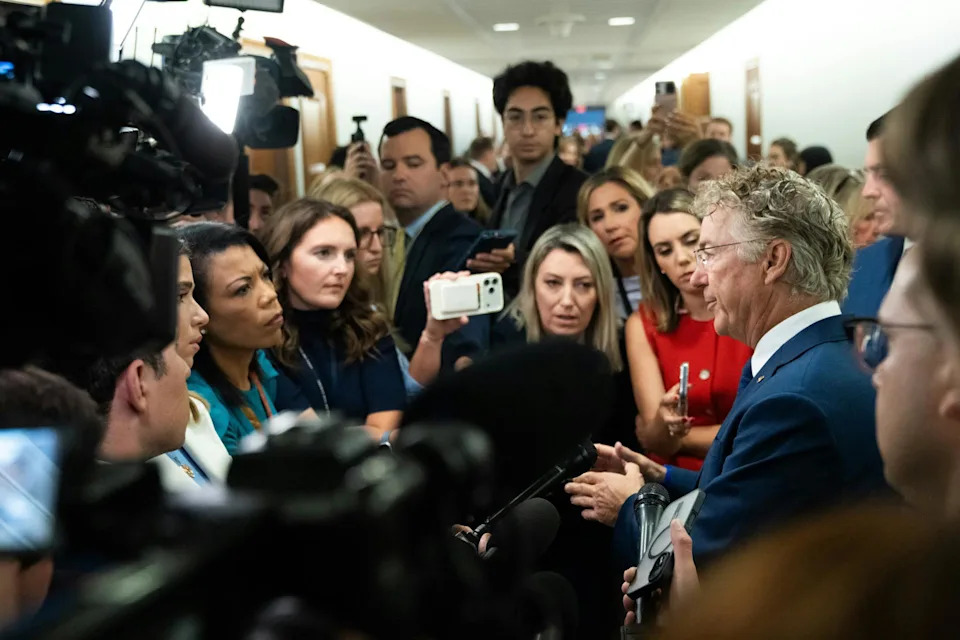
U.S. Sen. Rand Paul talks to reporters following a Senate Homeland Security and Governmental Affairs Committee hearing with Dr. Anthony Fauci at the Capitol on July 29, 2026.AP Photo/Allison Robbert
House Republican investigators spent roughly two years examining COVID-origins questions and ultimately issued findings that endorsed a lab-leak conclusion and accused Fauci of influencing scientific messaging. Those conclusions reflect a partisan committee's judgment and remain disputed by Fauci and Democratic members.
Why Conspiracy Theories Took Hold
COVID-19 created fertile conditions for conspiratorial thinking: profound uncertainty, alarming outcomes, rapidly changing guidance and broad distrust of institutions. People legitimately asked why the virus first appeared in Wuhan, why mask guidance changed, and how vaccines were developed so quickly. Problems arose when inquiry was turned into a predetermined conclusion—that powerful actors manufactured the virus or concealed a lab connection.
"Repetition breeds familiarity, and familiarity can be mistaken for proof."
A 2021 Public Religion Research Institute survey found about 39% of Americans agreed the coronavirus had been intentionally developed in a laboratory; among self-identified QAnon adherents the share was roughly 85%. The survey also linked anti-elite and anti-expert attitudes to greater acceptance of coronavirus conspiracy claims. Such beliefs often cluster: distrust of public-health officials can make vaccine-safety claims more persuasive, distrust of industry can make engineered-pandemic narratives plausible, and belief in shadowy elites primes people for broader conspiracies.
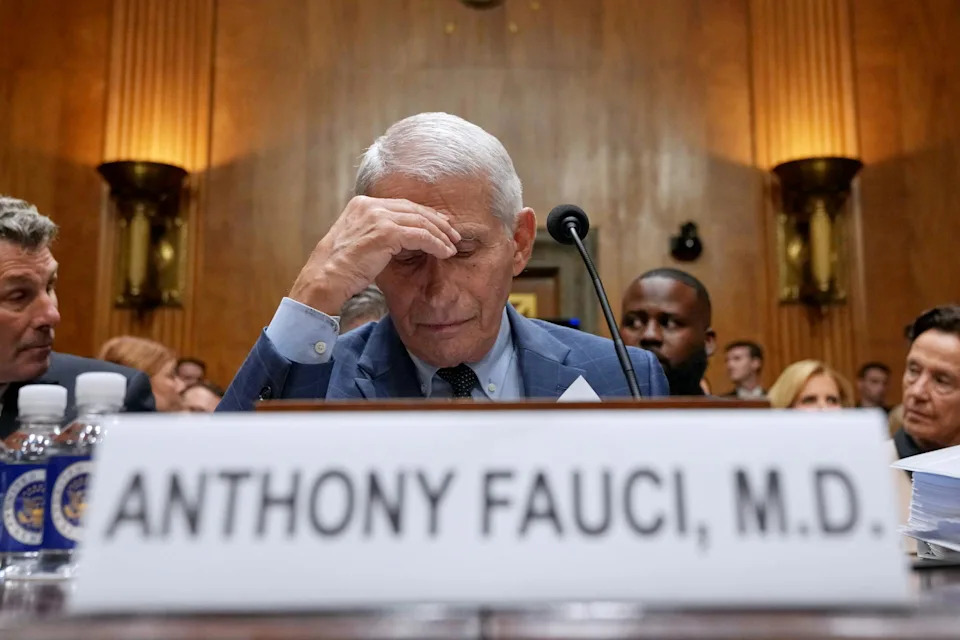
Dr. Anthony Fauci appears before the Senate Homeland Security and Governmental Affairs Committee at the Capitol on July 29, 2026.AP Photo/Allison Robbert
Science, Investigation, and the Limits of Evidence
Asking whether SARS-CoV-2 emerged via zoonotic spillover or through a laboratory-related incident is a legitimate scientific question. The World Health Organization's independent scientific advisory group reported in 2025 that China had not provided much of the information needed to fully evaluate competing hypotheses; the group said available evidence suggests spillover while not being able to definitively rule out a lab-related incident. Importantly, there is a difference between investigating an accidental lab incident and asserting that scientists intentionally engineered and released a pathogen.
The Political Consequences
The most consequential feature of these conspiracy narratives is their ability to migrate across communities. Claims that start in fringe online forums can be amplified by media personalities and political actors, then reintroduced into supporters' social feeds and formal government processes. The Fauci hearing demonstrates the endpoint of that migration: once echoed by elected officials and federal bodies, fringe claims can acquire institutional gravitas—even when the underlying evidence remains unresolved.
Author: Art Jipson, Associate Professor of Sociology and Criminology, University of Dayton.
This article is republished from The Conversation under a Creative Commons license. The author reports no conflicts of interest.
Help us improve.





















