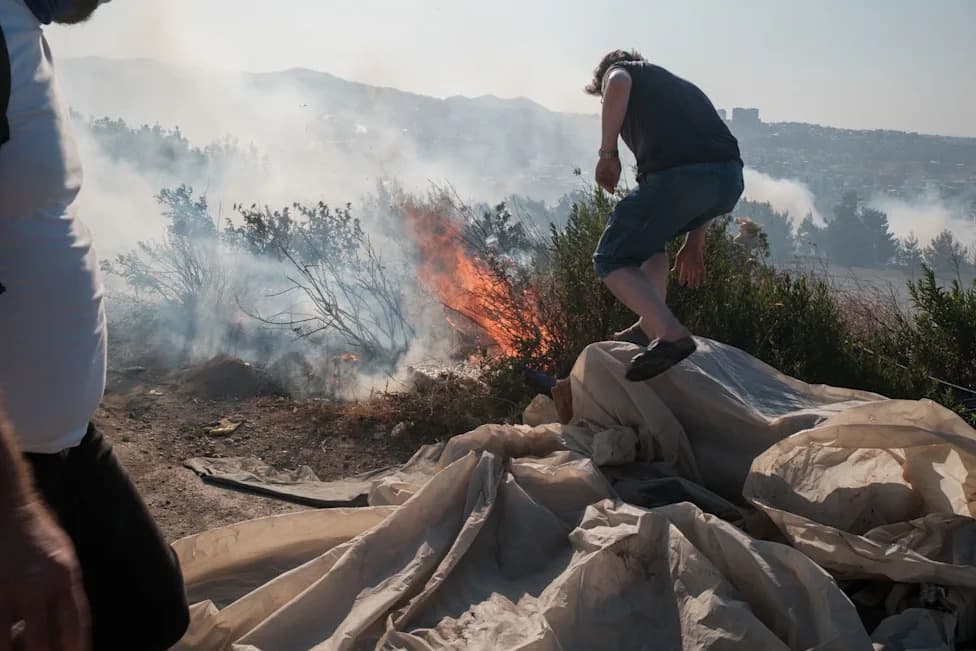
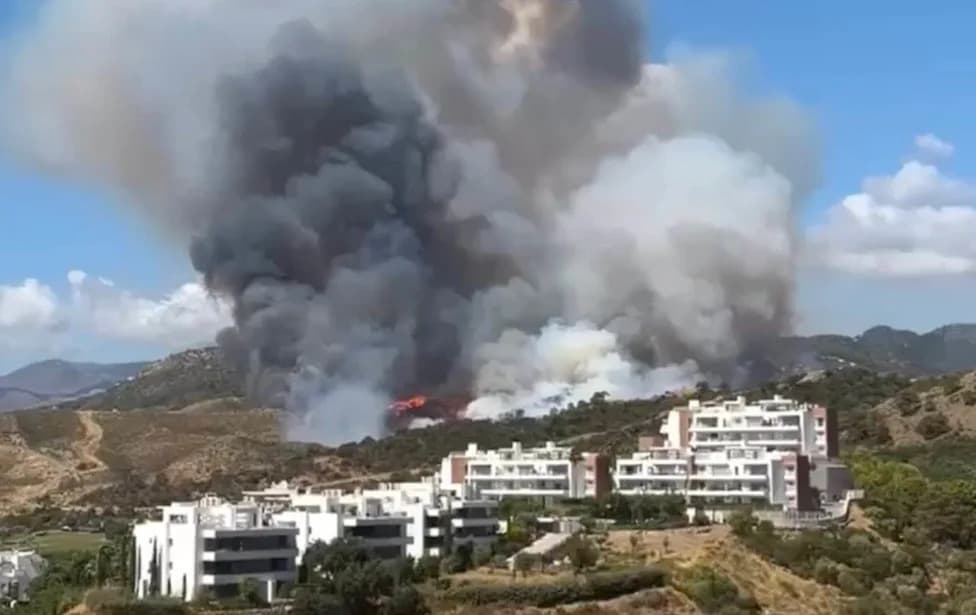
Turkey is fighting multiple wind-driven wildfires along its Aegean and Mediterranean coasts, with major operations underway around Ayvalik, Burhaniye and Gomec. Officials deployed planes, helicopters, nearly 1,000 firefighters and dozens of support vehicles; five people were injured and three villages plus 720 cattle were evacuated. Several hotspots have reignited amid strong coastal winds, and scientists warn climate change and a possible strong El Niño could worsen global wildfire risk this year.
Turkey Battles Wind-Driven Wildfires Along Aegean and Mediterranean Coasts
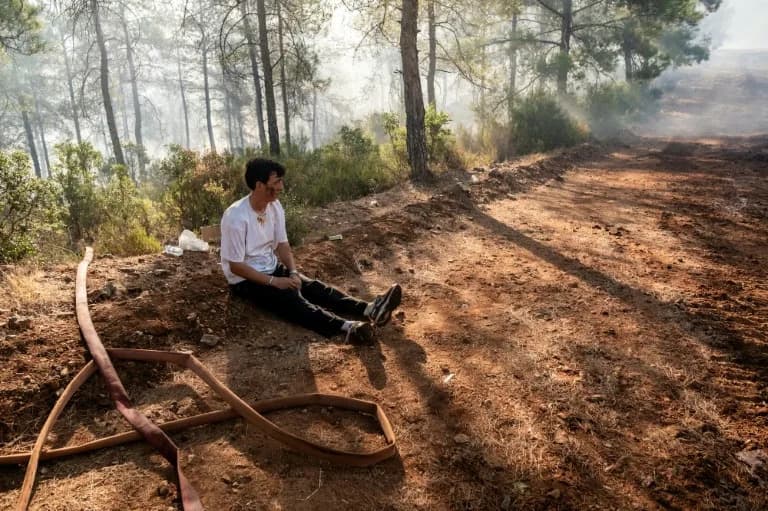
A volunteer rests amid operations to tackle a wildfire in Fethiye, southwest Turkey (Murat Kocabas)
Hundreds of Turkish firefighters and volunteers are battling fast-moving, wind-driven wildfires that have spread near key tourist areas along Turkey's Aegean and Mediterranean coasts.
Response and Impact
Authorities in western Balikesir province said crews remain engaged around the towns of Ayvalik, Burhaniye and Gomec. Five people were reported injured — three firefighters, a forestry official and a civilian — and are being treated in Ayvalik; officials said their injuries are not life-threatening.
To tackle the blazes, officials mobilised six water-bombing planes, seven helicopters, 56 fire engines, three water cannons, 920 firefighters and 60 volunteers. Three villages near Ayvalik, which lies on the Aegean Sea opposite the Greek island of Lesbos, were evacuated along with 720 cattle.
"We are continuing to fight the wildfires day and night," Agriculture Minister Ibrahim Yumakli wrote on X.
Recent Developments
Emergency teams reported responding to 169 fires across Turkey since Wednesday, 163 of which had been brought under control before several hotspots reignited — including near Fethiye on the southwest coast. Private broadcaster NTV reported strong winds of about 50–60 km/h (roughly 30–40 mph) caused a blaze to restart near the village of Bagyuzu, about 30 kilometres from Ayvalik.
State TRT television aired footage showing residents evacuating livestock and a man carrying a goat away from flames near Fethiye. The agriculture ministry has been sending text alerts to residents in southern and western regions deemed at high risk, though authorities have not yet released figures for the total area burned or confirmed any destroyed homes.
Context and Outlook
Turkey experienced early wildfires in 2025 linked to drought, yet had been relatively spared this season after unusually heavy winter rains and snowfall helped replenish groundwater and protect vegetation. Authorities also closed access to forests in vulnerable areas at the start of the summer holiday season to reduce risk.
Scientists warn the global wildfire season could be especially severe this year due to human-driven climate change and the possible emergence of a strong El Niño, according to research from Imperial College London and the World Weather Attribution network.
What Residents Should Know
- Follow local evacuation orders and official alerts.
- Keep clear of smoke and downwind from active fires; use masks if available.
- Report new fires to emergency services immediately.
Help us improve.