
The Senate hearing in which Dr. Anthony Fauci repeatedly invoked the Fifth Amendment highlighted how politically charged the Covid‑19 origins debate has become. Recently released documents — diaries, Slack messages, FOIA disclosures and partial intelligence declassification — show that some scientists privately considered a lab leak plausible even while publicly supporting a natural spillover. Intelligence agencies remain divided, and gaps in data from China plus contested messaging have left the question unresolved.
The Covid Origins Debate: New Documents, Private Doubts, and Unresolved Questions
The Covid Origins Saga Is More Complicated Than Either Side Wants to Admit
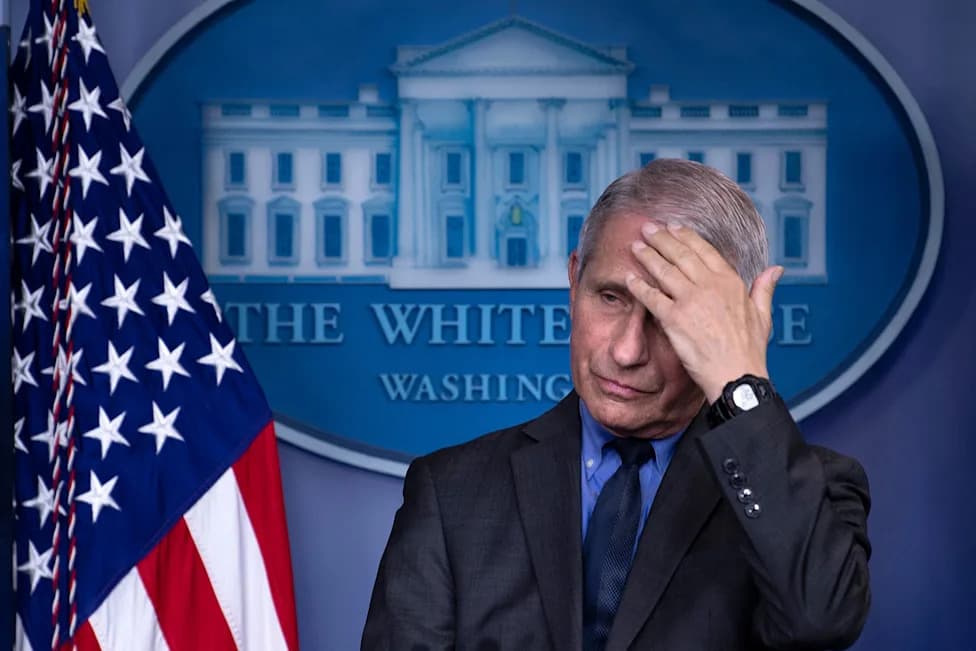
Dr. Anthony Fauci — the infectious-disease physician who led the National Institute of Allergy and Infectious Diseases (NIAID) for 38 years — repeatedly invoked his Fifth Amendment rights during a high-profile Senate Committee on Homeland Security and Governmental Affairs hearing. Over roughly three hours he responded to questions from both Republican and Democratic senators with the formula, "On the advice of counsel, I respectfully decline to answer based upon my rights under the Fifth Amendment to the Constitution."
Politics, Science, And A Flood Of Documents
The hearing underscored how politicized the debate over SARS‑CoV‑2's origins has become while shedding little new light on the central scientific question: did the virus emerge through natural spillover from animals, or from an accidental laboratory release at the Wuhan Institute of Virology (WIV)? In recent years, a large trove of documents — including FOIA releases, subpoenas, diary excerpts, private Slack messages among leading virologists, and declassified intelligence material — has complicated the narrative and revealed private assessments that sometimes differed from public statements.
Private Doubts vs. Public Messaging
Some scientists who publicly endorsed a natural origin privately expressed concern that a lab-associated origin was plausible. A recurring focus is the virus' furin cleavage site, a genetic feature that increases infectivity and prompted questions about whether such a sequence might have been inserted or unintentionally introduced during laboratory work. Slack messages and emails show that several researchers debated both hypotheses, with a few describing the possibilities as "equally probable" at different times.
Key Documents And Assessments
Important items in the public record include the March 2020 "Proximal Origin" letter in Nature Medicine, which argued a lab origin was unlikely; later-released correspondence indicates some of the authors privately had reservations. A classified May 2020 assessment by the Lawrence Livermore National Laboratory Z Division concluded an accidental lab release was equally possible. Intelligence agencies remain split: the FBI, DOE and CIA have signaled greater confidence in a lab-related origin in recent years, while several other agencies and the National Intelligence Council favor natural spillover.
Funding, Research Practices, And Project DEFUSE
Documents show that NIAID provided or supported collaborative research related to coronaviruses, and proposals such as the leaked 2018 Project DEFUSE grant (which was not funded) described field sampling, virus culture work and engineered cleavage-site experiments that some experts later viewed as a plausible roadmap for a lab-related origin. Questions about gain-of-function research, biosafety levels used, and which viruses were held or tested at the WIV remain central to investigations.
Consequences Of Messaging And Limited Access
Critics argue that the early, forceful public messaging favoring a natural origin diminished pressure on China to cooperate and may have narrowed the scope of international inquiries. At the same time, the absence of transparent data from Chinese authorities and remaining gaps in the global evidence base mean that a definitive conclusion remains elusive.
Bottom line: The new documents deepen uncertainty rather than resolve it. They show that leading scientists and officials privately considered a lab-related scenario plausible while publicly emphasizing animal spillover, and they underline why investigators — and the public — still lack a conclusive answer.
The debate is likely to continue until fuller access to primary data, virus samples, laboratory records and personnel interviews becomes available — or until new scientific evidence emerges that decisively favors one origin pathway over the other.
Help us improve.





















