
Rep. Jim Clyburn told a Vox interviewer that lower Black turnout helped cost Vice President Kamala Harris the 2024 election, saying higher turnout would have changed the result. His remarks — and his resistance to partywide introspection — have provoked criticism that Democrats risk taking minority voters for granted. With South Carolina now influential in the primary calendar, the debate over how the party engages its base has taken on renewed urgency.
Clyburn Blames Voters for Harris' 2024 Loss — Sparks Debate Over Democrats' Relationship With Their Base
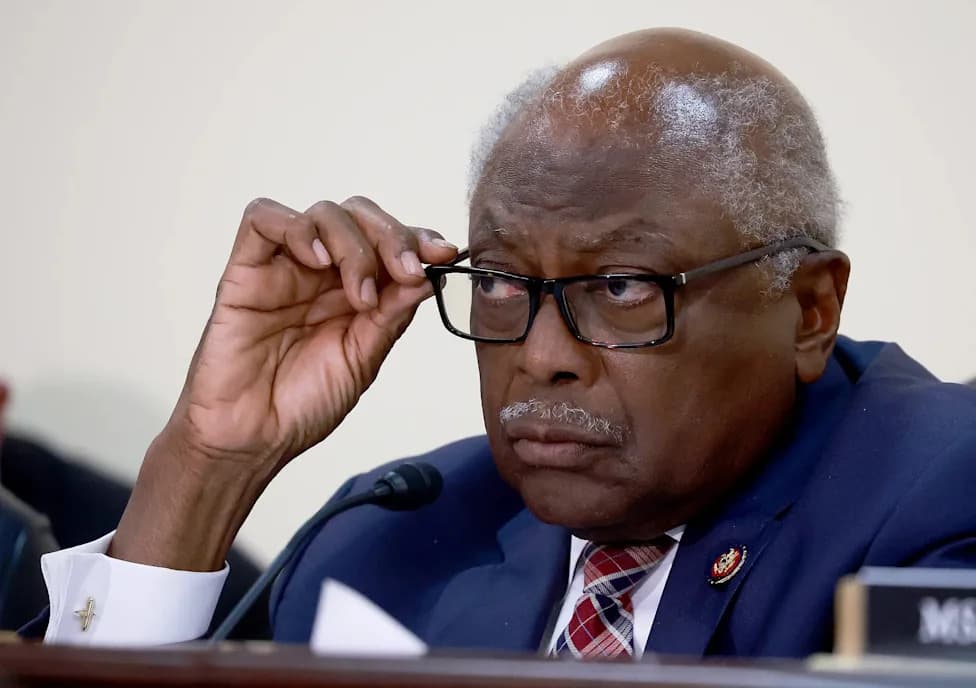
Rep. James E. Clyburn conducts a House Select Subcommittee hearing in the Rayburn Building in Washington, D.C., on June 14, 2022.
In a wide-ranging Vox interview, Rep. Jim Clyburn (D-S.C.) partially attributed Vice President Kamala Harris' defeat in the 2024 presidential race to lower turnout among Black voters, saying that if Black turnout had been higher she would have won. The exchange — and the lawmaker's broader dismissal of calls for party introspection — has renewed debate about whether Democrats are taking minority constituencies for granted.
What He Said
Speaking with reporter Astead Herndon, the 86-year-old, 17-term congressman cited turnout figures: "When the white vote turned out 71% two years ago, and the Black vote turned out 59%, you tell me whose fault that is." He added that if the "59% had been 69%, she would have won," and later responded "In many instances, absolutely" when asked whether Black voters had let Harris down.
Why The Remarks Matter
Many observers called the comments a deflection. Parties do not have an automatic claim on votes; they earn them by listening and responding to voters' concerns. The piece argues that treating minority communities as monolithic or as a guaranteed bloc is both politically dangerous and disrespectful to voters' agency.
Context And Critique
Clyburn's long career — including stints as chair of the Congressional Black Caucus and as House majority whip — gives him weight within the Democratic establishment. He played a key role in helping Joe Biden secure the 2020 nomination. That stature makes his refusal to embrace broad party introspection notable: in the interview he blamed "media branding" for the party's woes, dismissed the significance of progressive primary challenges as individual failures, and downplayed concerns about the party's age profile. He also admitted he had only recently heard of ChatGPT, a detail critics seized on as a symbol of a generational or technological disconnect among some leaders.
Broader Takeaways
Voters across demographics cited economic concerns — especially after a period of high inflation — and those concerns helped shape the 2024 results. Parties that respond to real-time voter priorities, rather than assuming loyalty, are better positioned to build trust and increase turnout. With South Carolina now at the front of the Democratic primary calendar, Clyburn's influence as a potential kingmaker is larger than ever, making his views and the party's response to them consequential for the coming cycle.
Bottom line: The interview underscores a pressing question for Democrats: will the party listen and adapt to voter concerns, or continue to rely on assumed loyalty from key constituencies?
Help us improve.





















