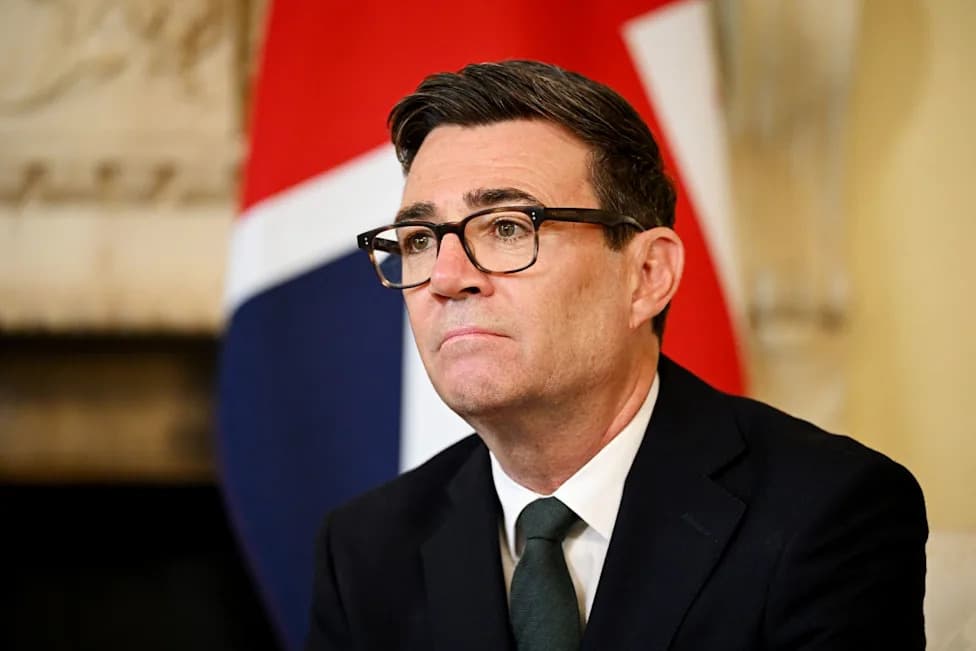
Prime Minister Andy Burnham has urged major reform of England's social care system and asked Baroness Casey to bring forward her review to 2027. BBC Verify outlines four main funding options: a lifetime cap on costs, a higher means-test threshold, free personal care based on need (as in Scotland), and a universal national care service. Cost estimates range from billions for a cap or higher means-test to roughly £7.5bn–£19bn a year by 2036 for broader models. Proposals can be combined to share risks and costs.
Andy Burnham Seeks Major Social Care Overhaul — Four Funding Paths Explained

[BBC]
Prime Minister Andy Burnham has called for substantial reform of England's social care system, describing the current arrangements as "bad for everybody." In a speech at a care home he announced cross-party talks with the Conservatives and Liberal Democrats and asked Baroness Casey to bring forward her social care review so recommendations are presented in 2027. He also confirmed the review will examine options for funding any reforms.
BBC Verify has examined four main approaches to reform and summarized estimated costs and implications for people who need care.
Why Reform Matters
Many people face very large bills for care late in life: around one in seven people aged 65+ are estimated to face lifetime care costs above £100,000. Reform proposals aim to reduce catastrophic costs, clarify entitlement and create a fairer, more sustainable system.
1. A Lifetime Cap on Care Costs
One option is to cap lifetime social care costs so the state pays expenses above a set threshold. A 2011 commission led by economist Andrew Dilnot proposed a £35,000 lifetime cap, with estimated annual costs then of £1.3bn–£2.2bn (today’s cost would be higher after inflation and demographic change). The coalition government endorsed the recommendation, but its implementation was delayed and later shelved.
2. A More Generous Means Test
Under current rules in England, people can qualify for local authority support for residential care if their assets (including a home) are under £23,250. Some argue that raising this threshold would extend support to many more people. In 2021, Boris Johnson’s government proposed raising the limit to £100,000, an approach that was estimated to cost about £1.8bn a year initially — with costs rising over time as eligibility expanded. That package relied in part on a Health and Social Care levy that was later abandoned.
3. Free Personal Care Based on Need
An alternative is to make personal care free at the point of use for everyone who qualifies by assessed need, regardless of wealth or setting (home or residential). Scotland already provides this model for personal care, which typically covers assistance with washing, dressing and toileting but not accommodation, food or daily living costs. The Health Foundation estimates that introducing a Scotland-style system in England could cost roughly £7.5bn a year by 2036.
4. A Universal National Care Service
A more ambitious option is a national care service modelled on the NHS: universal entitlement to personal care, national standards and guaranteed access. The Health Foundation estimates a fully comprehensive system could add about £19bn a year by 2036. Past UK proposals have included various funding ideas — for example, a compulsory contribution from estates after death — but such measures have proven politically contentious.
International Comparisons
Countries such as Japan and Germany base entitlement largely on assessed need, but they finance care using mandatory long-term care insurance contributions from workers and employers; individuals often still meet part of their costs. Any UK reform would need to consider trade-offs between universal coverage, levels of state support and who pays.
Combination Approaches
These four approaches are not mutually exclusive. Past proposals frequently combine elements — for example, a lifetime cap together with a more generous means test — to balance protection for households with fiscal sustainability.
What Happens Next? The timetable now hinges on Baroness Casey’s accelerated review, due in 2027, and the outcome of cross-party talks. Policymakers will need to weigh public preferences, fairness and affordability when choosing how to proceed.
Help us improve.