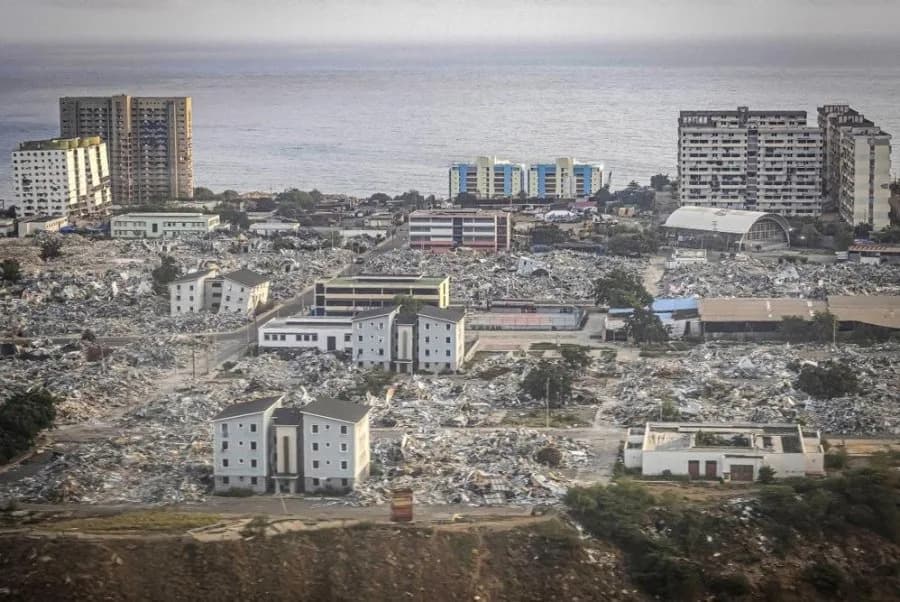
More than a month after the June 24 earthquakes in northern Venezuela, La Guaira faces mounting environmental and public health threats as cleanup continues. Officials estimate the twin quakes caused over 5,000 deaths, nearly 17,000 injuries and about $19.6 billion in damage, producing roughly 1.2 million tons of debris that may include asbestos, fuels and chemical residues. Experts warn contaminated rubble risks polluting water, harming coastal ecosystems and triggering disease outbreaks if water, sanitation, vaccination and debris management measures are not urgently implemented. Restoring essential health services and protecting volunteers and residents from hazardous dust are immediate priorities.
After Venezuela's Devastating Quakes, Experts Warn Of Looming Environmental And Public Health Crises
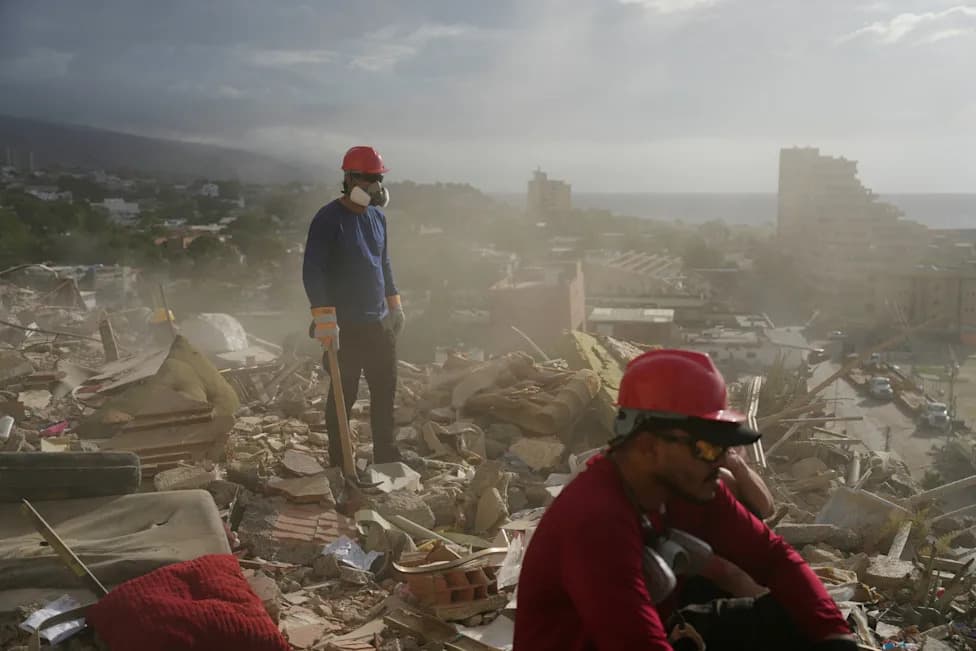
FILE - Rescue workers and volunteers search through the rubble of a building collapsed during the earthquakes in La Guaira, Venezuela, July 6, 2026. (AP Photo/Ariana Cubillos, File)(AP Photo/Ariana Cubillos)
More than a month after the powerful earthquakes that struck northern Venezuela on June 24, heavy machinery still thunders through the hardest-hit neighborhoods of La Guaira. Dust from collapsed buildings hangs in the humid air, garbage piles up, and families camp outside homes judged too dangerous to enter. Water trucks thread damaged streets as communities struggle to access safe water.
"The smell of corpses is very strong" in some areas, said Carolina de Jesús, Venezuela project director for the humanitarian group Project HOPE, who has worked almost daily in the region since the quakes. Public health and environmental specialists warn the coming weeks are critical to preventing secondary crises driven by contaminants released from rubble and by rebuilding activities.
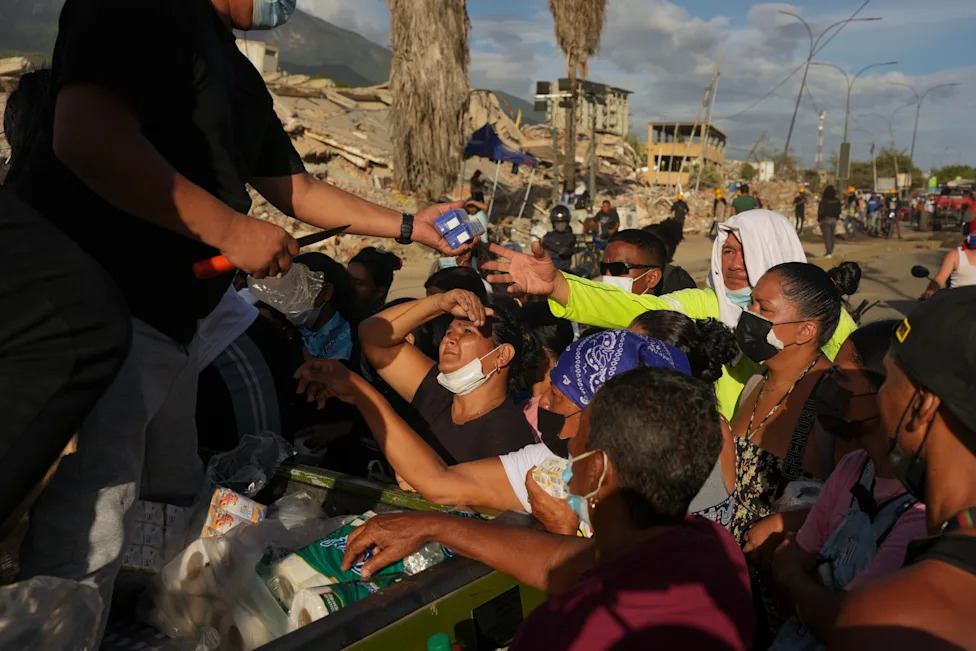
FILE - People affected by the earthquakes line up for food in La Guaira, Venezuela, June 28, 2026. (AP Photo/Matias Delacroix, File)(AP Photo/Matias Delacroix)
Official figures link the June 24 temblors—measured at magnitudes of 7.2 and 7.5—to more than 5,000 deaths, nearly 17,000 injuries and roughly 18,000 people left homeless. Authorities have not provided a definitive count of the missing; some estimates put the number in the tens of thousands. The World Bank estimates direct physical damage at about $19.6 billion.
An estimated 1.2 million tons of debris now block streets and public space. Much of that rubble may be contaminated with fuels, motor oil, paints, solvents, plastics and other hazardous materials released when buildings collapsed. If not carefully sorted and disposed of, these pollutants could spread to soil, groundwater and coastal waters.
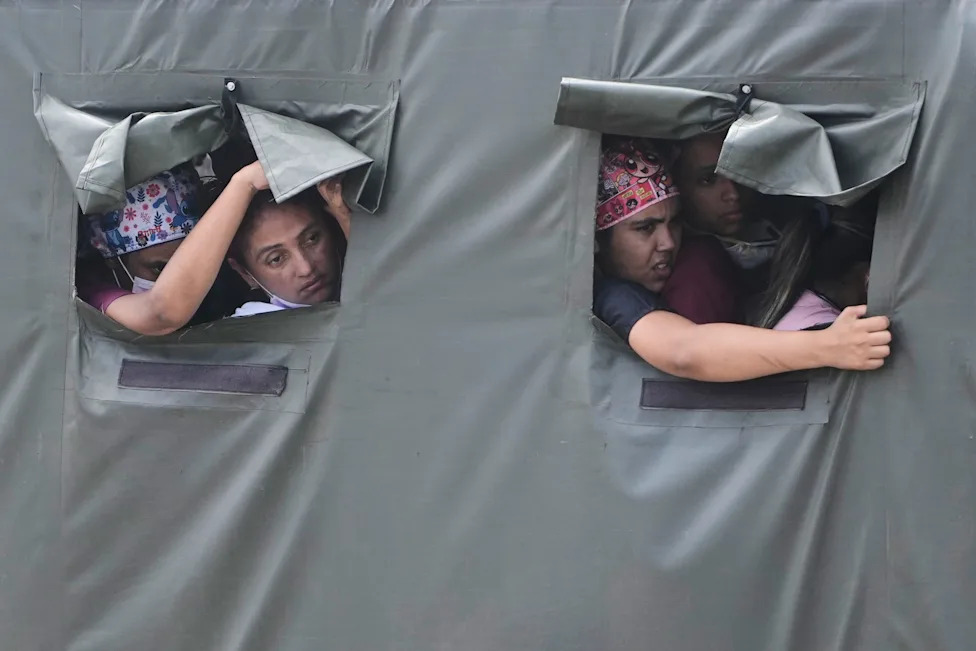
FILE - Health workers ride in a truck on their way to join earthquake relief efforts in La Guaira, Venezuela, June 28, 2026. (AP Photo/Fernando Vergara, File)(AP Photo/Fernando Vergara)
Authorities say they are separating contaminated material from recyclables: concrete and clean rubble may be reused for reconstruction, while asbestos, chemical residues and fuel-tainted debris should be sent to specialized facilities. Joaquín Benítez, director of Environmental Sustainability at Andrés Bello Catholic University, said some early emergency clearing may have seen debris dumped along the coast or into the sea, though local reporters said the practice was stopped after the first days.
If hazardous material reaches coastal waters, water quality and marine ecosystems could be harmed; large volumes of sediment and construction waste can also reshape shorelines and damage coastal habitats. Diego Díaz Martín, president of the environmental group Vitalis, warned seasonal rains could trigger landslides on hills already weakened by the quakes and urged recovery plans to rebuild away from high-risk slopes.
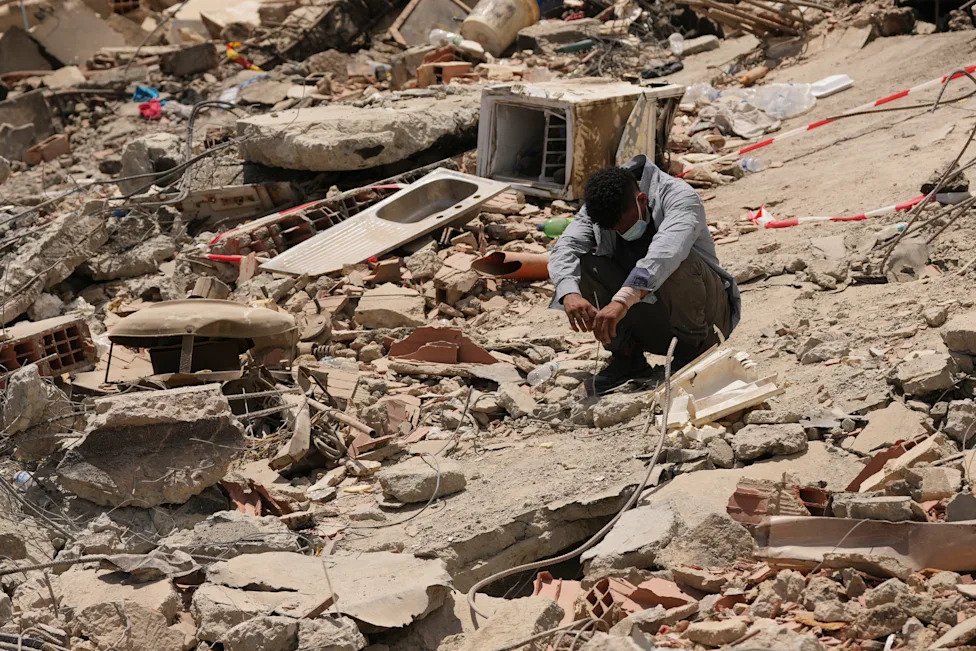
FILE - A man sits amid earthquake rubble in La Guaira, Venezuela, June 29, 2026. (AP Photo/Matias Delacroix, File)(AP Photo/Matias Delacroix)
Access to safe drinking water has become one of the most urgent problems. Even where tanker trucks deliver supplies, the water may not be properly treated. Unsafe water and poor sanitation are contributing to diarrheal diseases, urinary and skin infections, and conditions that help mosquito-borne illnesses spread.
"Earthquakes do not cause outbreaks by themselves. The risk comes from post-disaster conditions," said Dr. Mauricio Cerpa, an epidemiologist with the Pan American Health Organization (PAHO). Overcrowded shelters, disrupted water and sanitation systems, interrupted healthcare and reduced vaccination coverage create environments where disease can spread.
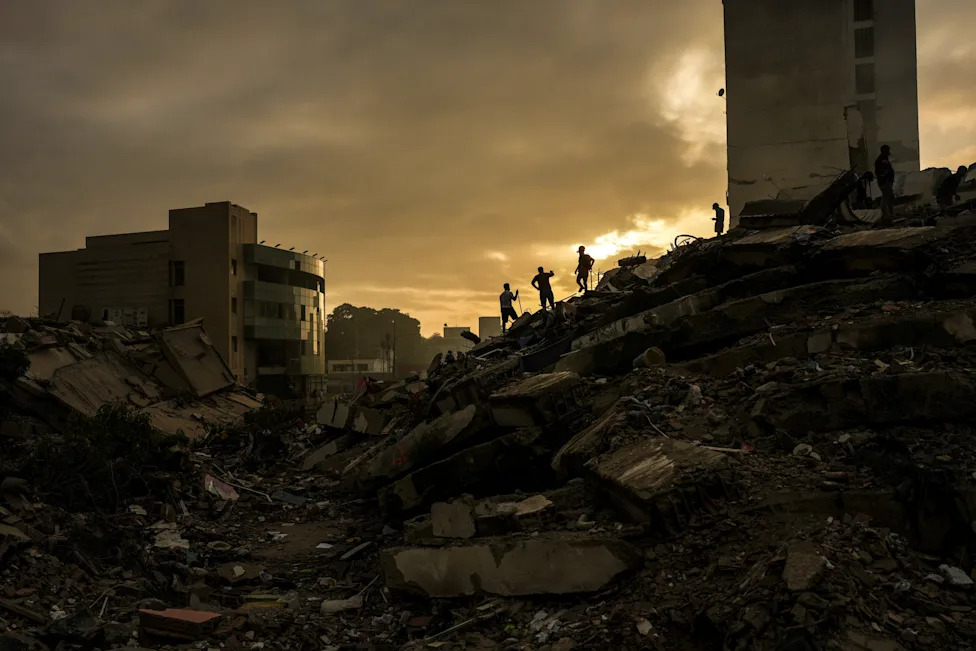
FILE - Men searching for survivors stand atop a mountain of rubble three days after twin earthquakes struck, in La Guaira, Venezuela, June 27, 2026. (AP Photo/Matias Delacroix, File)(AP Photo/Matias Delacroix)
PAHO and other health authorities have identified 18 priority diseases and public-health issues requiring immediate notification, including diarrheal diseases, respiratory infections, dengue, malaria and measles. Disease surveillance in temporary shelters, vaccination campaigns and improvements to water and sanitation are top priorities, officials said.
Health specialists also warn thousands of people with chronic conditions—such as diabetes and hypertension—face increased risks if routine services remain disrupted. Thousands of volunteers and humanitarian workers support relief efforts, but many have developed respiratory problems after prolonged exposure to silica and cement dust; others have suffered dehydration and diarrheal illnesses while working long hours in the heat.
Alycia Clark, vice president and chief pharmacy officer at Direct Relief, said the quakes compounded longstanding shortages of medicines, health workers and infrastructure, putting many patients at risk of missing essential care. Public-health and environmental experts say the next recovery phase must focus on restoring safe water and sanitation, rebuilding core health services, protecting workers from hazardous dust and managing contaminated debris so environmental hazards do not become new emergencies.
What experts urge: rapid, coordinated debris management that separates hazardous waste from reusable material; safe storage and disposal of contaminated rubble; immediate water, sanitation and vaccination interventions; and reconstruction that avoids landslide-prone zones.
Help us improve.