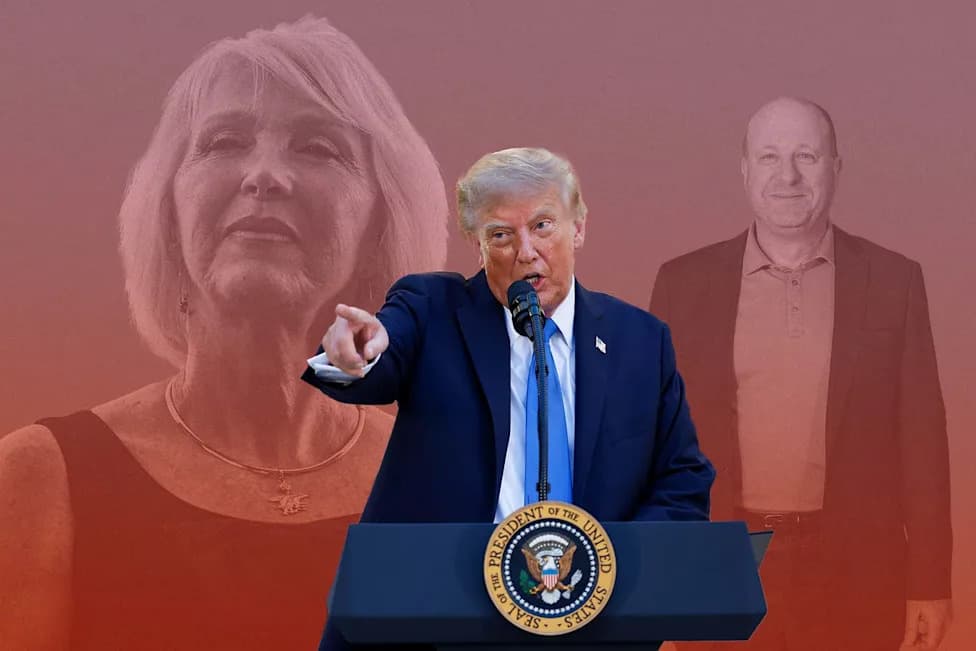
A federal court filing reveals the Trump administration acknowledged canceling $7.6 billion in clean-energy grants because the projects were sited in 16 states won by Kamala Harris in 2024. The DOE canceled 321 awards tied to 223 projects in areas including battery manufacturing, hydrogen, grid upgrades and carbon capture — contradicting public claims the moves were "business decisions." Lawmakers, clean-energy groups and multiple lawsuits, including Thakur v. Trump, have pushed for oversight and investigation.
Court Filing: $7.6B In Clean-Energy Grants Cut Because Projects Were In Harris-Won States
Photo Credit: iStock
A recent federal court filing renewed scrutiny of the Trump administration's October decision to cancel billions in clean-energy grants, revealing the cuts were tied to projects located in states carried by Democrat Kamala Harris in the 2024 presidential election.
What the filing says
Federal lawyers acknowledged in court that the grants were ended "based solely on the political identity of the grant recipient's state," a statement that directly contradicts the Energy Department's public explanation that the cancellations were "business decisions." According to the filing, the Department of Energy (DOE) canceled 321 awards tied to 223 projects, cutting about $7.6 billion in funding across 16 states.
Projects and technologies affected
The canceled awards supported a wide range of clean-energy efforts, including battery manufacturing, hydrogen technology, electric-grid upgrades and carbon-capture projects. These awards were intended to support domestic manufacturing, modernize transmission and distribution systems, and reduce pollution in communities reliant on older, more polluting infrastructure.
Political fallout and legal challenges
Lawmakers and clean-energy groups responded swiftly. Rep. Marcy Kaptur (D-Ohio) and Sen. Patty Murray (D-Wash.), the top Democrats on the House and Senate Appropriations committees, said the filing confirmed long-held suspicions that politics drove the decisions. More than two dozen House and Senate Democrats — including Sens. Adam Schiff and Alex Padilla and Rep. Zoe Lofgren — requested an investigation by the DOE's acting inspector general; the department's watchdog opened a probe in December.
"The grants were ended based solely on the political identity of the grant recipient's state." — Federal court filing
Multiple lawsuits challenge the cancellations. One ongoing case, Thakur v. Trump, includes the recent admission by federal lawyers. In a separate suit brought by clean-energy organizations and the city of St. Paul, Minnesota, government attorneys said grant selection "was influenced by whether a grantee's address was located in a State that tends to elect ... Democratic candidates in state and national elections."
Consequences for communities and the energy transition
Advocates and local officials warn that halting these infrastructure and manufacturing investments could have tangible consequences: fewer local jobs, delayed modernization of the grid, slower reductions in pollution, and potentially higher energy bills for households and businesses. Many communities are also dealing with rising costs and increasingly disruptive, climate-driven weather — making investments in resilient, clean infrastructure more urgent.
Reactions
Democrats framed the administration's actions as politically motivated and harmful to communities. "Weaponizing the federal government like this is outright un-American," Kaptur and Murray said. Holly Bender, chief program officer at the Sierra Club, described the filing as evidence the administration was "brazenly admitting to a vindictive approach to cancelling much-needed energy infrastructure."
The legal and oversight processes are ongoing. If investigators and courts find the administration acted improperly, previously canceled projects could be reinstated or otherwise compensated, but such outcomes remain uncertain as litigation proceeds.
Help us improve.