
Iran launched multiple ballistic missiles aimed at US forces across the Middle East, a strike CENTCOM described as an "attempted surprise attack"; US forces say all missiles were intercepted and remain on high alert. Reported interceptions included five over Jordan, and the strikes coincided with President Trump’s meeting with Israeli Prime Minister Benjamin Netanyahu. Analysts say Tehran sought to regain momentum and assert its role in any talks; oil prices jumped more than 4% as markets reacted. The IRGC also reported stopping three tankers in the Strait of Hormuz and rejected an Omani proposal to split transit routes equally.
Iran Fires Ballistic Missiles At US Bases Across Middle East As Trump Meets Netanyahu
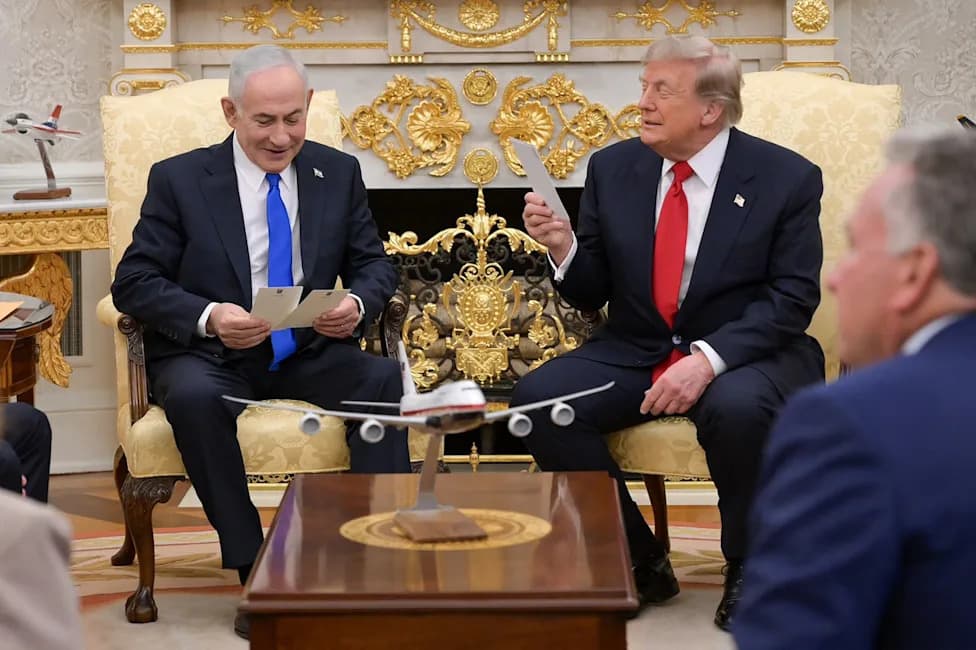
US President Donald Trump meets Israeli Prime Minister Benjamin Netanyahu in the Oval Office on July 28, 2026 [AFP]
The United States military says it intercepted multiple ballistic missiles launched by Iran across the Middle East as President Donald Trump met Israeli Prime Minister Benjamin Netanyahu at the White House.
In a post on X, US Central Command (CENTCOM) said Iran's Islamic Revolutionary Guard Corps (IRGC) fired several ballistic missiles in what CENTCOM described as an "attempted surprise attack on US forces based in the Middle East." CENTCOM added that all incoming missiles were intercepted and that "US forces remain vigilant and at a high state of readiness." The Jordan News Agency reported five interceptions over Jordan.
IRGC Statement and Targets
The IRGC said its air arm targeted a US airbase and a CENTCOM facility in Jordan "with several ballistic missiles," and warned the strikes would continue "as long as threats against the Islamic Republic of Iran continue and illegal and vicious actions by American forces against our interests continue." The claim was reported by Iran's IRIB broadcaster.
Analysts’ Views and Context
Al Jazeera correspondents quoted analysts who said the strikes appeared intended to seize the initiative rather than to be purely reactionary. Resul Serdar in Tehran described the action as seeming like a "pre-emptive attack," while Jason Campbell of the Middle East Institute suggested Tehran may be trying to regain momentum and to signal it must be included in any negotiations.
The strikes occurred after President Trump postponed a two-week US bombing campaign on July 24, saying "good talks" were under way with Iran. Trump has warned he could resume strikes if talks stall; Iran has denied seeking renewed talks with Washington.
Wider Consequences
Following confirmation of the Iranian attack, US oil futures jumped more than 4% to above $82 a barrel and Brent crude rose past $88, reflecting market concern over regional instability. Earlier in the week, prices had eased as Washington paused strikes and traders monitored reports of potential diplomacy.
The Strait of Hormuz remains a focal point. The IRGC told Tasnim news agency it had "struck and stopped" three oil tankers in the strait, saying the vessels "continued to move along an unsafe and illegal route, ignoring our warnings." Oman reportedly proposed joint traffic management with Iran, but Tehran rejected an equal split of transit routes. Deputy Foreign Minister Kazem Gharibabadi said Iran would manage shipping on its side while Muscat would manage part, but not all, of the opposite lane.
Implications
The incident highlights the fragile balance between military action and diplomacy in the region. With high-profile meetings underway in Washington and concerns about new nuclear sites raised by Israeli officials, the strikes are likely to complicate mediation efforts and raise the risk of further escalation.
Key sources: CENTCOM statement on X; IRGC statements via IRIB and Tasnim; reporting and analysis from Al Jazeera, Jordan News Agency, and the Middle East Institute.
Help us improve.





















