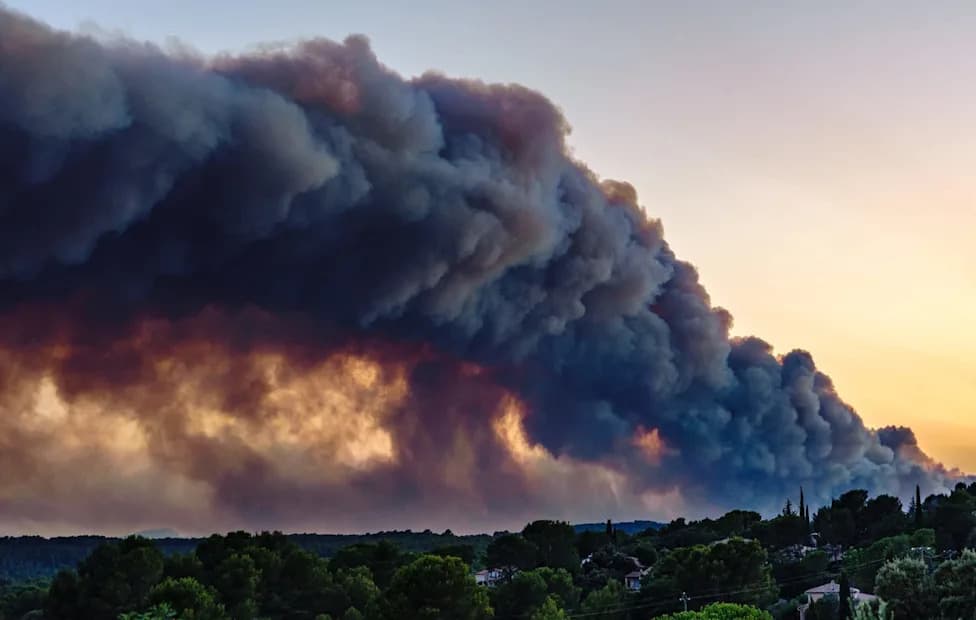
Europe is confronting a wave of unprecedented mega‑fires: intense blazes in southwestern France have spawned pyrocumulonimbus storm clouds and more than 116,000 hectares have burned. Over 300,000 people have been evacuated across France and Spain. Scientists link the scale and ferocity to climate‑driven extremes — a wet winter followed by successive heatwaves — and warn such events will become more frequent without deep cuts in emissions.
Europe Enters a New Era of Mega‑Fires as Blazes Burn With ‘Atomic Bomb’ Intensity
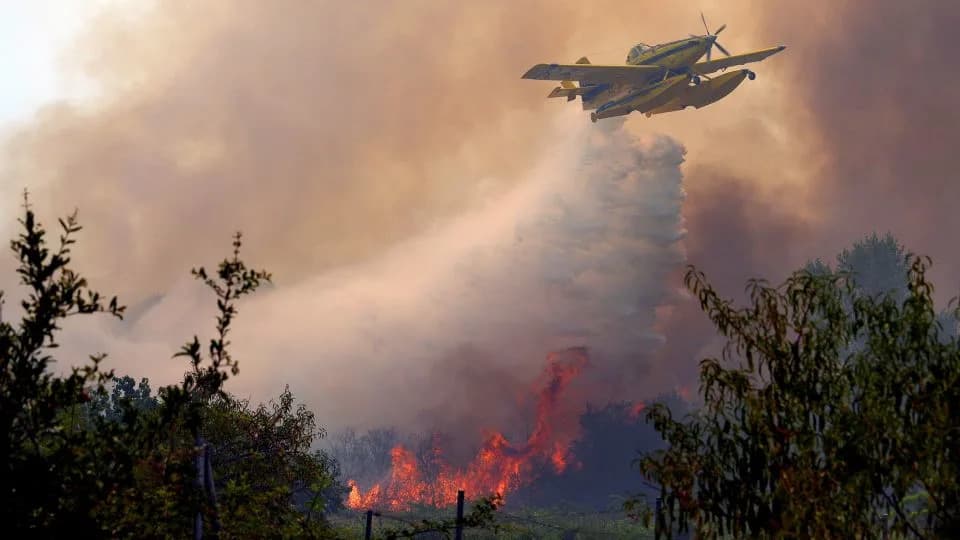
An aircraft dumps water over a wildfire burning near San Martin de Valdeiglesias, west of Madrid, on July 26, 2026. - Cesar Manso/AFP/Getty Images
Widespread wildfires across southwestern France and parts of Spain have reached unprecedented ferocity, producing fire‑driven thunderstorm clouds and forcing mass evacuations. Authorities say more than 116,000 hectares (about 290,000 acres) have burned in France — the largest footprint on record for the country — while officials across both nations have evacuated more than 300,000 people.
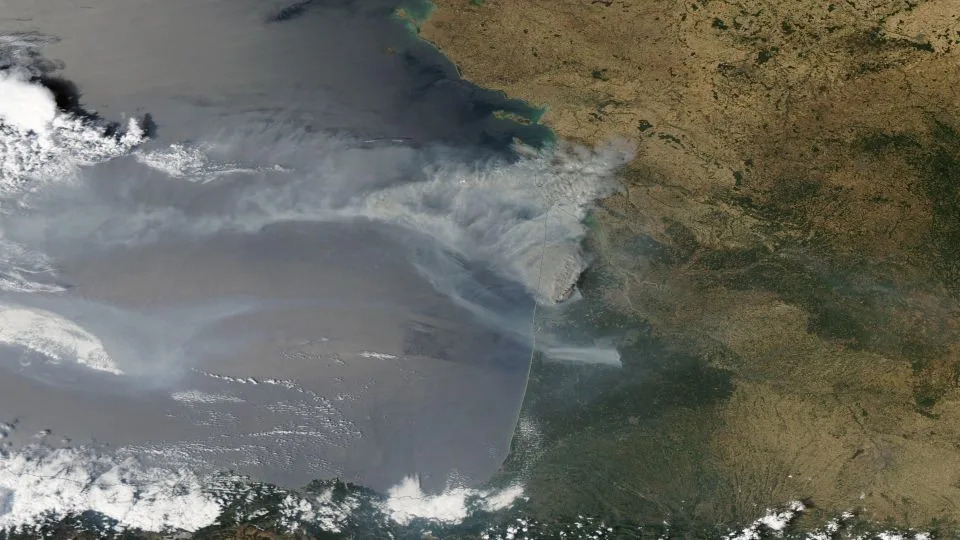
Layered satellite images show a cloud of smoke over southwest France on Monday, July 27, 2027. - NASA Worldview
What Happened
Over the past weeks, exceptionally intense blazes generated towering pyrocumulonimbus clouds — convective storm columns formed when extreme heat from fire plumes rises into cooler air and condenses. These fire clouds can spawn their own winds, rain and lightning, making a dangerous fire self‑sustaining and highly unpredictable.
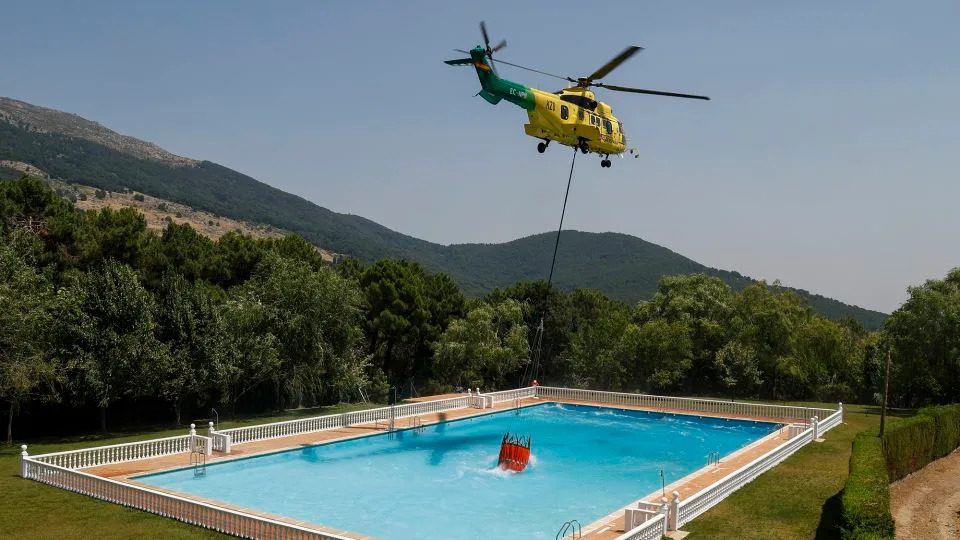
A helicopter collects water from a swimming pool to combat wildfires on July 28, 2026 in Casillas, in Ávila province, Spain. - Pablo Blazquez Dominguez/Getty Images
Scale, Impact and Response
France and Spain have each mobilized massive firefighting resources and requested EU assistance as fires spread near cities, tourist areas and agricultural zones. President Emmanuel Macron described the situation in Bordeaux as "the hardest we've ever recorded," while experts warn these events are stretching local and national response capacities.
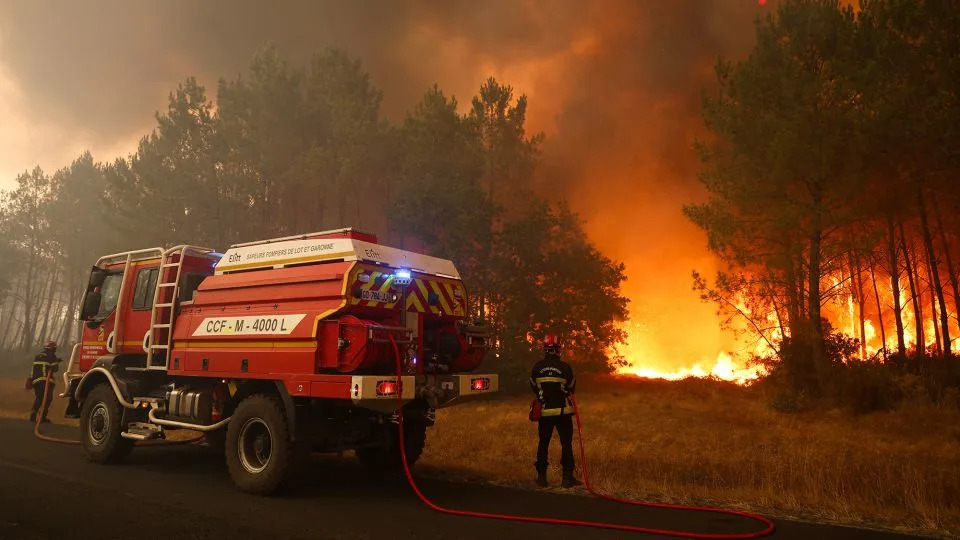
Firefighters try to extinguishing fires using a wildland water truck near Le Porge, southwestern France on July 23, 2026. - Romain Perrocheau/AFP/Getty Images
"We have entered an era of fires that cannot be extinguished," said Víctor Resco de Dios, a lecturer in forestry engineering and global change. "These are fires that burn with the intensity of several atomic bombs."
Why This Is Happening
Scientists point to a climate‑driven "whiplash" of extremes: an unusually wet winter produced abundant vegetation growth, then a succession of heatwaves since spring dried that growth into highly combustible fuel. Combined with wind and topography, these conditions produce rapidly spreading, erratic fires that can overwhelm brigades and force large‑scale evacuations.
Health, Economic and Long‑Term Risks
Thick smoke poses serious public health risks; wildfire pollution is linked to tens of thousands of premature deaths worldwide each year. Economically, fires threaten tourism, wine regions and critical infrastructure. Experts warn that, without substantial reductions in fossil fuel emissions and strengthened adaptation, Europe should expect more frequent and larger fire seasons.
Outlook
Authorities caution that complete suppression of some of these fires may be impossible until fuels are exhausted or persistent heavy rains arrive. Scientists say the continent may increasingly face megafire scenarios once associated primarily with places such as Australia, the western United States and parts of Canada.
Key facts: >116,000 hectares burned in France; >300,000 evacuated across France and Spain; pyrocumulonimbus observed; governments have requested EU assistance; experts link events to climate‑amplified weather extremes.
Help us improve.