
U.N. rights chief Volker Türk warned that actions by Israeli forces in southern Lebanon — including mass displacement, demolitions and restrictions on returns — mirror patterns seen in Gaza and may amount to international crimes. Lebanese authorities report more than 4,333 killed, 12,236 injured and roughly 1.2 million displaced since March. The U.N. will monitor alleged violations by all parties, and talks in Rome on Aug. 4 aim to reduce tensions.
U.N. Rights Chief Warns Of Gaza‑Like Pattern In Southern Lebanon, Flags Possible International Crimes
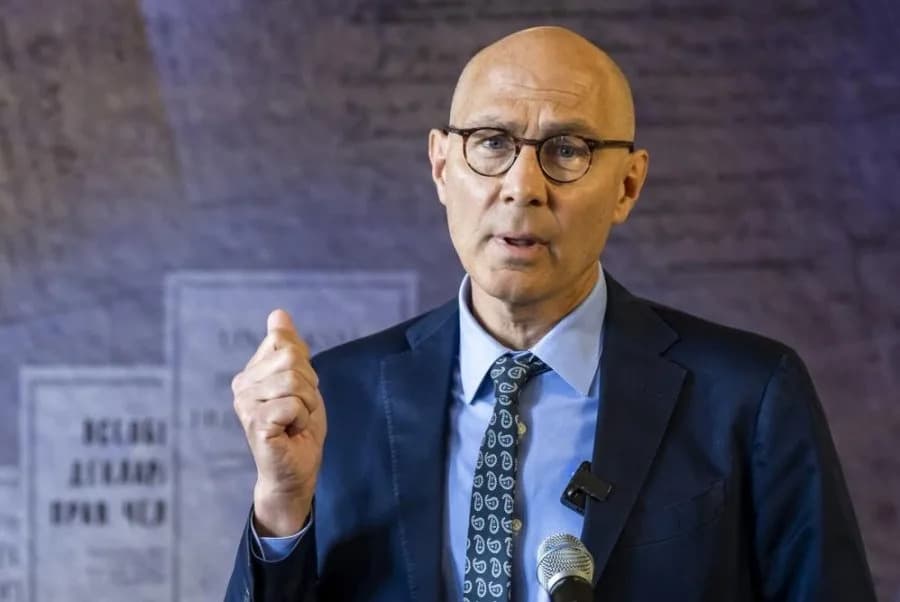
U.N. High Commissioner for Human Rights Volker Turk, during a visit to Lebanon that ended Monday, voiced concern about Israel's repeated pattern of forced displacement, demolitions, territorial control and denial of returns in the southern portion of the country, File Photo by Martial Trezzini/EPA
U.N. High Commissioner for Human Rights Volker Türk warned that Israeli operations in southern Lebanon show a repeating pattern of forced displacement, widespread demolitions, territorial control and restrictions on returns that echo what was seen in Gaza. Speaking at the end of a two‑day visit to Beirut, Türk said his office has documented "large‑scale serious violations" of international humanitarian law by Israeli forces in southern Lebanon, some of which could, in certain circumstances, amount to war crimes or other international offences.
Human Cost and Destruction
Türk described the human impact as "devastating," citing Lebanese government figures that say more than 4,333 people have been killed and 12,236 injured in Lebanon since March. Authorities report the dead include more than 135 healthcare workers, numerous journalists and media staff; 410 healthcare workers have been injured and 17 hospitals damaged. An estimated 1.2 million people were displaced during the recent escalation, and dozens of villages and neighborhoods were heavily damaged or reduced to ruins.
Repeated Displacement And Denial Of Return
Many residents in southern Lebanon have been displaced two or three times since 2023, Türk said, and some who attempted to return were forced back because their villages were destroyed. "The fact that you know you can go back, resume your life and then get displaced again is extremely debilitating for people. It is a trauma that does not heal," he told UPI.
Legal Concerns And Monitoring
Türk emphasized that evacuation orders must give people adequate time and means to leave in compliance with international humanitarian law. He said his office will examine allegations including the large‑scale displacement, denial of returns and the occupation of significant Lebanese territory in the south. "I am concerned that the overall conduct resulting in large‑scale displacement and the denial of returns could amount to international crimes," he said.
The Office of the High Commissioner for Human Rights (OHCHR) is independently monitoring and documenting alleged violations by all parties to the conflict in Lebanon, including Hezbollah. Türk noted that Hezbollah also has obligations under international humanitarian law and that its combat activities and military installations — particularly when located in or near civilian areas — will be scrutinized.
Context And Outlook
The Israel‑Hezbollah war began on Oct. 8, 2023, and intensified sharply on March 2 amid a broader regional escalation. Despite a U.S.‑brokered ceasefire in April and a comprehensive framework agreement signed on June 26, attacks and demolitions in southern Lebanon have continued, according to reports.
Türk expressed hope that Lebanon‑Israel talks scheduled in Rome on Aug. 4 would help de‑escalate the situation, lead to the withdrawal of Israeli forces, strengthen Lebanese state authority in the south and secure respect for international humanitarian law. He also warned of a "very, very dangerous situation" in the West Bank, where he said similar patterns of displacement and territorial control risk creating de facto annexation.
Other Concerns
Türk acknowledged Israel's legitimate security concerns but stressed that the principles of precaution, distinction and proportionality under international humanitarian law must be respected. He also voiced alarm about the proliferation of small, low‑cost drones and urged action toward prohibiting autonomous lethal weapons.
Quote: "If we don't address their grievances, those grievances will continue to fester because they have lost everything ... everything," Türk said, underlining the long‑term human and political consequences of repeated displacement.
Help us improve.





















