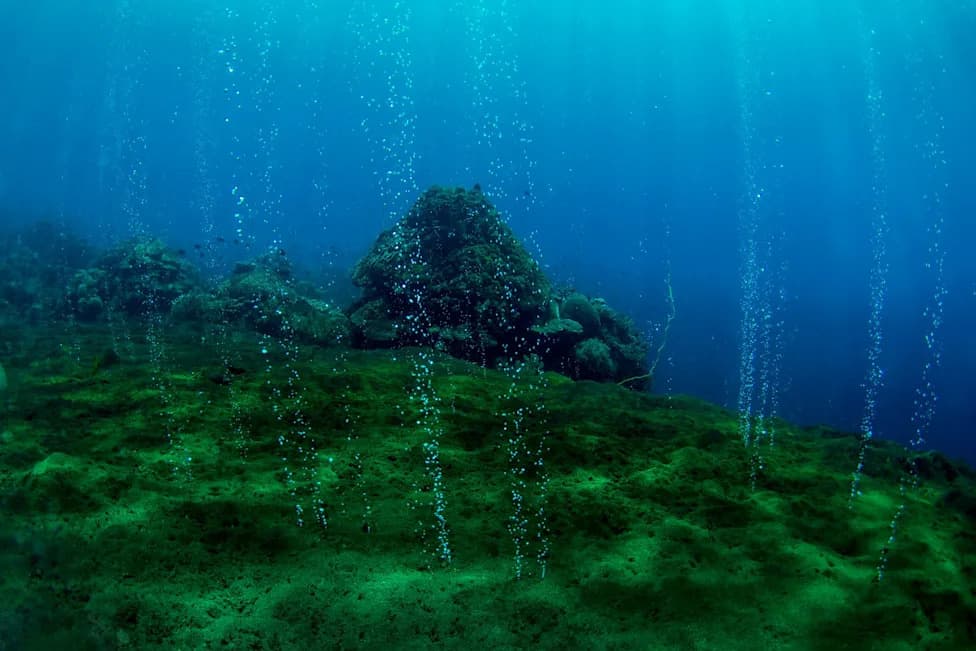
Te lapa—literally "the flashing"—are brief, linear flashes observed beneath the ocean across the Pacific Ring of Fire that historically helped Polynesian navigators find land. Scientists have proposed competing explanations: transient underwater electrical discharges triggered by hydrothermal or tectonic activity, dense bioluminescent displays from dinoflagellates, or a combination of both. Laboratory experiments and deep-sea voltage spikes offer clues, but no single theory explains all observations. Better deep-imaging tools and coordinated measurements are required to settle the question.
Mysterious Underwater 'Te Lapa' Flashes in the Pacific Still Baffle Scientists
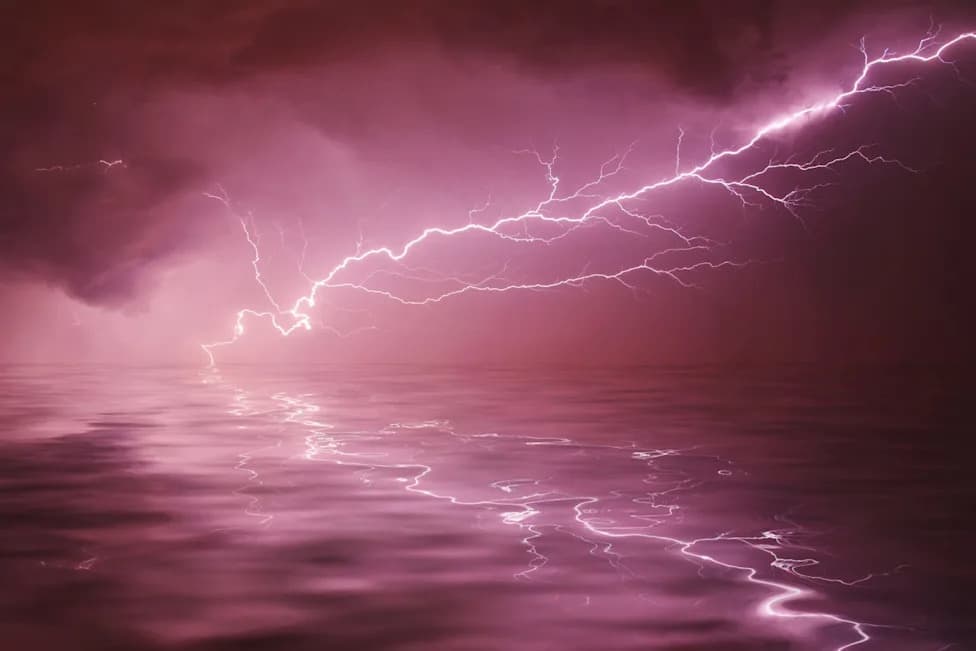
Underwater Lightning Still Baffles ScientistsAnton Petrus - Getty Images
Across the Pacific's Ring of Fire—from Sumatra and Java to waters off Chile—mariners and islanders have long reported sudden, linear streaks of light that flash beneath the ocean surface and vanish almost instantly. Known locally as te lapa, or "the flashing," these ephemeral bolts illuminate the sea on otherwise calm nights and were reportedly used by Polynesian wayfinders to find land. Despite centuries of observation and modern study, the phenomenon's physical cause remains unresolved.
Eyewitness Accounts and Traditional Knowledge
On the isolated island of Taumako in the Solomon Islands, the late chief Aliki Koloko Kaveia—descended from the legendary voyager Lata—learned navigation from elders and later taught it through the Vaka Taumako Project. Cultural anthropologist Marianne George met Kaveia in 1993 and witnessed te lapa firsthand. She described it as a torch-like flash that shot through the depths and vanished instantly, not as lightning reaching down from the sky.
Wayfinders reported that te lapa often appeared to originate from submerged land, so voyagers used the flashes to guide them toward islands at night when stars were obscured and swell patterns were the only cues.
Scientific Investigations and Leading Theories
Researchers have narrowed down what te lapa is not: reflections from stars or satellites are too faint, and atmospheric electrical phenomena such as St. Elmo's Fire cannot occur underwater. Deep-sea submersibles have recorded sudden voltage spikes around hydrothermal vents and volcanic areas on the seafloor—regions with strong local electromagnetism—prompting speculation about underwater electrical discharges.
At first glance, underwater lightning sounds impossible because seawater is a very good electrical conductor: dissolved salts dissociate into ions that should allow any localized charge to dissipate quickly. Yet some measurements show electrical events traveling hundreds of feet before fading. Scientists therefore hypothesize that unusual deep-sea conditions—insulating gas bubbles, very sharp temperature gradients, or mineral-rich plumes from hydrothermal vents—could allow voltage to accumulate until it discharges, potentially breaking water molecules and producing transient light.
Could Biology Explain It?
Bioluminescence was long dismissed as an explanation, but Harvard researcher John Huth's laboratory experiments reopened the question. In his Underwater Lightning Project, Huth cultured dinoflagellates—microorganisms that glow when disturbed—filled a tank with a dense patch, and then created pressure waves by pulling a decoy fish through the water. With lights off, cameras captured pale blue streaks racing through the tank, showing that coordinated flashes from many organisms can produce visible streaks of light.
However, major uncertainties remain: it is unclear whether dinoflagellate blooms in the open ocean could produce the intensity, spatial scale, or the electrical signatures recorded by submersibles. Another possibility is that biological and geophysical mechanisms interact—fish or swells trigger bioluminescence in areas where geophysical conditions also favor electrical discharges.
What's Next?
Te lapa sits at the intersection of traditional knowledge and modern science. To resolve the mystery, researchers say targeted field campaigns are needed: sensitive deep-imaging systems that can detect faint light at depth, synchronized electrical and chemical sensors near hydrothermal vents and coastal shelves, and coordinated observations of biological blooms and fish behavior. Until such data are available, te lapa remains an unsolved and compelling oceanographic puzzle.
Key historical and scientific figures referenced in this story include cultural anthropologist Marianne George, traditional navigator Aliki Koloko Kaveia, David Lewis (author of We, the Navigators), and Harvard researcher John Huth.
Help us improve.