
SpaceX’s Flight 13 on July 24 advanced Starship development with the V3 upper stage deploying 20 next‑generation Starlinks, re‑igniting a Raptor in orbit and making a notably soft splashdown off Western Australia without exploding. The Super Heavy booster experienced engine issues on reentry and will be investigated. SpaceX plans a Ship catch attempt on Flight 14 if post‑flight data are clean, with Starship slated for NASA’s Artemis missions in the coming years.
Starship Flight 13: Soft Splashdown, 20 Starlinks Deployed and Raptor Re‑Ignition — Highlights
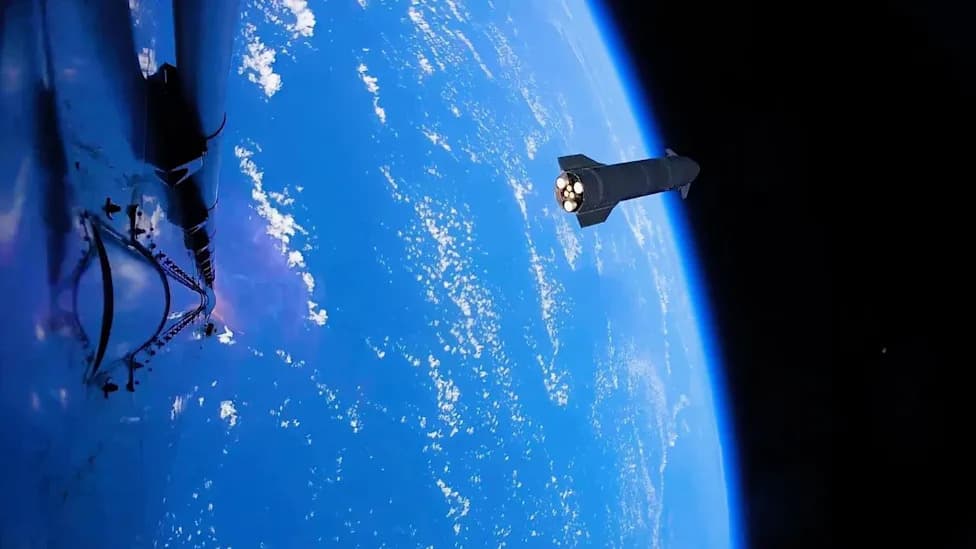
The two stages of SpaceX's Starship megarocket separate during the vehicle's 13th test flight, on July 24, 2026.
SpaceX's 13th Starship test flight delivered both engineering progress and spectacular visuals. Flight 13 lifted off from Starbase in South Texas on July 24, sending the 408-foot (124 m) Starship V3 into orbit and generating dramatic livestream and social media footage that captured key moments of the mission.
Mission Highlights
Successful Upper-Stage Operations: The Ship upper stage completed its primary objectives: deploying 20 next-generation Starlink satellites, re‑igniting one of its Raptor engines in orbit, and executing a controlled deorbit that ended with a remarkably gentle splashdown off the coast of Western Australia. The upper stage survived impact without exploding — a first for Starship test flights.
Credit: SpaceX
Booster Anomaly on Reentry: The Super Heavy booster experienced engine problems during its return to Earth. SpaceX will analyze Flight 13 telemetry as part of its routine post-flight review to determine root causes and next steps.
Stunning Footage and Public Updates
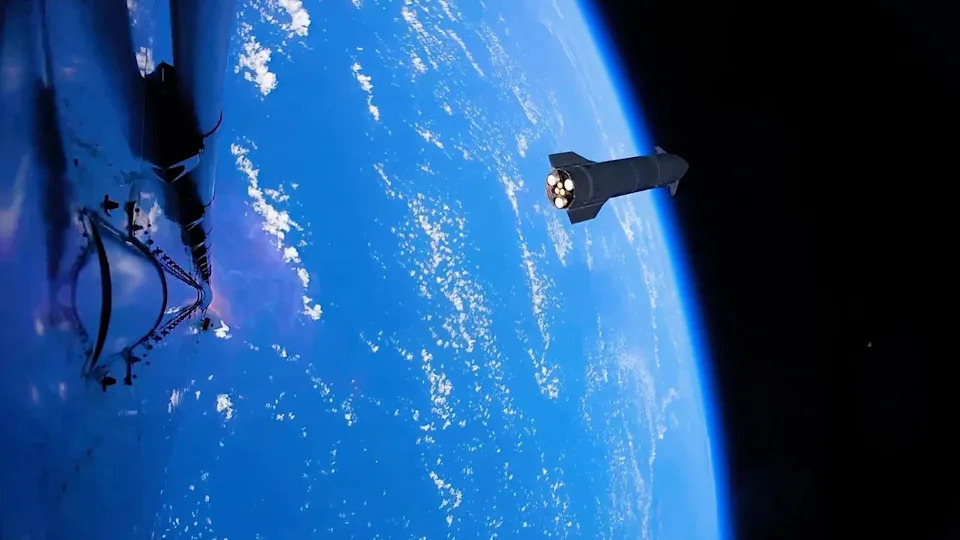
SpaceX streamed the launch live and posted additional imagery and video on its X account. Notable clips included an in-flight view from Super Heavy of Ship receding after stage separation, a Ship-eye perspective of the descent toward the Indian Ocean, and drone footage capturing the splashdown and subsequent fire near the upper stage nose — which the vehicle survived.
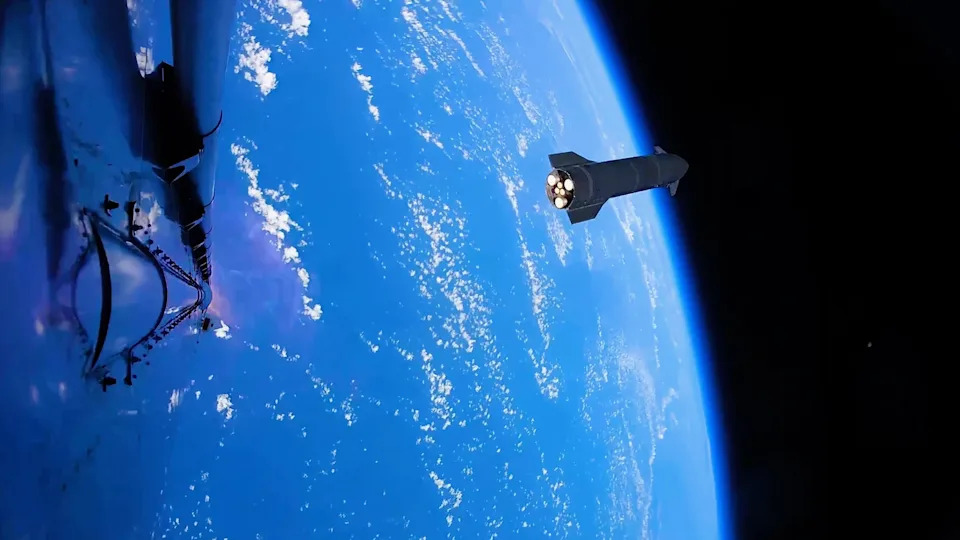
The two stages of SpaceX's Starship megarocket separate during the vehicle's 13th test flight, on July 24, 2026. | Credit: SpaceX
Reusability and Next Steps
Both stages of the Starship system are designed for rapid reuse. Super Heavy has been successfully caught by the tower's capture arms on three previous test flights. SpaceX plans to attempt the first in-flight capture of Ship on Flight 14, pending the completion of Flight 13's data review and the absence of any red flags, company founder and CEO Elon Musk said.
Program Context: Starship’s initial test flight occurred in April 2023. Flight 13 was the second launch of the Version 3 configuration, the first iteration intended for operational missions. NASA has scheduled Starship for the Artemis III crewed Earth-orbit mission next summer and for a lunar landing near the Moon’s south pole on Artemis IV in late 2028.
Why it matters: Flight 13 combined mission success (satellite deployment and in-orbit Raptor restart) with important lessons from the booster anomaly, while the soft splashdown points toward improved survivability and recovery prospects for the upper stage.
Help us improve.





















