
Sudan’s army says it has retaken the Al Sadarat highway, reconnecting Khartoum with el-Obeid and restoring a key 350 km (217-mile) supply route. The army reported reclaiming Um Qurfa and Jarigakh after two days of heavy fighting, a move that could speed military logistics and improve humanitarian access. About 500,000 people remain trapped in el-Obeid amid intense RSF drone strikes. UN and aid agencies warn urgent aid, protection and security guarantees are still needed to prevent further civilian suffering.
Sudanese Army Says It Has Retaken Strategic Al Sadarat Highway Connecting Khartoum and el-Obeid
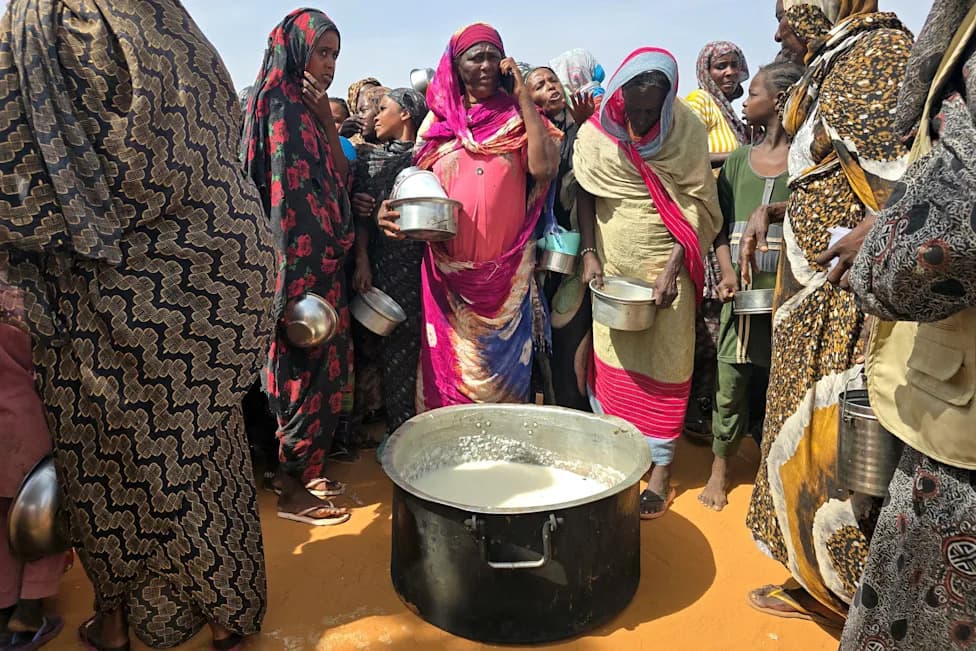
Sudanese women gather for a hot meal in al-Rahmaniyah camp for displaced people, near the city of el-Obeid in the South Kordofan region on July 7, 2026 [AFP]
The Sudanese army has announced it has regained full control of the Al Sadarat highway, the main road linking the capital Khartoum with el-Obeid, a city that had been besieged by the rival paramilitary Rapid Support Forces (RSF).
What Happened
In a statement on Sunday, the army said its forces recaptured towns and villages along the route after two days of intense fighting with the RSF, which had held most of the 350 km (217-mile) highway since April 2023. The army specifically reported retaking the localities of Um Qurfa and Jarigakh, saying operations "inflicted heavy losses in lives and equipment" on RSF fighters and forced them to withdraw.
“With this victory, the forces have taken control of the export route of Omdurman Al-Abyd,”
Al Jazeera correspondent AlMigdad Alruhaid told the network the capture restores "a direct connection between the capital and Kordofan for the first time in months," a development the army says will speed movement of troops, fuel, weapons and supplies to el-Obeid and could reopen important trade corridors for livestock and agricultural products from the Kordofan region.
Humanitarian Impact
About 500,000 people remain trapped in el-Obeid, the United Nations says, and residents have faced intense RSF drone strikes during the siege. Relief agencies warn that securing the highway could improve humanitarian access to communities cut off by the fighting, but ground risks and potential retaliation mean civilians remain vulnerable.
UN Women last week warned that women and girls in el-Obeid now face "an impossible choice over something as basic as a bucket of water: risk a drone strike by collecting it in daylight, or risk rape by waiting until dark." The organization said sexual violence has been used as a weapon throughout Sudan's three-year war, with testimonies describing rape and other brutal abuses.
Wider Context
The current conflict between the Sudanese army and the RSF began in April 2023 amid disputes over integrating the paramilitary into the national armed forces. The World Health Organization estimates the fighting has killed about 40,000 people and forced more than 14 million to flee their homes, creating one of the world’s largest contemporary displacement crises.
While the army frames the highway's capture as a strategic win that hinders the RSF’s bid to seize el-Obeid and extend control over western Sudan, humanitarian agencies caution that restoring a supply route does not immediately resolve urgent needs on the ground. Access, security guarantees and rapid delivery of aid remain essential to prevent further civilian suffering.
Help us improve.





















