Federal filings show a wide-ranging, partially documented effort by Chinese state media, government-linked sources and private companies to influence U.S. policy, opinion and commerce. DOJ records report more than $20 million in FARA expenditures by private China-linked groups in 2025 and nearly $80 million from government sources. State-run outlets such as CGTN and several companies are registered under FARA, while many campus and united-front actors operate without public disclosure. The filings illuminate influence channels but do not by themselves prove specific election-interference claims.
Beijing’s Influence Machine: Federal Filings Reveal How China Seeks To Sway America
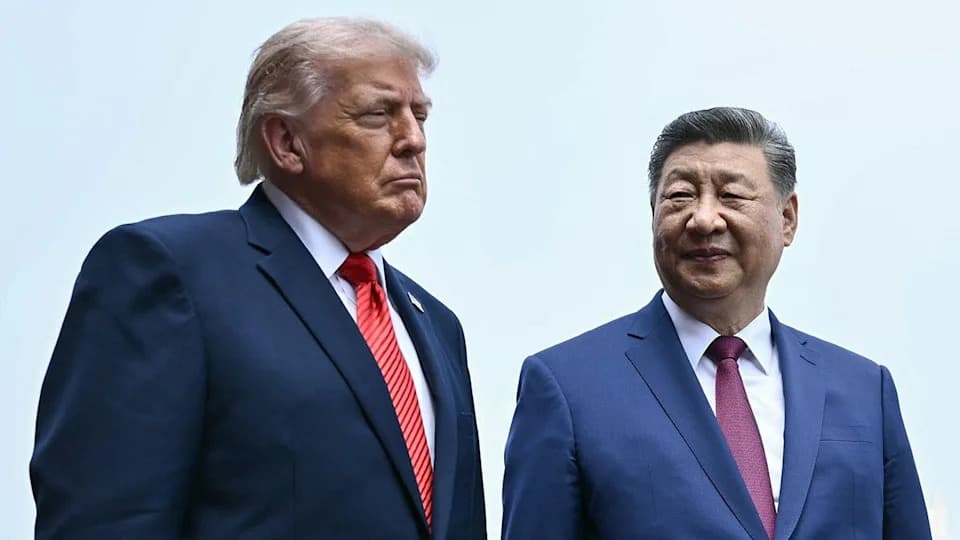
China's President Xi Jinping (R) and US President Donald Trump visit the Temple of Heaven on May 14, 2026 in Beijing, China.
Federal records and public filings show a broad, multi-pronged effort by China-linked actors to influence U.S. policy, public opinion and commercial decisions. Department of Justice FARA disclosures and Lobbying Disclosure Act reports provide a partial window into activity by state media, government sources and private companies, though they do not by themselves prove specific election-interference claims.
State Media and Information Operations
One of Beijing’s clearest tools is its state-run media network. The U.S. State Department estimated in 2023 that China spends "billions of dollars annually on foreign information manipulation efforts." DOJ records list five Chinese media entities as active foreign agents in the United States, including Xinhua, China Daily and CCTV’s overseas operation, CGTN America.
DOJ filings reviewed by reporters show CGTN received $66.8 million in funding from CCTV between February and November 2025. During 2025, CGTN amplified messaging that often mirrored left-of-center U.S. positions on climate policy, immigration and racial issues while criticizing some Trump administration policies. Academic research suggests such outlets focus less on directing individual votes and more on portraying the U.S. as unstable or poorly governed in contrast to a stable, rising China.
Chinese Embassy response: "China's international exchanges and cooperation are open and transparent. Portraying normal engagement as 'influence operations' distorts facts and stigmatizes legitimate exchange."
The China Lobby in Washington
American lobbying firms have increasingly represented Chinese commercial and state-linked interests. Lobbying filings show dozens of U.S. firms signed contracts with companies partly or wholly owned by Chinese entities beginning in 2025. Seven Chinese companies maintain active FARA registrations, including Huawei, Hikvision and JinkoSolar.
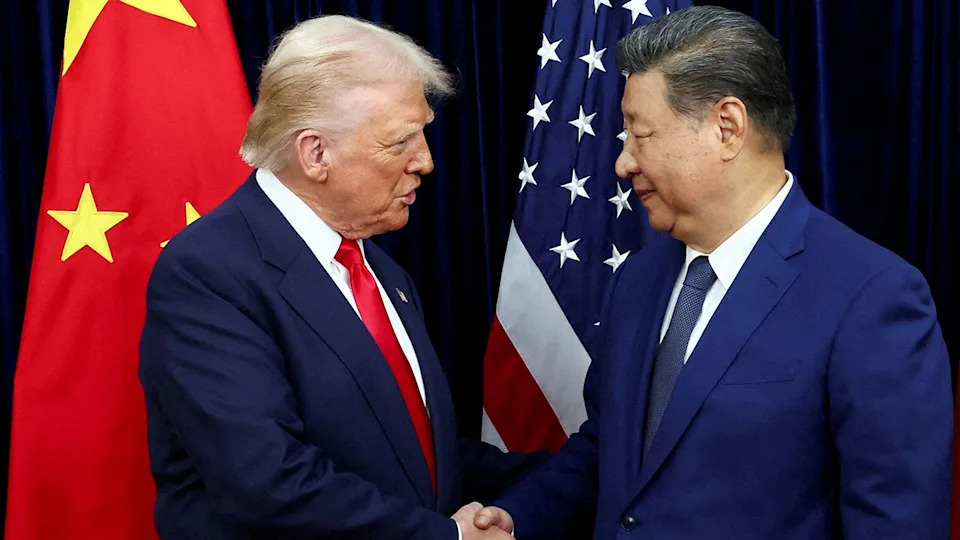
President Donald Trump shakes hands with Chinese President Xi Jinping as they hold a bilateral meeting at Gimhae International Airport, on the sidelines of the Asia-Pacific Economic Cooperation (APEC) summit, in Busan, South Korea, on Oct. 30, 2025.
There is a legal distinction between FARA and the Lobbying Disclosure Act (LDA): FARA requires more detailed public disclosure for activities deemed to involve political or public-influence work on behalf of a foreign principal, while the LDA requires more limited reporting for commercial advocacy. Critics say some entities use the LDA to avoid FARA’s stricter transparency requirements.
Trade, Tourism and United Front Outreach
Beyond media and lobbying, Beijing funds organizations that promote trade, tourism and investment ties. The China Council for the Promotion of International Trade (CCPIT) discloses regular funding to facilitate business outreach in the United States. Analysts and some declassified material cited by researchers argue CCPIT and similar bodies can serve dual diplomatic or united-front purposes, while Chinese officials call those claims unfounded.
What’s Not On The Record
Not all influence activity appears in public registries. Campus groups the State Department has associated with Beijing, such as some chapters of the Chinese Students and Scholars Association, and networks tied to the United Front Work Department typically do not register under FARA, limiting public visibility. This opacity is a central concern for lawmakers and analysts tracking foreign influence.
Notable Details and Examples
- Spending reported: DOJ records show more than $20 million in FARA expenditures from China-linked private entities in 2025 and nearly $80 million from government-associated sources during the same period.
- Companies under scrutiny: Hikvision, designated under restrictions for alleged human-rights abuses, reports under FARA and has disclosed lobbying materials provided to U.S. agencies. Tencent has disclosed more than $10 million in lobbying since 2025 and is contesting a Pentagon designation that linked it to China’s military supply chain.
- Research and oversight: Academic papers and think-tank reports underscore consistent themes across state media and raise questions about the strategic intent behind some outreach programs.
Bottom Line
Public records provide a clearer—but incomplete—picture of how Beijing-linked actors engage U.S. audiences and policymakers. FARA and LDA disclosures are valuable transparency tools, but gaps remain where networks operate without public filing. The debate continues about the scale, intent and implications of these activities, and U.S. policymakers are weighing both scrutiny and high-level engagement, including invitations for bilateral talks on subjects like artificial intelligence.
Help us improve.