Brazilian Air Force investigators found that severe icing at 17,000 feet, recurring de‑icing system faults and crew distraction combined to cause the Aug. 9, 2024 Voepass ATR 72 crash that killed 62 people. Heavy ice reduced lift and led to an unrecoverable flat spin. The report also cites a culture at Voepass of tolerating mechanical deviations and notes the findings were briefed to victims’ families before public release.
Brazil Probe: Severe Icing, Faulty De‑Icing Systems and Crew Distraction Blamed for Crash That Killed 62
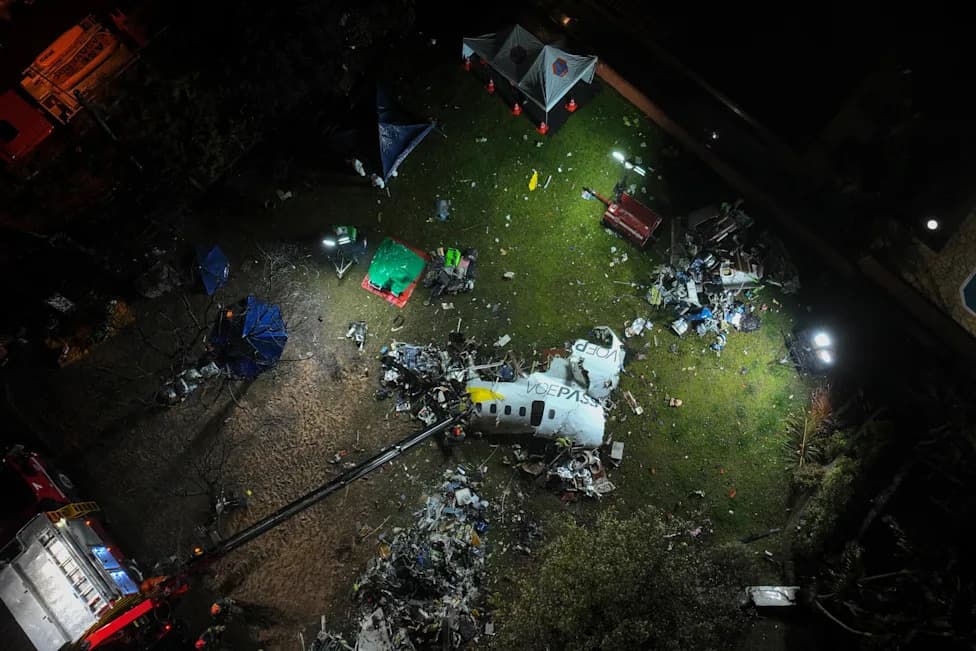
FILE -A view of the debris of a Voepass airplane that crashed the previous day, in Vinhedo, Sao Paulo state, Brazil, Aug. 10, 2024. (AP Photo/Andre Penner, File)
SAO PAULO (AP) — Brazilian Air Force investigators have concluded that a combination of severe atmospheric icing, recurring mechanical faults in the de‑icing system, and crew distraction led to the Aug. 9, 2024, Voepass ATR 72‑500 crash outside São Paulo that killed all 62 people on board.
Background
The twin‑turboprop aircraft, operating a scheduled flight from Cascavel to São Paulo’s international airport, came down in a residential neighborhood in Vinhedo. The accident is Brazil’s deadliest air disaster since 2007.
Key Findings
Investigators determined the airplane encountered severe icing while cruising at 17,000 feet. Heavy ice accumulation reduced lift and precipitated an unrecoverable flat spin. Flight recorder data showed the crew detected significant ice buildup, but the aircraft’s de‑icing system experienced recurring technical faults and was switched on and off multiple times during critical phases of the flight.
At a press conference in Brasília, officials said the investigation uncovered a broader safety problem within the operator. They described a systemic "culture of normalizing deviations" at Voepass, where preexisting mechanical issues — including known de‑icing defects — were tolerated before departure.
Investigators also found that the flight crew were preoccupied with routine radio communications and administrative tasks while severe icing warnings were active, delaying or preventing timely corrective maneuvers.
Family Briefing and Next Steps
The full findings were briefed to victims’ families before being released publicly. The report is expected to inform regulatory follow‑up, potential safety recommendations for operators and manufacturers, and any corrective actions by Voepass and aviation authorities.
Bottom line: Severe atmospheric icing, unreliable de‑icing equipment and crew distraction combined to produce a catastrophic loss of control.
Help us improve.