The House will vote on the Stop Insider Trading Act, which would bar members of Congress (and their spouses and dependent children) from buying individual stocks while in office and require public notice at least one week before any sale. The bill raises penalties for reporting violations and does not force divestment of existing holdings. Republicans added a nationwide photo voter-ID requirement, reducing Democratic support and clouding the measure's chances in the Senate. The vote follows renewed scrutiny after disclosures showing thousands of transactions by President Trump in early 2026.
House Set To Vote On Stop Insider Trading Act — Bans Lawmakers From Buying Individual Stocks
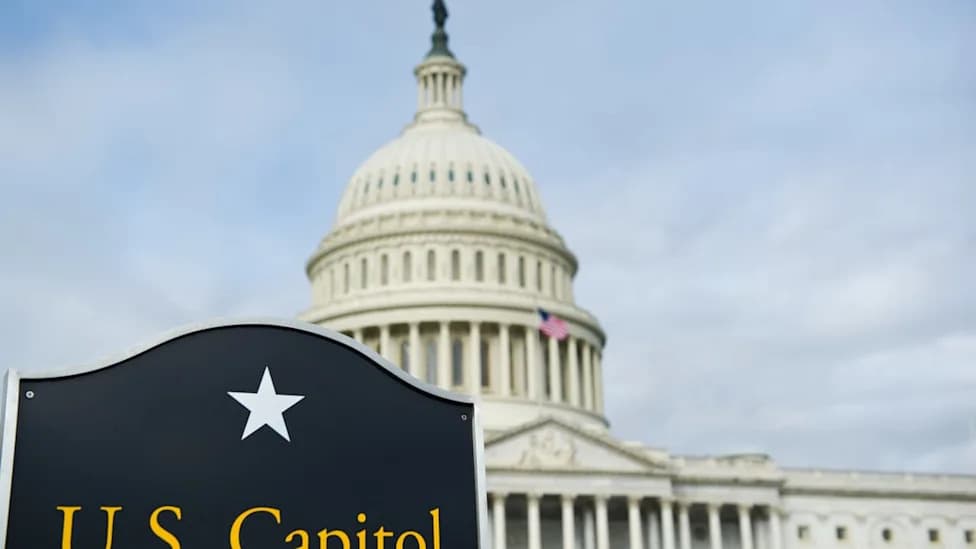
House votes on congressional stock-trading ban bill
The U.S. House is scheduled to vote Wednesday on the Stop Insider Trading Act, a bill that would prohibit members of Congress from purchasing individual stocks while serving in office. Republicans paired the proposal with a nationwide photo voter-ID requirement, a move that narrowed Democratic support and clouds the measure's prospects in the Senate.
Key Provisions
The bill, introduced by Rep. Bryan Steil (R-Wis.), would bar members of Congress — as well as their spouses and dependent children — from acquiring shares of publicly traded companies while the member is in office. Lawmakers who wish to sell existing individual stock holdings would be required to provide public notice at least one week before the transaction.
The measure would not force members to divest stocks they already own. It would, however, raise penalties for failing to report stock sales properly: fines would increase to $2,000 or 10% of the transaction's value, whichever is greater, compared with the typical $200 penalty for first-time reporting violations today.
"I think it's really important that we tell the American people we're done allowing members of Congress to be day-trading stocks," Rep. Steil said on CNBC's "Squawk Box" ahead of the vote. "Let's remove even the appearance of impropriety that any given trade is based on any inside information an individual may gain while serving in Washington."
Reaction and Political Outlook
Critics say the bill does not go far enough. Rep. Seth Magaziner (D-R.I.), part of a bipartisan effort seeking a broader restriction, described it as "a stock trading ban that still allows stock trading." The attached voter-ID provision — which would require photo identification for federal ballots nationwide — further reduced the bill's chances of attracting Democratic votes.
If the combined package reaches the Senate, its path is uncertain: most major legislation there effectively requires 60 votes to overcome a filibuster, and the addition of the voter-ID language makes bipartisan support less likely.
Background
Federal law dating to 2012 already prohibits congressional insider trading, but enforcement has been uneven and penalties have frequently been criticized as weak. The vote comes amid renewed scrutiny of lawmakers' stock trading: President Donald Trump's disclosure filings showed more than 3,700 transactions in the first three months of 2026, including purchases of shares in companies such as Nvidia and Axon ahead of major government announcements involving those firms.
The Stop Insider Trading Act aims to simplify the rules and remove the appearance of conflicts of interest, but lawmakers and watchdogs remain divided over whether it goes far enough to restore public trust.
Help us improve.