
Researchers analysed phytoliths from Cloggs Cave in GunaiKurnai country and found evidence that whole grasses were intentionally carried into the cave and burned as part of ritual practices over a period extending to about 25,000 years. Excavations (2019–2020) identified 29 phytolith types — up to 97% from grasses — and nearly 20% showing signs of burning. Dated ashy layers and a 28 cm standing stone (~2,000 years) support a long sequence of ceremonial activity, with GunaiKurnai community members integral to the research.
Ancient Ritual Fires: Study Shows Indigenous Australians Burned Grasses in Cloggs Cave for 25,000 Years
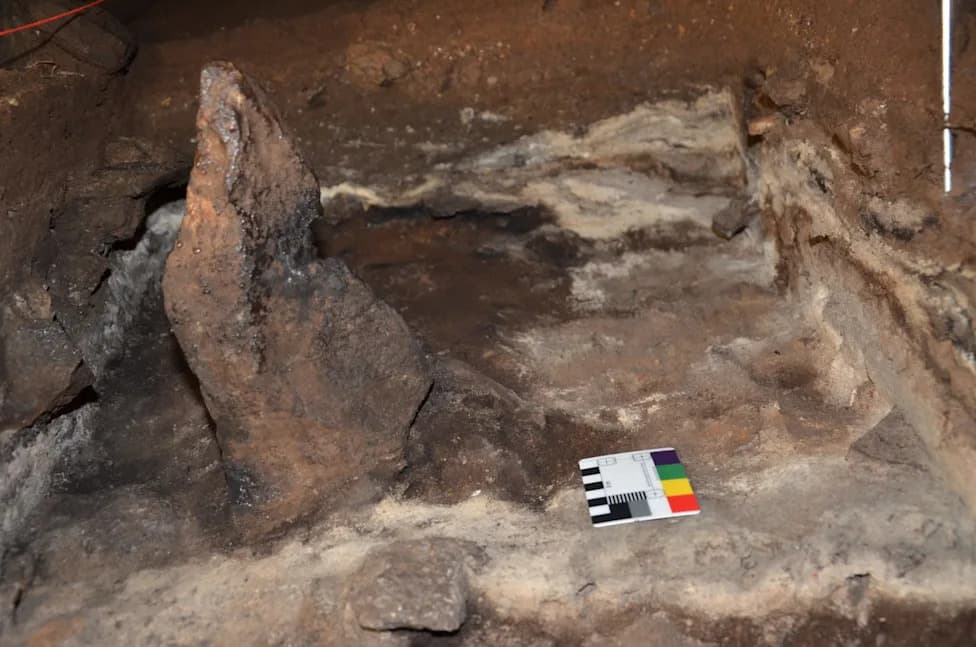
A 2,000 year-old standing stone, depicted during excavations. (Bruno David via SWNS)
New research shows that people brought whole grasses into Cloggs Cave in southeastern Australia and repeatedly burned them as part of long-term ritual activity extending back roughly 25,000 years. The study, published in Frontiers in Environmental Archaeology, combines microscopic plant analysis, dating techniques and archaeological excavation to link preserved plant remains with traditional ceremonial practices of the region’s GunaiKurnai people.
Phytolith Evidence And Methods
Archaeologists led by researchers from the Australian National University and Monash University analysed phytoliths — microscopic silica bodies produced by plants — recovered from buried deposits in Cloggs Cave during excavations in 2019–2020. The team sorted thousands of phytoliths from two test pits (1.5 m and 2.3 m deep) using microscopy. Dating of the deposits used optically stimulated luminescence (OSL) and accelerator mass spectrometry (AMS) radiocarbon methods.
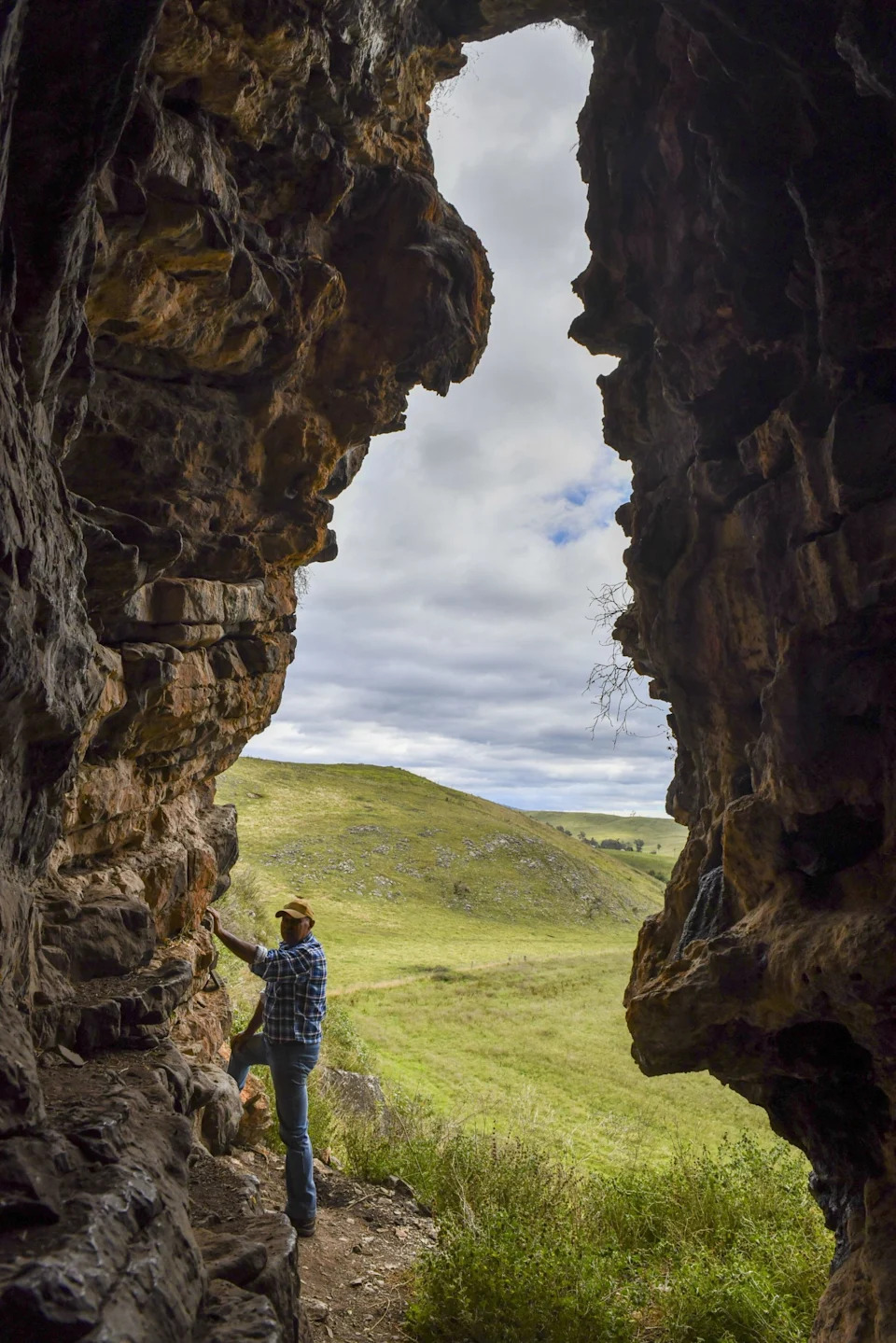
Gunai Kurnai Elder Uncle Russell Mullett at the cave entrance of Cloggs Cave. (Jess Shapiro via SWNS)
Findings: Selective Gathering And Repeated Burning
Study co-author Elle Grono (ANU) reports that phytoliths indicate whole grasses — stems, leaves, flowers and roots — were taken from the landscape and laid out in thin layers inside the cave to be burned. Partially burned phytoliths embedded in distinct ashy layers could only have been produced by in-cave burning rather than natural deposition or occasional animal transport.
The team identified 29 distinct phytolith types from grasses, herbs and woody plants; up to 97% of the assemblage derived from grasses. Both cool-temperate Pooideae and warm-climate Panicoideae grasses are represented, while drought-tolerant Chloridoideae and woody-plant phytoliths were far less common. The evidence suggests deliberate selection of particular grasses growing a short distance from the cave entrance rather than indiscriminate collection from the wider woodland.
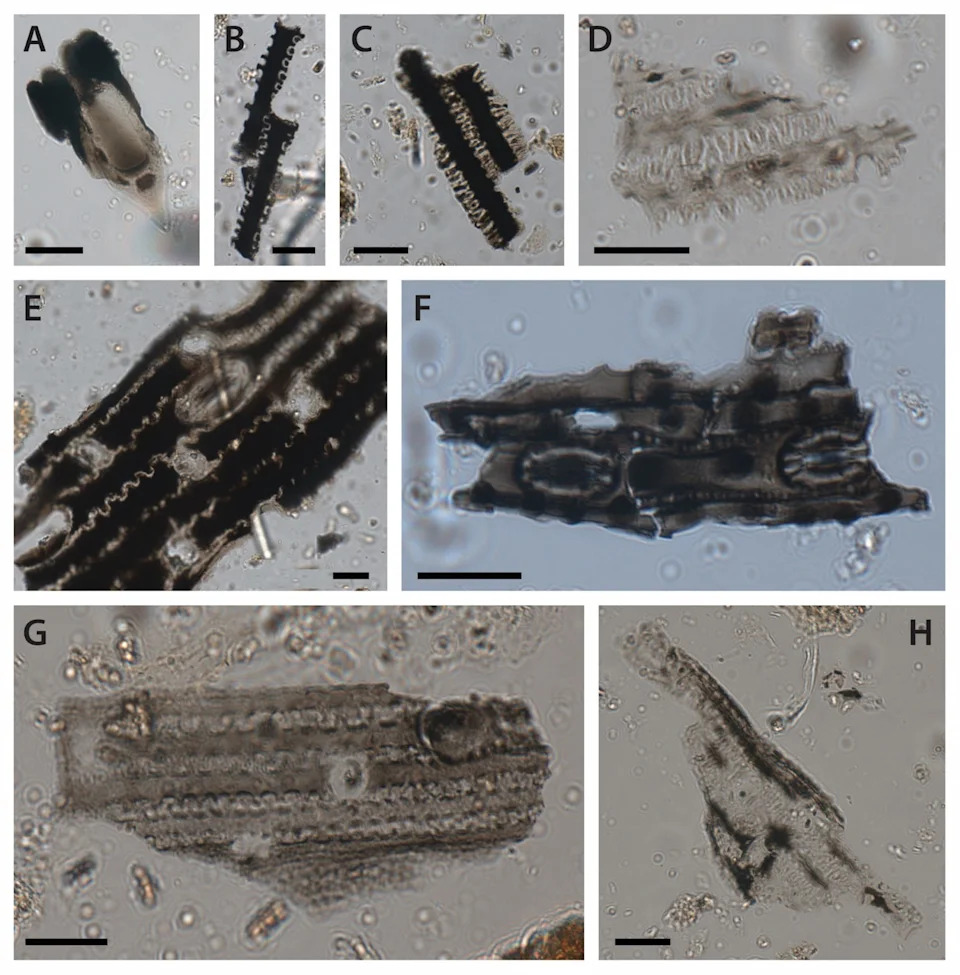
Microscopic images of burnt grass phytoliths from Cloggs Cave. Most of the images depict phytoliths from the inflorescences and leaves of grasses. (GunaiKurnai Land via SWNS)
Stratigraphy, Dates And Ritual Context
Within the upper strata the researchers documented 73 thin ashy layers dated to roughly 4,400–1,600 years ago. Deeper deposits and phytolith preservation indicate a much longer sequence of activity, which the authors interpret as extending to around 25,000 years ago. An unexpected 28-centimetre standing stone found in the ashy sequence was dated to about 2,000 years ago and is interpreted as a ritual feature erected by what the report refers to as Old Ancestors.
"The Old Ancestors selected whole grasses from the wider landscape and carried them into Cloggs Cave to spread them out in thin layers and burn," said Elle Grono.
Bruno David (Monash University), who co-led the excavations, noted that the burning pattern accords with GunaiKurnai traditional practices that use ash in rites and to mark or trace movements, including references to spirit-beings in oral histories. Other macrobotanical finds from deeper layers — such as fat-smeared and trimmed Casuarina sticks — point to a variety of ritual uses of plants across the site's long history.
Community Partnership And Ethical Practice
The excavations were conducted at the request of the GunaiKurnai Land and Waters Corporation and involved GunaiKurnai community members in study design, fieldwork, interpretation and dissemination. The authors emphasize the importance of community partnership in interpreting ritual and cultural evidence from the site.
Significance
This research provides rare archaeological evidence linking microscopic plant remains with intentional, long-term ritual behaviors in an Australian cave context. By combining phytolith analysis, careful stratigraphic excavation and community collaboration, the study illuminates how plant-burning ceremonies played a recurring role in the spiritual and cultural life of the GunaiKurnai region for millennia.
Help us improve.





















