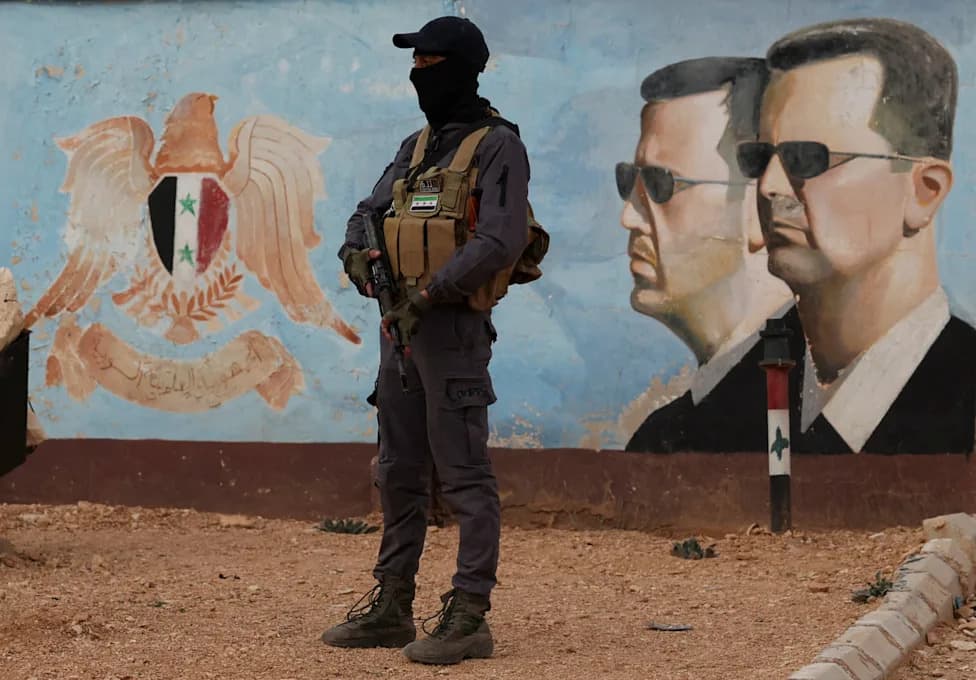
Report: The Syrian Centre for Media and Freedom of Expression found that at least nine journalists were killed and many more detained or disappeared over the last five years amid sectarian violence and restrictions under the Transitional Government. The centre documents killings of clearly marked reporters, prolonged incommunicado detention, restricted access for foreign correspondents, and alleged abuses by foreign forces. It warns that new and existing laws—most notably Law No. 20 (2022) and Law No. 19 (2024)—have been used to limit speech and media freedom during the transition.
Report: Transitional Government Suppressed Coverage as At Least Nine Journalists Were Killed, Detained or Disappeared in Syria
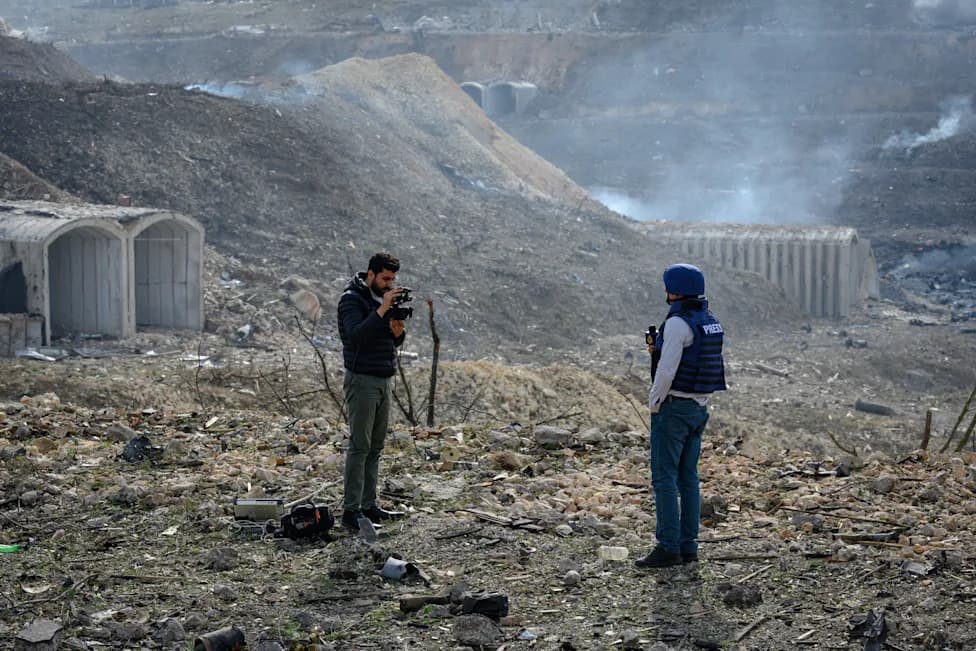
An Al Jazeera Arabic journalist broadcasts, while Syrians examine the aftermath of powerful Israeli airstrikes that targeted missile and weapons depots at a former Syrian military base, which residents said was also used by Russia, on December 16, 2024. (photo credit: Scott Peterson/Getty Images)
The Syrian Centre for Media and Freedom of Expression has documented sustained and severe threats to journalism in Syria, finding that at least nine journalists were killed in connection with their work over the past five years and many others were detained, disappeared or harassed during the transitional period following the fall of the Assad regime.
Killings, Detentions and Impunity
Six of the nine fatal attacks occurred in connection with or after the regime's fall; four of those incidents involved reporters covering armed confrontations linked to the transition or the unrest in the governorate of Sweida. Most victims were clearly identified as press members—wearing vests or helmets or travelling in vehicles marked with "press" insignia—yet relatives and colleagues say no prompt, effective, independent or publicly disclosed investigations followed.
The report documents cases in which journalists were killed away from their workplaces, including Alaa Mohammed, who was shot at his home in what investigators believe was retaliation for his political commentary. Mohammed was a member of the Alawite community, which the centre says has been repeatedly targeted since the regime change, including during the sectarian violence in March 2025 that reportedly left more than 1,400 people dead.
Disappearances and Incommunicado Detention
Beyond killings, the centre records numerous incidents of arbitrary arrest, enforced disappearance and prolonged incommunicado detention. Photojournalist Sari Majid A. Shoufi of Suwayda 24 went missing while covering attacks on the Druze in Sweida; his body was found after a 10-day search. Kurdish reporter Hassan Zaza was taken from his home, held without contact for a week and later released without formal charges. American journalist Bilal Abdul Kareem was arrested in al-Bab and remains in custody with no public information about charges or his whereabouts.
Two other reporters, Ahmed Polad and German journalist Eva Maria Michelmann, were abducted while covering clashes between the Syrian Arab Army and fighters formerly backed by the United States. Their locations were unknown for months until April 2026, when both were discovered to be held in detention centres in Damascus and Aleppo. Michelmann was released after diplomatic pressure and legal representation; Polad remains detained without a publicly disclosed legal process.
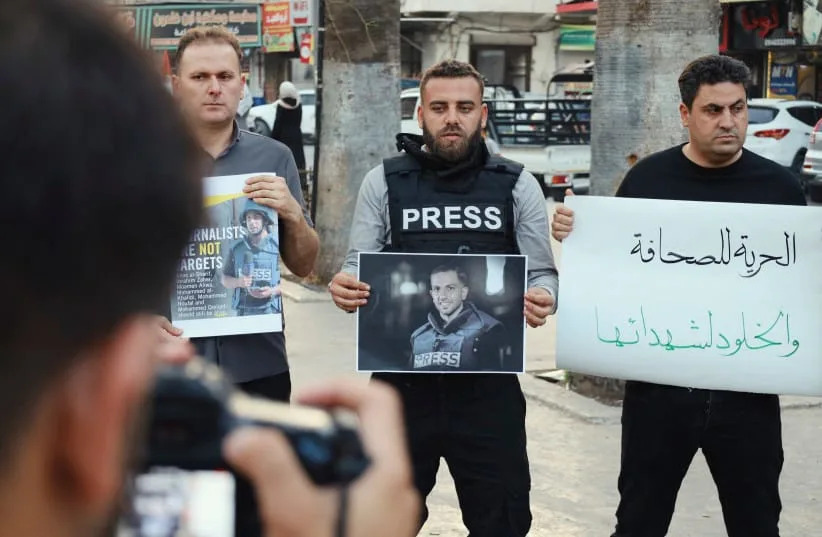
A man in a press vest holds a photo of a journalist beside protesters with signs in Arabic during a rally in Idlib, Syria on August 11, 2025. (credit: OMAR ALBAW/Middle East Images/AFP via Getty Images)
Restrictions on Foreign and Independent Reporting
International correspondents also face substantial barriers. Authorities have sealed off areas affected by sectarian attacks—most notably after the March 2025 violence—restricted access for foreign journalists and demanded extensive disclosure of sources, past reporting and travel plans. In some cases, approvals to report in Syria never arrived or were heavily delayed. Reporters told the centre they were sometimes barred from publishing while inside the country or required to sign pledges restricting future reporting for alleged "security reasons." The New York Times and other outlets were forced in some cases to rely on phone interviews instead of on-the-ground reporting.
"These practices raise concerns regarding transparency, media access, and the ability of independent journalists to document events of public interest during the transitional period," the centre said, noting that they contradict public statements by Transitional Government officials about openness to international media.
Censorship, Laws and Foreign Actors
Censorship has extended to cultural spaces: the centre reports a theatrical production was suspended in August 2025 after actors criticized the Transitional Government's handling of attacks on Alawite and Druze communities. The Transitional Government also restricted reporting in some Aleppo neighborhoods following the retaking of those areas.
Legal protections introduced during the transition—including the 2025 Constitutional Declaration guaranteeing freedom of opinion and press—have been undermined in practice, the report says. Rights groups have criticized Syria's Law No. 20 of 2022 on Combating Cybercrime for criminalizing online expression, and Law No. 19 of 2024, which established a Media Ministry, for concentrating control over media and enabling censorship.
The report documents violence by foreign forces as well. It cites an assault by Russian military guards on Souria Post journalists Hashim Al-Abdullah and Ehab Khaled at the Hmeimim air base in March 2025, during which reporters were detained, beaten and threatened. It also notes that ANHA reporters Jihan Belkin and Nazim Dashdan were killed by a drone strike near Aleppo while returning from coverage of clashes at the Tishreen Dam; their vehicle bore press markings but appears to have been hit by Turkish or Turkish-backed forces.
What the Centre Urges
The Syrian Centre for Media and Freedom of Expression urges independent, transparent investigations into killings and abductions, guarantees for journalists' access and safety, and repeal or revision of laws used to restrict media freedom. The centre warns that without accountability and greater openness, the transitional period risks entrenching impunity for crimes against journalists and further eroding press freedom in Syria.
Key named cases in the report: Alaa Mohammed; Sari Majid A. Shoufi; Hassan Zaza; Bilal Abdul Kareem; Ahmed Polad; Eva Maria Michelmann; Hashim Al-Abdullah; Ehab Khaled; Jihan Belkin; Nazim Dashdan.
Help us improve.