Russian researchers modeled the impact of somatic mutations on aging and report that, if those mutations were eliminated, a theoretical human lifespan could be around 156 years. Somatic mutations—DNA changes that accumulate in cells—disproportionately affect non‑regenerating tissues such as the brain and heart, linking them to dementia and heart failure. The authors note other aging mechanisms remain important, and the paper offers a roadmap for research rather than an immediate way to extend life. Public‑health measures recommended by the NIH continue to be the most practical tools for adding healthy years today.
New Model Suggests Humans Could Live Up to 156 Years if Somatic DNA Damage Were Eliminated

An older man jogs.
Aging remains the universal constraint on human life. The current oldest living person is Ethel Caterham of the United Kingdom, listed by Guinness World Records at 116 years old.
For years many scientists treated roughly 122 years as an effective upper limit to human lifespan, a conclusion often cited from a 2021 study in the journal Oncoscience. But new theoretical work published in July 2026 in npj Aging suggests that, under specific assumptions, humans might live substantially longer—perhaps as long as about 156 years.
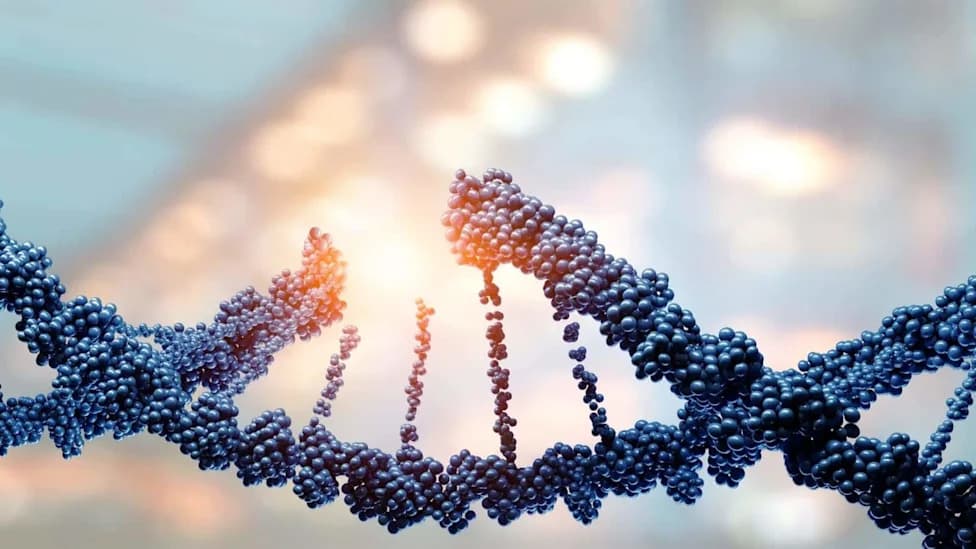
The paper, authored by Russian researchers Evgeniy Efimov, Vlad Fedotov and Leonid Malaev, centers on the role of somatic mutations—DNA changes that accumulate in a body’s cells over time due to environmental exposures and copying errors during cell division. The authors built a mathematical model in which the effects of somatic mutations are removed; in that counterfactual scenario the model estimates a possible lifespan near 156 years.
Why Somatic Mutations Matter
Somatic mutations are widely recognized as contributors to aging and disease because they can impair cell function and, in some cases, trigger cancer. Some organs—such as the liver—can regenerate cells and thus tolerate accumulated DNA damage better. By contrast, two vital organs, the brain and the heart, contain cell types that do not readily renew: neurons and cardiomyocytes. That distinction aligns with global data showing dementia and heart disease among the leading causes of death.
"The conditions that cost people their independent, healthy years—such as dementia and heart failure—fall heavily on precisely the tissues that cannot regenerate," Jordan Weiss, an assistant professor and aging researcher at NYU’s Grossman School of Medicine, told Newsweek. "So the gap between how long people live and how long they stay well is concentrated in organs that have no way to replace worn‑out cells."
Limits and Caveats
The authors are careful to emphasize that somatic mutations are only one of several biological processes that drive aging. Their analysis does not eliminate the contributions of mitochondrial dysfunction, epigenetic drift, telomere shortening or loss of proteostasis. The 156‑year figure is an estimate from a theoretical model that removes one major damage mechanism; it does not represent an immediately achievable human lifespan.
Egle Pavyde, a pharmacist and regenerative medicine researcher, told Newsweek the study’s strength is in quantifying a long‑held suspicion: accumulated DNA damage is a major reason we cannot live indefinitely, but it is only one piece of a complex puzzle.
"It proves that DNA damage accumulating in our cells is one of the reasons we cannot live indefinitely but also shows that our bodies are complex systems and that it is only one piece of a much larger puzzle," Pavyde said.
The practical implication is a research roadmap: therapies that prevent or repair somatic DNA damage—particularly in non‑renewing tissues such as the heart and brain—could yield the largest gains in healthy lifespan. As Weiss put it, protecting tissues that already renew themselves will yield limited benefit; preserving DNA integrity in neurons and cardiomyocytes is the harder and more valuable challenge.
What This Means for People Today
The study does not provide a clinical method to extend human lifespan right now. Meanwhile, decades of public‑health research identify behaviors and interventions that improve healthy life expectancy. The National Institutes of Health recommends avoiding smoking, maintaining a healthy weight, getting quality sleep, keeping up with vaccines and preventive cancer screenings, and treating hypertension and high cholesterol.
Luigi Ferrucci, scientific director of the NIH’s National Institute on Aging, summarized: "People have demonstrated that if you do these things, which are all feasible, you can increase your life expectancy by 10 years. We don't need a magic pill. The magic pill is already here."
Bottom line: The new modeling work challenges the notion of a hard 122‑year ceiling by showing how one major driver of aging—somatic mutations—contributes to lifespan limits, and it spotlights DNA preservation in non‑renewing tissues as a promising focus for future research. The result is a theoretical upper bound, not a promise, and many biological hurdles remain.
Help us improve.