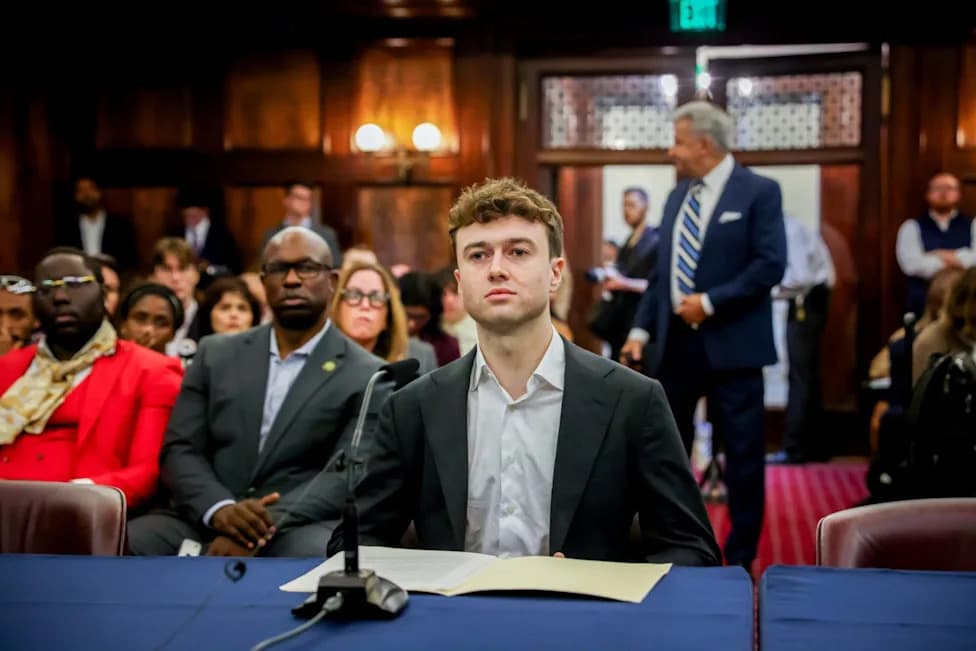
Peter Navarro lost a July 21 appeal to overturn his contempt convictions for refusing to comply with a Jan. 6 committee subpoena. A unanimous D.C. Circuit panel ruled he did not validly invoke executive privilege because such claims require presidential authorization. The court found Navarro's testimony about a short phone call with former President Trump uncorroborated and insufficient to overturn the trial court's credibility findings. Navarro served a four-month sentence in 2024 and plans further appeals, his lawyer says.
Peter Navarro Loses Appeal Over Jan. 6 Contempt Conviction; D.C. Circuit Affirms Ruling
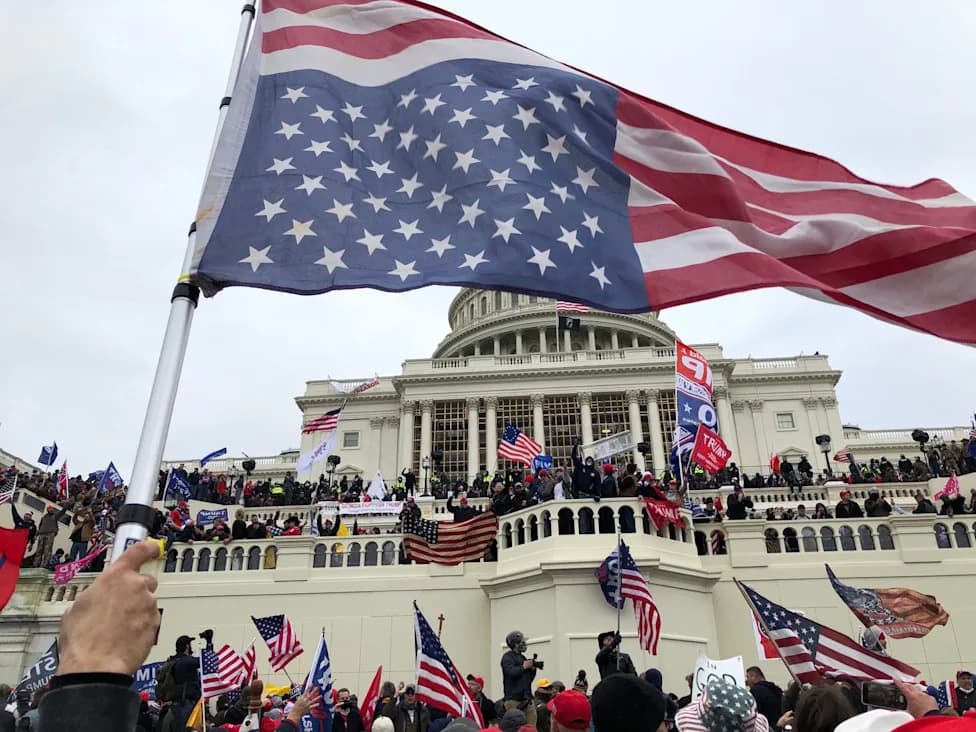
Rioters stand on the US Capitol building to protest the official election of President-elect Joe Biden on Jan. 6, 2021 on Washington DC.(Thomas P. Costello, USA TODAY Network)
Former White House trade adviser Peter Navarro lost a bid to overturn his contempt of Congress convictions on July 21, when a three-judge panel of the U.S. Court of Appeals for the D.C. Circuit unanimously affirmed a lower court ruling. Navarro was convicted on two counts of contempt for refusing to produce documents and for declining to testify after being subpoenaed by the House committee that investigated the Jan. 6, 2021, attack on the U.S. Capitol.
Why the Appeal Failed
Navarro argued on appeal that he was protected by executive privilege and therefore could not be compelled to comply with the committee's subpoenas. The appeals court rejected that claim, finding that Navarro never properly invoked executive privilege because such a claim must be authorized by the President.
"Dr. Navarro first asserted executive privilege unilaterally without consulting with or receiving direction from President Trump," wrote Judge Patricia A. Millett for the panel, which also included Judges Cornelia T.L. Pillard and J. Michelle Childs.
The panel explained that Navarro's later testimony that President Donald Trump had instructed him in a brief phone call to assert privilege was insufficiently corroborated and did not overcome the trial court's credibility findings. The appeals court described Navarro's testimony as largely "self-serving" and "conclusory."
Background And Consequences
Navarro was subpoenaed in 2022 after publicly claiming in a book and media interviews that he helped devise a plan to delay certification of the 2020 presidential election results. After he failed to comply with the committee's subpoena, he was indicted and convicted on two counts of contempt of Congress.
He served a four-month prison term in 2024 after the U.S. Supreme Court denied a request to postpone his sentence while his appeal proceeded. Following the 2024 election, President Trump appointed Navarro to a White House advisory role on trade and manufacturing.
What's Next
Navarro's attorney, Abhishek Kambli, said the decision was not surprising and indicated they plan to pursue further appeals. Kambli argues the outcome has implications for senior presidential advisers who may claim executive privilege in good faith when confronted with congressional subpoenas.
This ruling clarifies the appeals court's position that a unilateral assertion of executive privilege by a subordinate official is insufficient; presidential authorization or clear direction from the President is required for that protection to apply.
Note: This article has been updated with additional information.
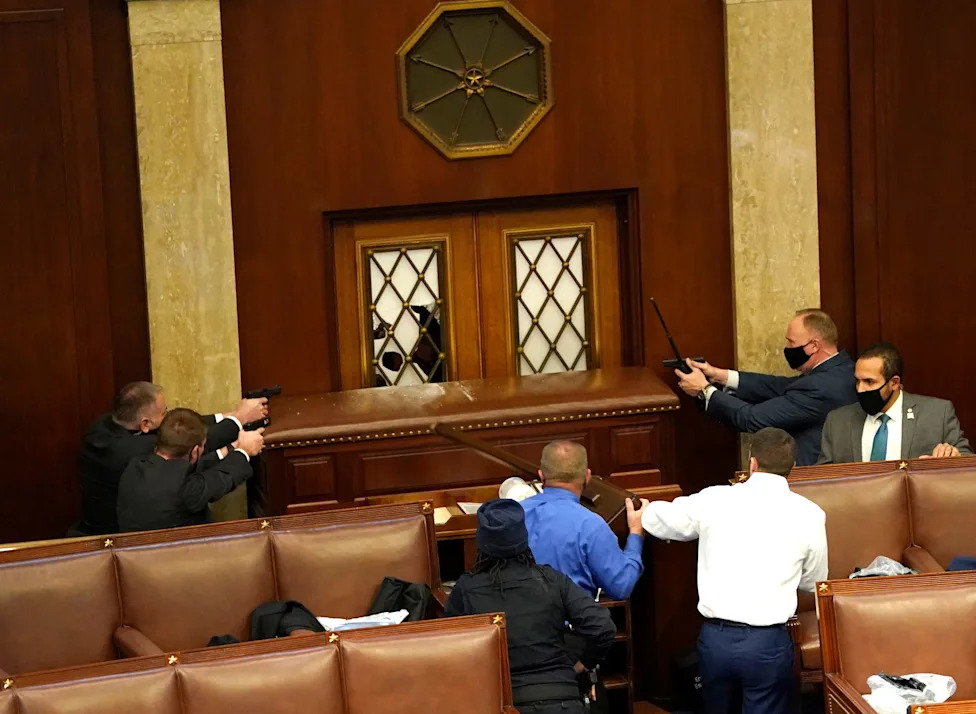
Law enforcement officers point their guns at a door that was vandalized in the House Chamber during a joint session of Congress on Jan. 6, 2021 in Washington, DC. Congress held a joint session today to ratify President-elect Joe Biden's 306-232 Electoral College win over President Donald Trump.(Drew Angerer, Getty Images)
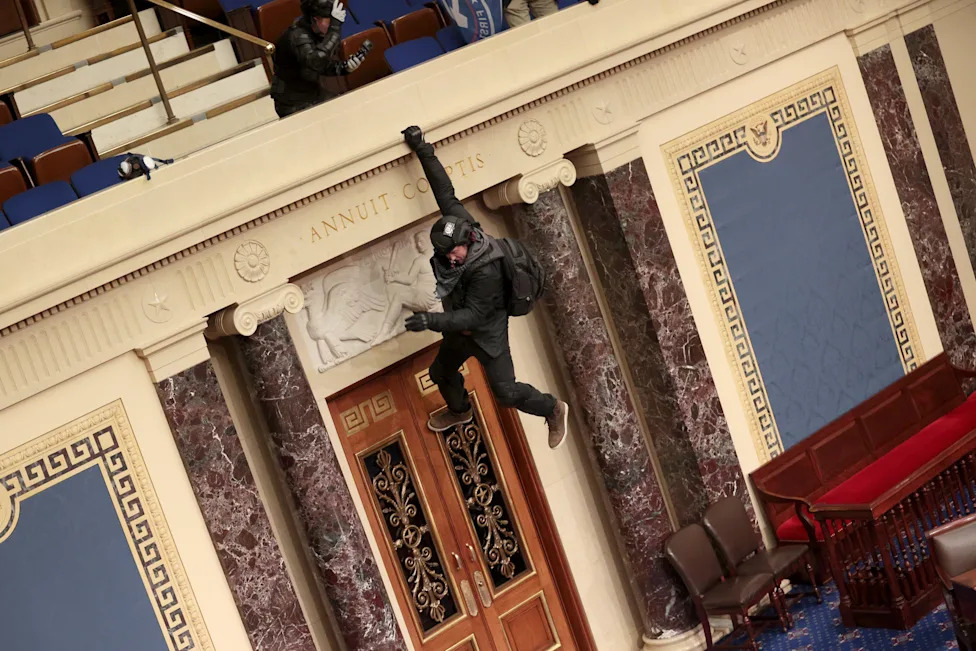
Pro-Trump rioter Josiah Colt is seen hanging from the balcony in the Senate Chamber on Jan. 6, 2021 in Washington, DC. Josiah Colt turned himself in at the Ada County Sheriff's Office in Boise, Idaho on Jan. 12, 2021.(Win McNamee, Getty Images)
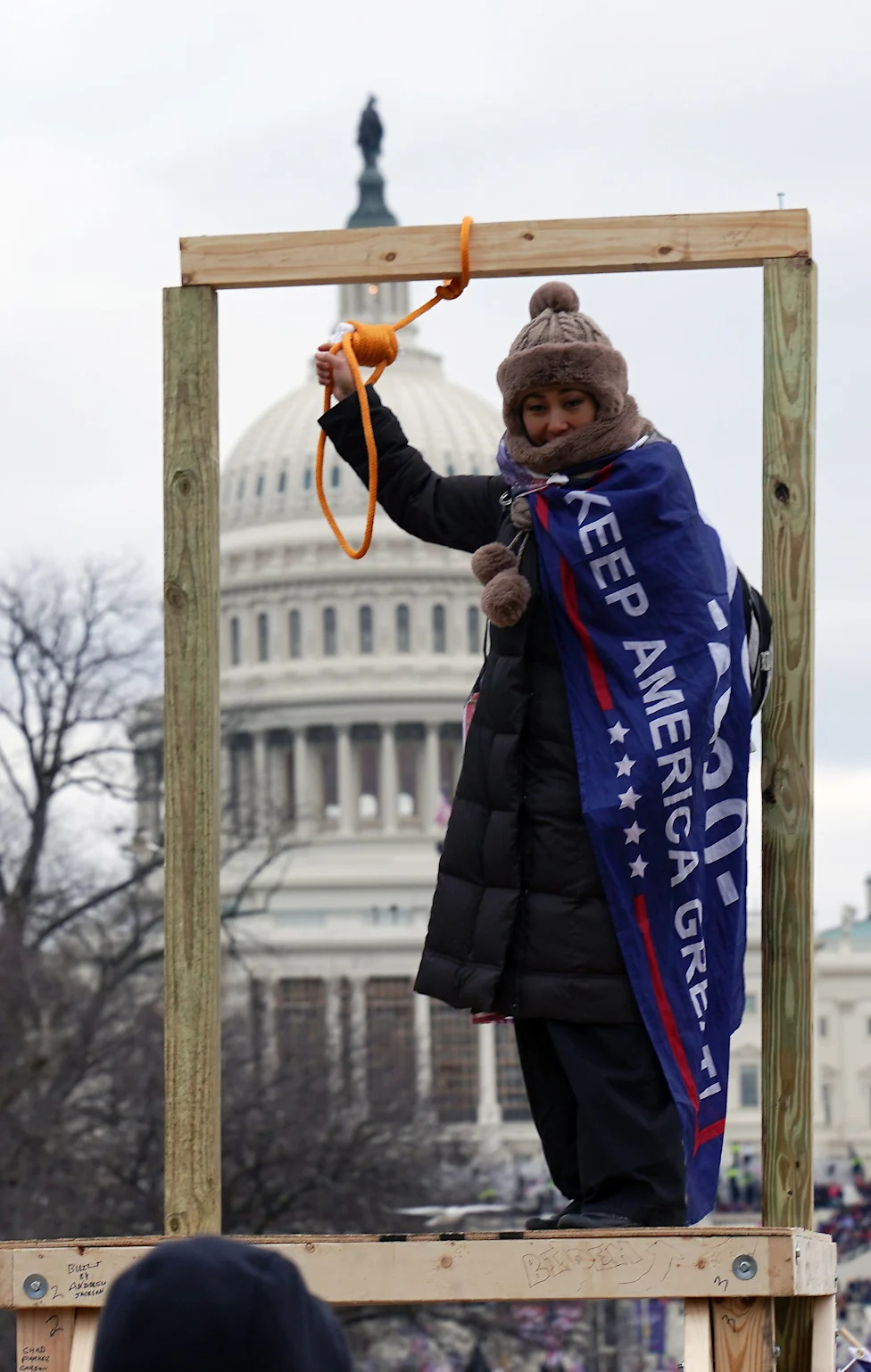
A person poses with a noose displayed in front of the US Capitol building on Jan. 6, 2021.(Trevor Hughes, USA TODAY)
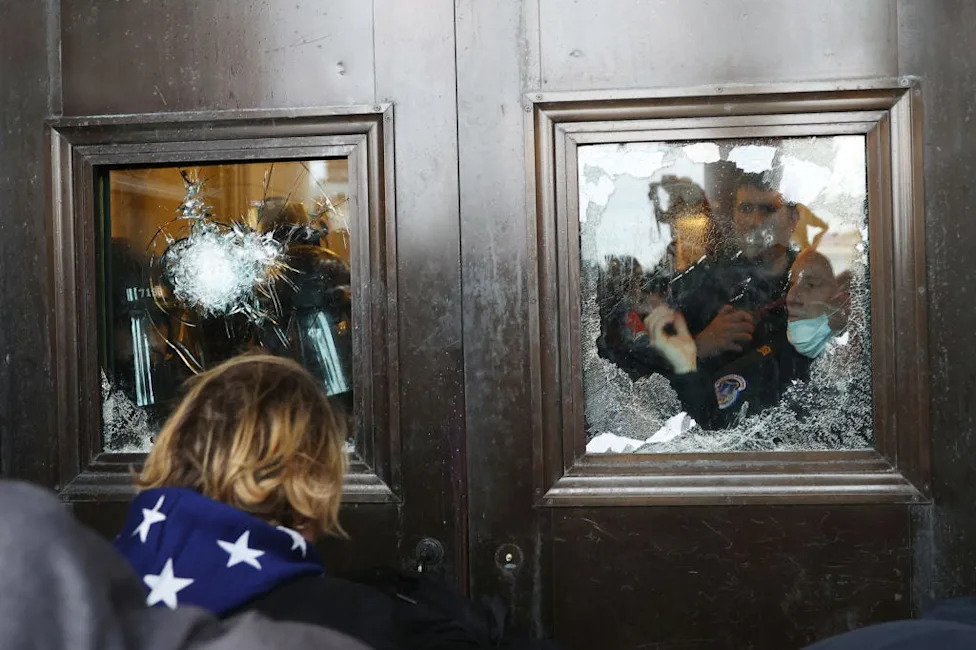
A Capitol police officer looks out of a broken window as pro-Trump rioters gather on the U.S. Capitol Building on January 06, 2021 in Washington, DC.(Tasos Katopodis, Getty Images)
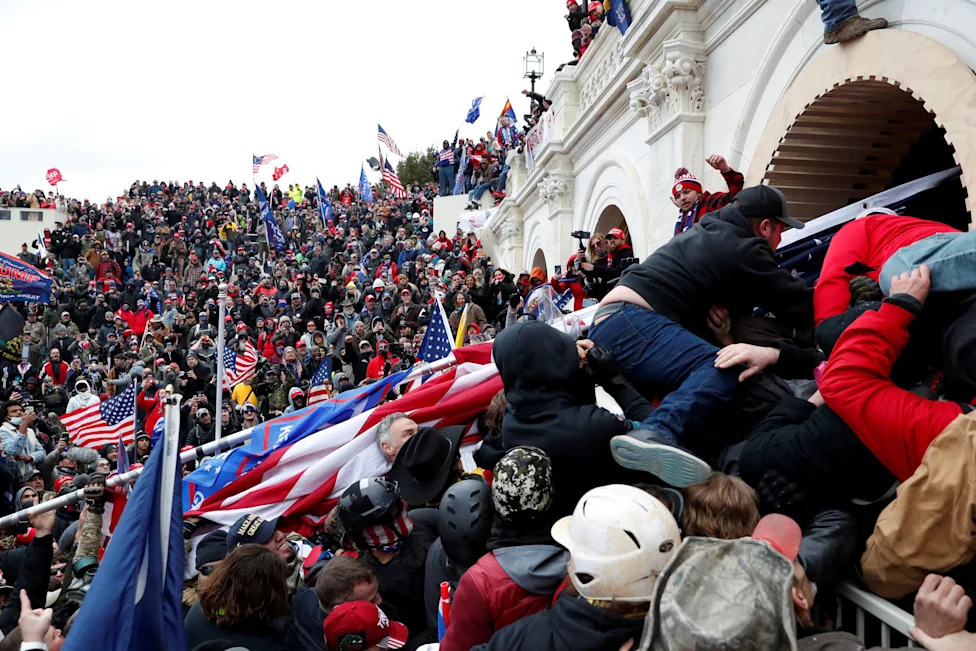
Pro-Trump protesters storm into the U.S. Capitol during clashes with police, during a rally to contest the certification of the 2020 U.S. presidential election results by the U.S. Congress, in Washington on Jan. 6, 2021.(Shannon Stapleton, REUTERS)
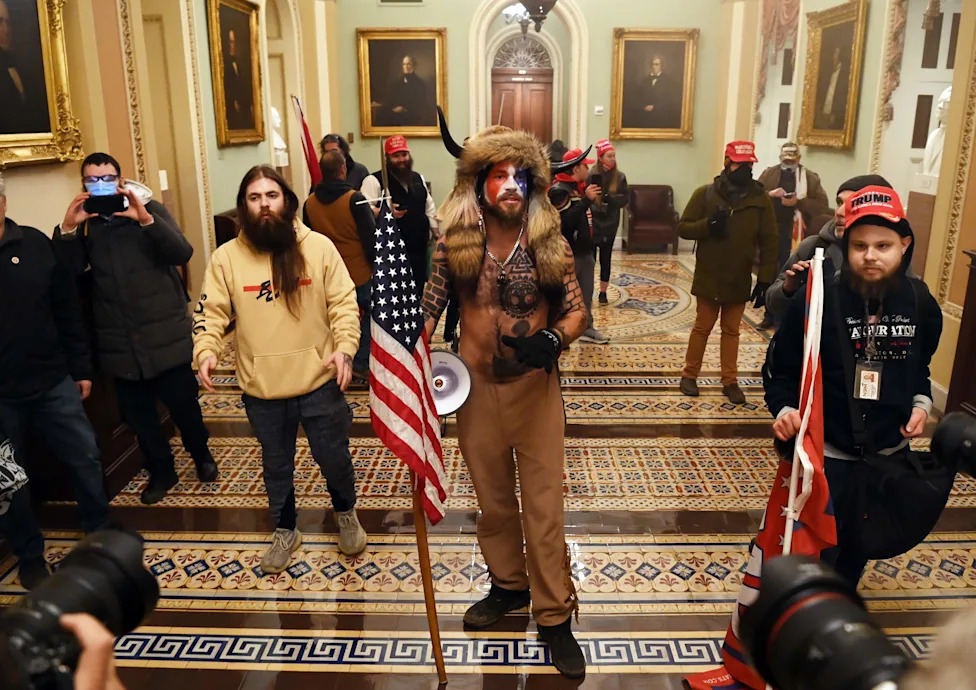
Supporters of US President Donald Trump enter the U.S. Capitol on Jan. 6, 2021, in Washington, DC.(Saul Loeb/ Getty Images)
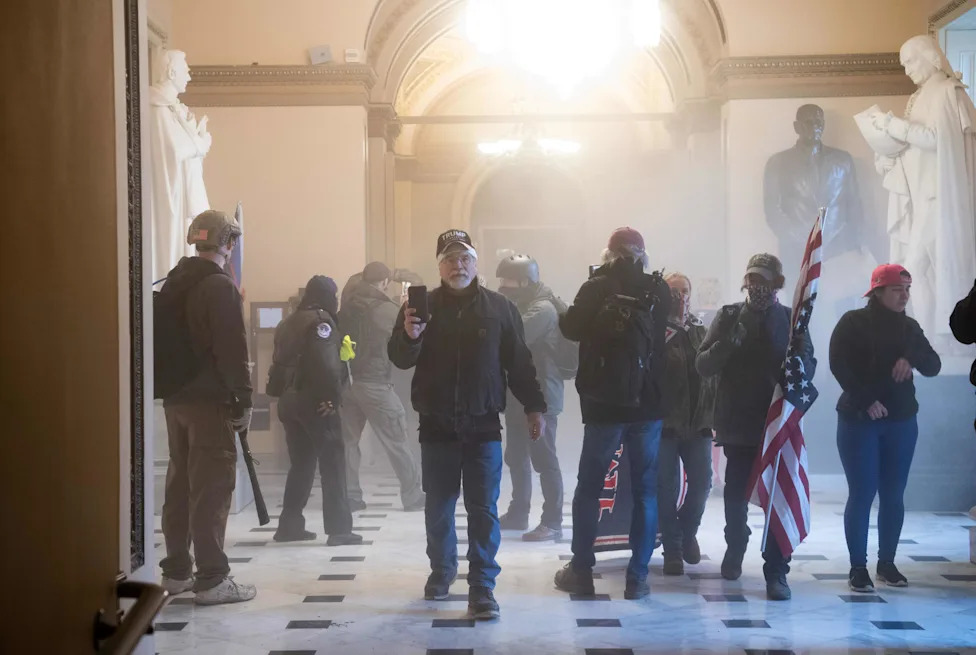
Pro-Trump rioters protest inside the US Capitol on Jan. 6, 2021, in Washington, DC. - Demonstrators breeched security and entered the Capitol as Congress debated the a 2020 presidential election Electoral Vote Certification.(SAUL LOEB, AFP via Getty Images)
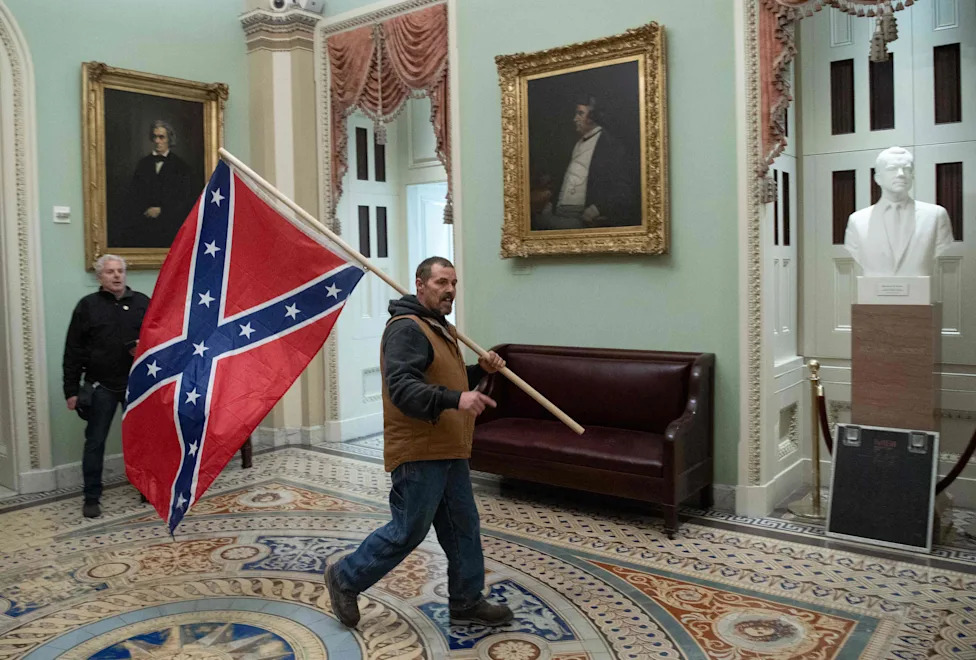
A supporter of President Trump carries a Confederate flag as he protests in the U.S. Capitol Rotunda, in Washington, DC on Jan. 6, 2021,(SAUL LOEB, AFP via Getty Images)
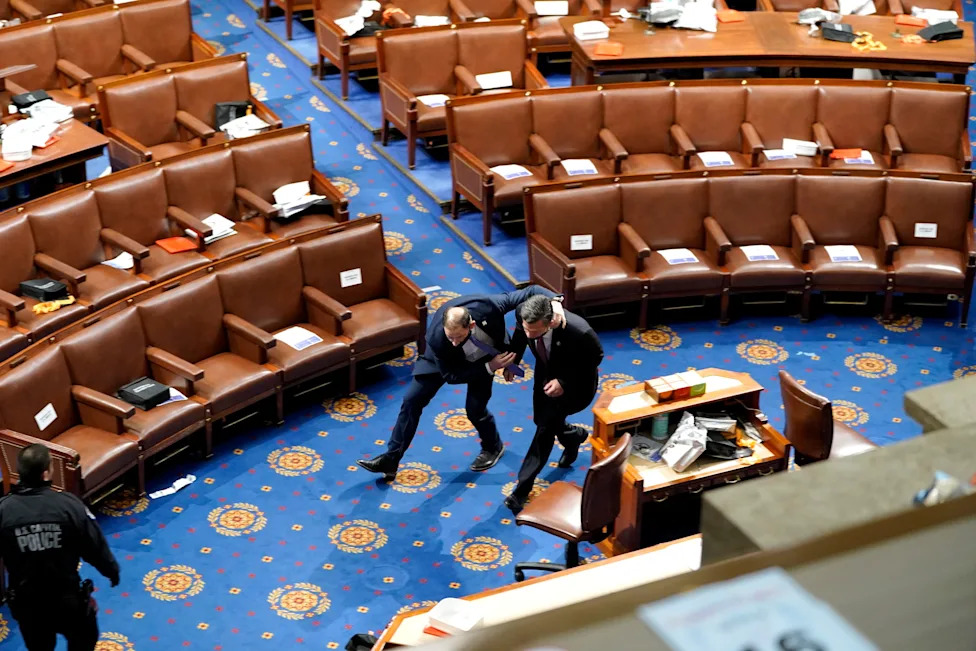
Members of congress run for cover as protesters try to enter the House Chamber during a joint session of Congress on January 06, 2021 in Washington, DC.(Drew Angerer, Getty Images)
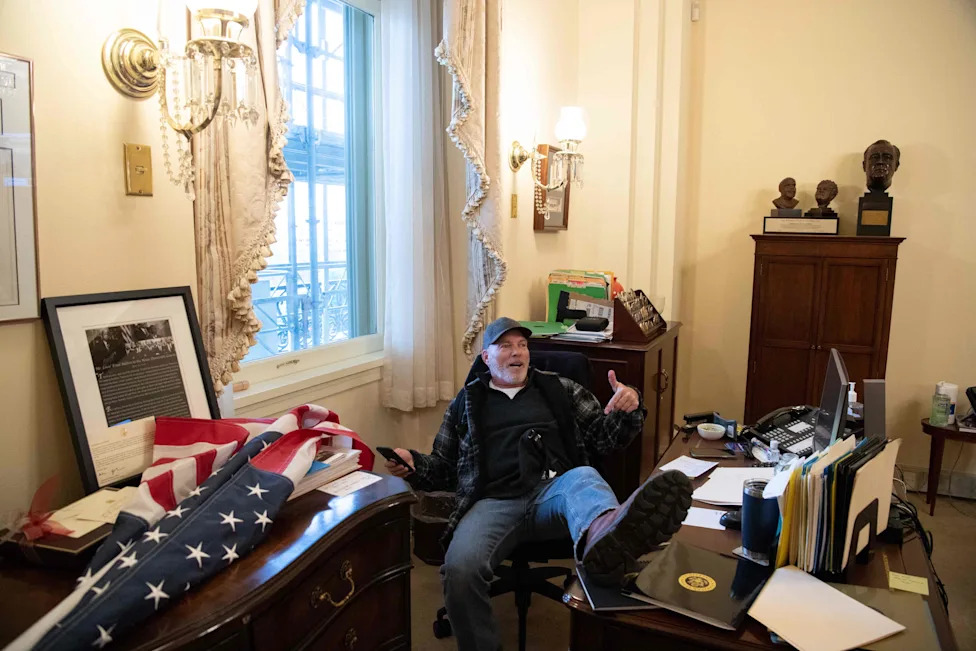
A supporter of President Donald Trump sits inside the office of U.S. Speaker of the House Nancy Pelosi inside the U.S. Capitol in Washington, D.C., on Wednesday, Jan. 6, 2021.(SAUL LOEB, AFP via Getty Images)
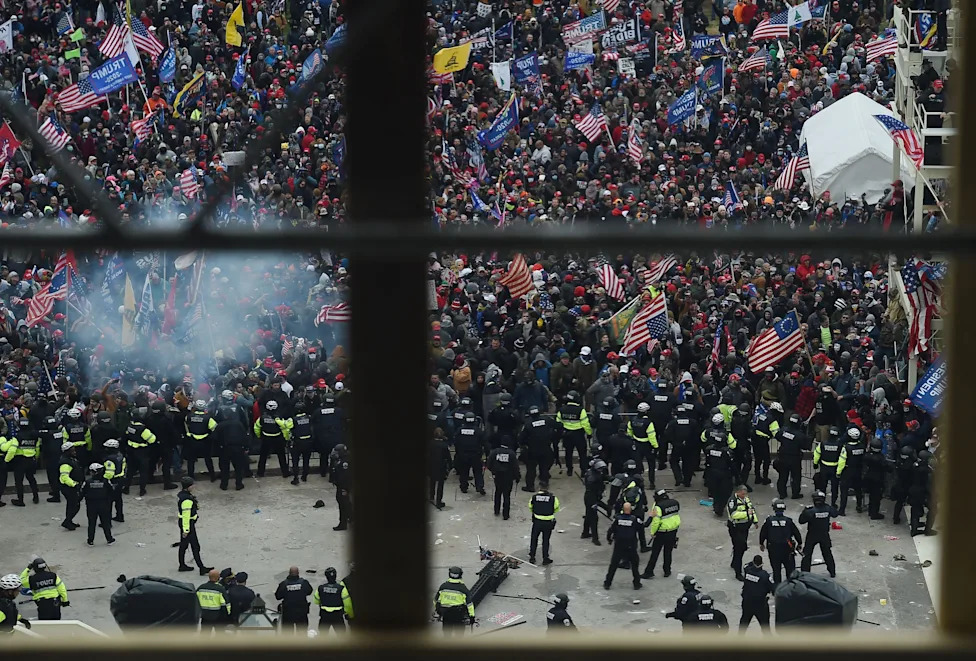
Police hold back supporters of US President Donald Trump as they gather outside the US Capitol's Rotunda on January 6, 2021, in Washington, DC. - Demonstrators breeched security and entered the Capitol as Congress debated the a 2020 presidential election Electoral Vote Certification.(OLIVIER DOULIERY, AFP via Getty Images)
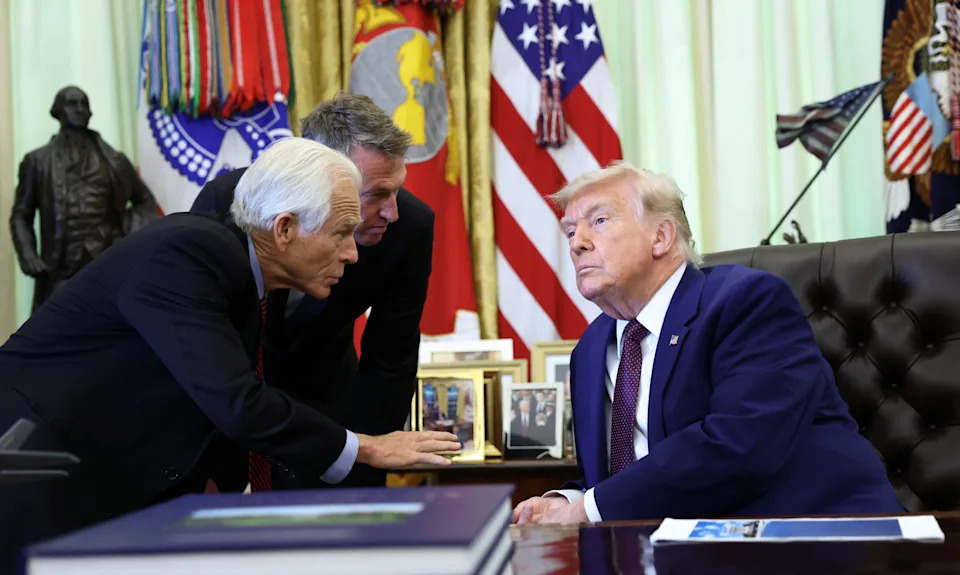
U.S. President Donald Trump speaks with Trade and Manufacturing adviser Peter Navarro and Customs and Border Protection Commissioner Rodney Scott in the Oval Office of the White House in Washington, D.C., U.S., June 3, 2026.
Help us improve.