The article tells how Japanese American soldiers, many of them Nisei, responded to wartime discrimination by serving with extraordinary valor in World War II. Despite the Army's early removal of Japanese American servicemembers and the internment of roughly 120,000 community members under Executive Order 9066, about 33,000 served. The 100th Infantry Battalion and the 442nd Regimental Combat Team fought in Italy and France, including the 1944 rescue of the 'Lost Battalion' in the Vosges, and became one of the most decorated units in U.S. history.
The 'Purple Heart Battalion': How Japanese American Soldiers Fought Nazis Abroad and Prejudice at Home
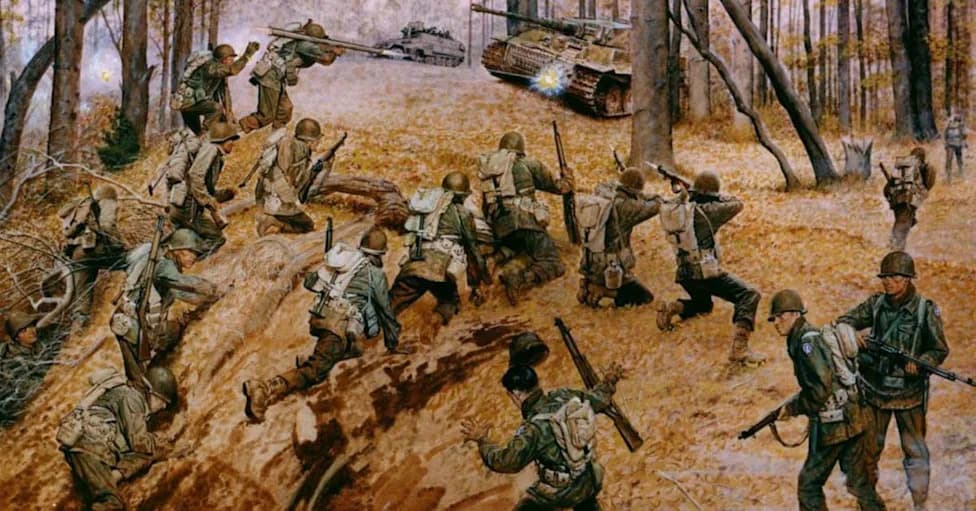
The 442nd Regimental Combat Team rescues the 'Lost Battalion' in October 1944. (U.S. Army Center of Military History)
One month after the attack on Pearl Harbor, fear and suspicion reshaped U.S. policy toward Japanese Americans. In January 1942 the Army removed Japanese American soldiers and ROTC cadets from service. In February, President Franklin D. Roosevelt issued Executive Order 9066, which led to the forced removal and incarceration of roughly 120,000 Japanese Americans.
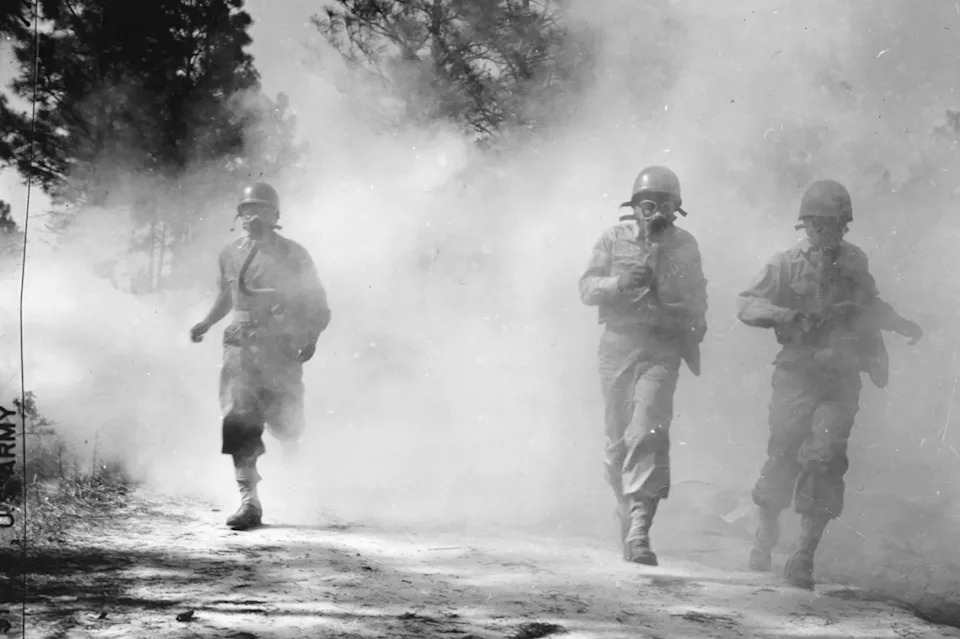
Service members of the 442d Infantry Regiment run through a screen of smoke during training at Camp Shelby, Mississippi, on May 11, 1943. (U.S. National Archives)
Choosing To Serve Despite Injustice
Despite these injustices, tens of thousands of Japanese Americans volunteered or accepted the draft to serve the nation they called home. About 33,000 Nisei (second-generation Japanese Americans, pronounced 'NEE-say') joined the U.S. military during World War II. Many of them served in the famed 442nd Regimental Combat Team and its predecessor, the 100th Infantry Battalion.
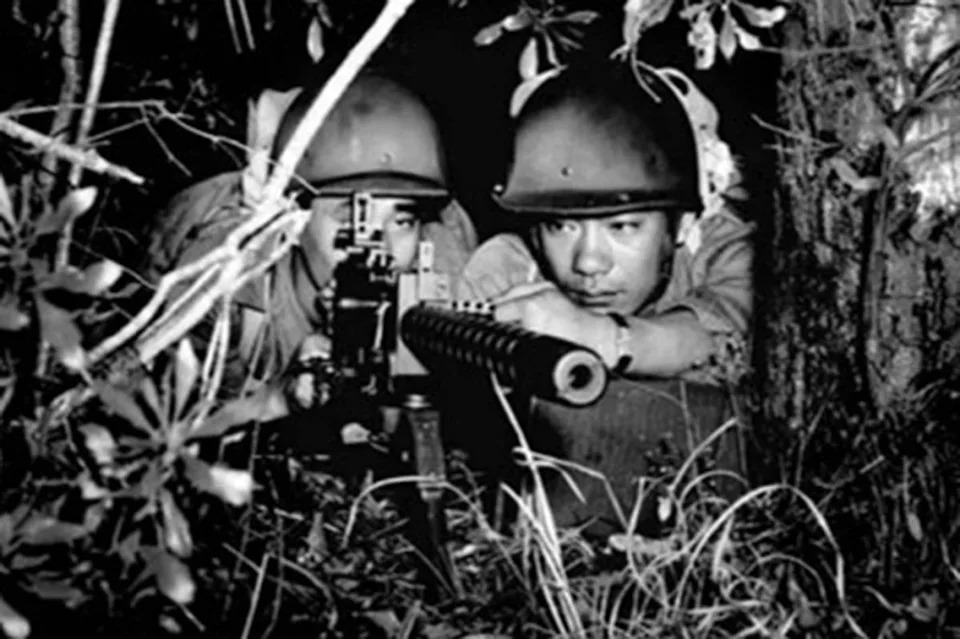
Pvt. Takeshi Omuro fires a machine gun as Pfc. Kentoku Nakasone feeds the cartridge belt to the weapon in 1943. (U.S. Army)
From Hawaii Guard Units To The European Front
The 100th Infantry Battalion was formed in mid-1942 from roughly 1,400 Hawaii National Guardsmen. Commanded by white officers, the unit adopted the motto 'Remember Pearl Harbor.' Suffering heavy casualties but earning a reputation for toughness, the 100th later became the 442nd's 1st Battalion.
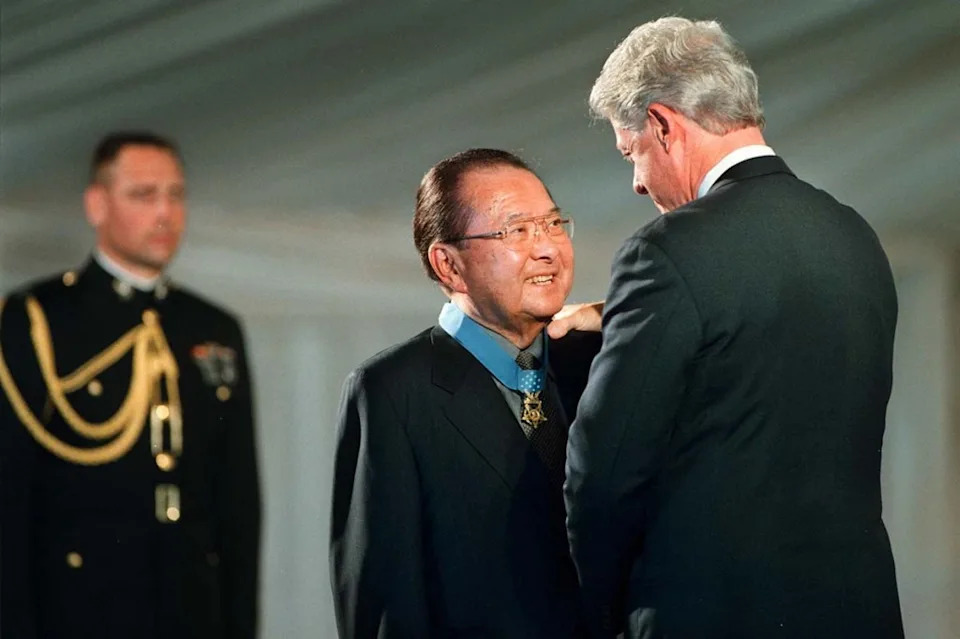
President Bill Clinton awards Sen. Daniel Inouye (D-Hawaii) the Medal of Honor at the White House in Washington, June 21, 2000. (Getty Images)
On February 1, 1943, the Army activated the 442nd Regimental Combat Team. Nisei soldiers trained at Camp Shelby, Mississippi, and elsewhere; some trained for nearly a year while others were rushed into combat to reinforce the 100th. The 442nd first saw major action in Italy in June 1944, helped the Allies capture Rome, and then moved into France.
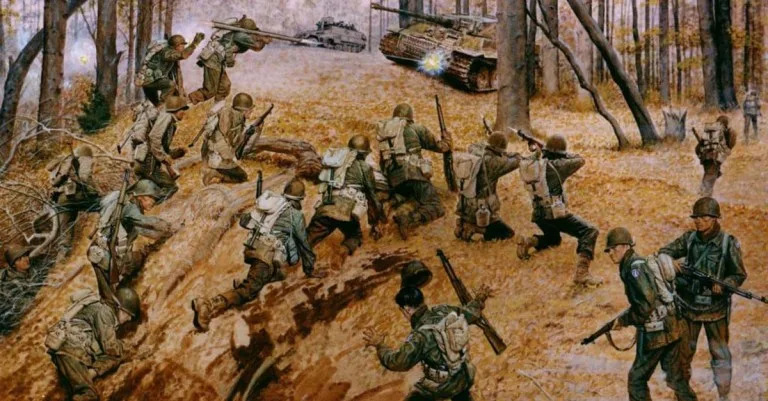
442nd Regimental Combat Team
The Vosges Campaign And The 'Lost Battalion'
In late October 1944, the 442nd fought in the dense, rain-soaked Vosges Mountains on the French-German front. Tasked with rescuing the surrounded 1st Battalion, 141st Infantry Regiment — the so-called 'Lost Battalion' — the Nisei soldiers endured minefields, artillery barrages, icy weather, and brutal terrain.
every day carry m9 beretta 80x
'Go for Broke' — the 442nd's motto — reflected the unit's determination to prove its loyalty through courage and sacrifice.
After repeated assaults and six days of intense fighting, the 442nd succeeded in rescuing the men of the Lost Battalion, but at a high cost in lives and wounds. Individual acts of extraordinary valor included Pvt. George Sakato, who charged enemy positions and personally captured and killed enemy soldiers, and Pvt. Barney Hajiro, who assaulted 'Suicide Hill' and neutralized multiple machine-gun nests under heavy fire.
"Axis Sally"
Legacy And Recognition
The 442nd became one of the most decorated units in U.S. military history. Its soldiers collectively earned nearly 9,500 Purple Hearts, about 4,000 Bronze Stars, 560 Silver Stars, and seven Distinguished Unit Citations (later redesignated Presidential Unit Citations). The unit's heavy casualty rate earned it the somber nickname 'the Purple Heart Battalion.'
housing inspectors at Fort Benning check the condition of an air filter and HVAC return vent during a quality assurance inspection of a home being readied for occupancy.
On June 21, 2000, President Bill Clinton awarded 21 Medals of Honor to Japanese American veterans; 19 of those recipients had served in the 442nd or the 100th. Survivors and lawmakers — including Senator Daniel Inouye — attended the White House ceremony, which highlighted both the bigotry these soldiers and their families endured and their steadfast commitment to serve with honor.
aaron zaliponi trump shooter psa rifle
Remembering Their Service: The story of the 100th and 442nd is a powerful reminder of courage in the face of prejudice: a community doubted by its own country that nevertheless answered the call to defend it. Their service reshaped perceptions and left an enduring legacy of valor and sacrifice.
Help us improve.