
Iran has described the Pakistan-mediated Islamabad memorandum with the United States as "a declaration of America's defeat," framing the accord as a victory for domestic resistance. U.S. Senator Marco Rubio began a Gulf tour to reassure allies, while the memorandum notably omits Iran's missile programme and proxy networks. Pakistan said technical talks will resume next week, and the IAEA's Rafael Grossi said UN inspections of Iranian nuclear sites are "going to happen."
Iran Calls Islamabad Deal 'A Declaration Of US Defeat' As US Senator Rubio Begins Gulf Tour
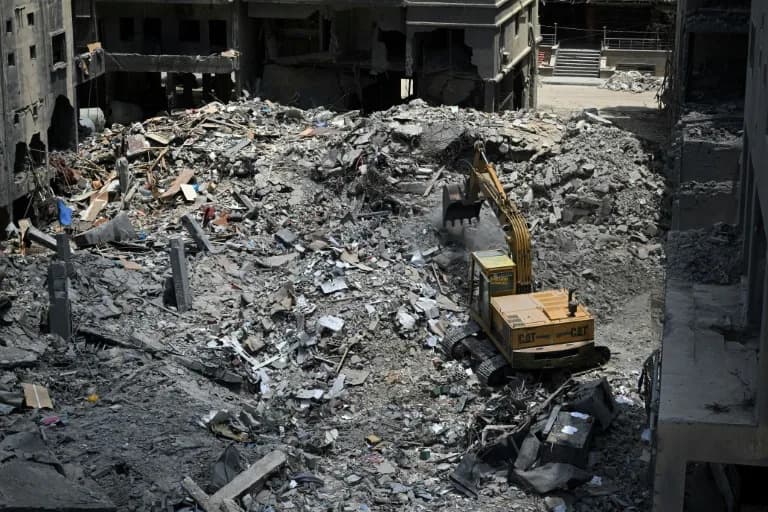
The process to remove the rubble from Israeli bombardment has begun in south Lebanon (Joseph EID)(Joseph EID/AFP/AFP)
Iran on Wednesday hailed the Islamabad memorandum it signed with the United States to end the recent Middle East war as "a declaration of America's defeat," as U.S. Senator Marco Rubio began a tour of Gulf states most affected by Tehran's actions.
The conflict, which the article says began after a large US-Israeli campaign of strikes on February 28, escalated into wider regional disruption: Tehran retaliated with a blockade of a key energy waterway and launched thousands of drones and missiles at neighbouring Gulf countries.
Washington and Tehran signed a Pakistan-mediated memorandum of understanding last week and have opened a process aimed at reaching a more permanent settlement. Iranian leaders have sought to present the accord as a political victory while maintaining the country's governing system.
"The Islamabad understanding was not the result of pressure and coercion, but rather the result of the resistance and authority of the brave Iranian nation,"
— Mohammad Bagher Ghalibaf, Iran's chief negotiator
Ghalibaf added:
He reiterated Iran's position that security in the Middle East should be ensured by regional countries themselves."That is why the Islamabad Memorandum of Understanding became a declaration of America's defeat."
US Diplomatic Push In The Gulf
U.S. Senator Marco Rubio arrived in the United Arab Emirates on Tuesday and was due to hold private talks with UAE leader Sheikh Mohamed bin Zayed before travelling to Kuwait and Bahrain to participate in a Gulf Cooperation Council meeting. The trip is intended to reassure Gulf partners alarmed by the recent instability.
Rubio said he planned to raise the Islamabad memorandum with Gulf leaders, and reiterated that the memorandum does not address two major regional concerns: Iran's missile programme and its network of proxy forces.
He also stressed that the Strait of Hormuz is an international waterway and rejected the idea that any nation could impose transit fees after Oman and Iran signalled they were considering charging "costs" for navigation through the strategic route.
"It's an international waterway. No country is allowed to charge tolls or fees on an international waterway. That's existing international law."
Iran's Message And Lebanon's Fragile Ceasefire
Iran signalled a defiant diplomatic posture, urging regional states to consider closer ties with Tehran rather than further alignment with the West. Ghalibaf emphasised that a lasting settlement must include a ceasefire in Lebanon, where Tehran-backed Hezbollah's involvement drew that country into the wider conflict.
"For us, the ceasefire in Lebanon has been and is as important as the ceasefire in Iran, and the end of the war in Lebanon has been as important as the end of the war in Iran."
In Lebanon, communities hardest hit by Israeli bombardment have been clearing rubble and trying to restore daily life. In the coastal city of Tyre, barber Hussein Hassan returned to reopen his shop, saying residents "shake off the dust and rise up again like the phoenix."
Domestic Politics, Mediation And Inspections
Iran's framing of the Islamabad deal is aimed at both international and domestic audiences; the government faces internal factional opposition to talks with the United States, although analysts say such opponents currently lack the institutional power to derail negotiations.
"There are certainly factions seriously opposed to the talks and to any compromises with the US,"
— Arash Azizi, Yale University lecturer
Pakistan said technical talks between the parties are expected to resume next week, with officials indicating possible dates early in the week.
One persistent sticking point remains Iran's nuclear programme. The article reports conflicting claims: it quotes a U.S. statement saying Iran had "fully and completely agreed" to allow U.N. inspectors to return, a claim Iran denies. Separately, the head of the International Atomic Energy Agency, Rafael Grossi, said inspections of Iranian nuclear sites are "going to happen," while noting scheduling could be imminent or slightly delayed.
"Whether this happens today, the day after, in one week or in 10 days, it's important but not essential. This is going to happen,"
— Rafael Grossi, IAEA Director General
As technical talks resume, the memorandum's long-term durability will depend on whether the parties can bridge differences over missiles, proxy forces and nuclear verification — issues that remain central to regional and international security concerns.
Help us improve.





















