Summary: Several EU leaders cautioned against hastily opening direct talks with Russia after brief diplomatic contacts involving António Costa's office were reported. Many argued Moscow has shown no real willingness to pursue peace, while others urged keeping communication channels open or appointing an EU envoy. Ukrainian President Volodymyr Zelenskiy welcomed progress on EU membership talks amid the debate.
EU Leaders Urge Caution Over Direct Talks With Russia After Brief Diplomatic Contacts
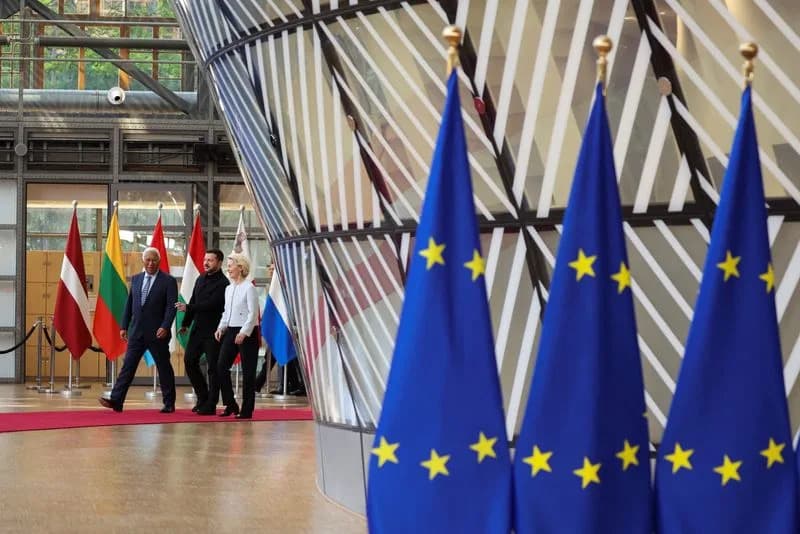
European Council President Antonio Costa, Ukrainian President Volodymyr Zelenskiy and European Commission President Ursula von der Leyen arrive for a European Union leaders' summit in Brussels, Belgium, June 18, 2026. REUTERS/Laia Ros
BRUSSELS, June 18 — Several European Union leaders urged caution on Thursday about rushing into direct negotiations with Russia after an EU official said the office of Portuguese Prime Minister António Costa had made "brief contacts at diplomatic level" with the Kremlin.
EU capitals have recently stepped up debate over whether to engage Moscow directly over the war in Ukraine after broadly isolating Russia since its February 2022 invasion. But member states remain divided on whether now is the right moment for talks.
"First of all, there has to be someone on the other side willing for peace," Latvian Prime Minister Andris Kūlbĕrs (Kulbergs) said on arrival at the summit in Brussels. "Unfortunately, no one wants peace on that side ... there is no point for contact if the other party (Russia) doesn't want (peace)."
Lithuanian President Gitanas Nausėda said it would be better to wait for positive signals from Moscow, such as a willingness to open peace negotiations or agree to a ceasefire. "So far I do not see any positive signals from Russia, so my question is: what do we want to achieve?" he asked.
Dutch Prime Minister Rob Jetten echoed the scepticism, saying the Netherlands did not see evidence that Russia was prepared to negotiate and that talks were unlikely to begin soon. "We see that the Russians have not shown any serious interest recently," he said.
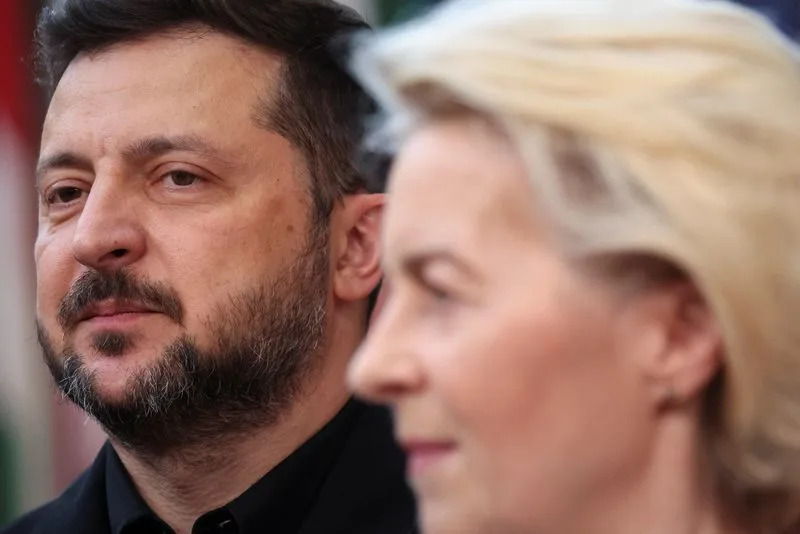
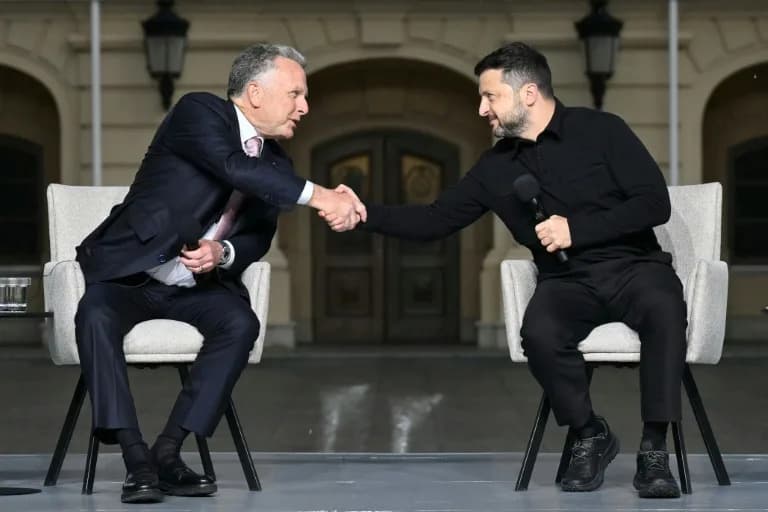
Ukrainian President Volodymyr Zelenskiy and European Commission President Ursula von der Leyen meet with the media on the day of a European Union leaders' summit in Brussels, Belgium, June 18, 2026. REUTERS/Laia Ros
An EU official, speaking on condition of anonymity, said Costa's brief contacts were intended merely to "open communication channels" and that "nothing was discussed on substance."
Some leaders, however, argued for keeping lines to Moscow open. Austrian Chancellor Christian Stocker said he wanted communication channels maintained at any level, although he too questioned whether President Vladimir Putin was ready to seek a negotiated peace.
"I do not have the impression that Russia, and Russia's President Putin in particular, is coming to the negotiating table in order to negotiate a peace solution," Stocker said.
Earlier this week, Italian Prime Minister Giorgia Meloni proposed appointing a single EU envoy to coordinate contacts with Russia over Ukraine.
Meanwhile, Ukrainian President Volodymyr Zelenskiy welcomed the opening of the first phase of EU membership talks on Monday — a milestone Kyiv sees as strengthening its ties to Western institutions while it resists Russia's invasion.
Context: The comments reflect a broader debate inside the EU about the timing and terms for engagement with Moscow: whether to try to open channels now in the hope of exerting influence, or to wait for clear Russian moves toward de-escalation before negotiating.
Help us improve.