
A reanalysis of an Iron Age cairn on Scotland's north‑west coast reveals that a woman (≥30) had at least four limb bones deliberately shaped into pointed implements and then reburied in anatomical position. Mitochondrial DNA from her inner ear links her to a ~15‑year‑old male in the same tomb, possibly a relative. Striations inside her skull are consistent with postmortem removal of soft tissue, and DNA ties both individuals into wider maritime networks spanning about 265 km (165 miles). The findings, published in Antiquity, point to complex, possibly ritualized mortuary practices.
2,000-Year-Old Woman’s Bones Were Whittled Into Tools and Reburied, Study Finds
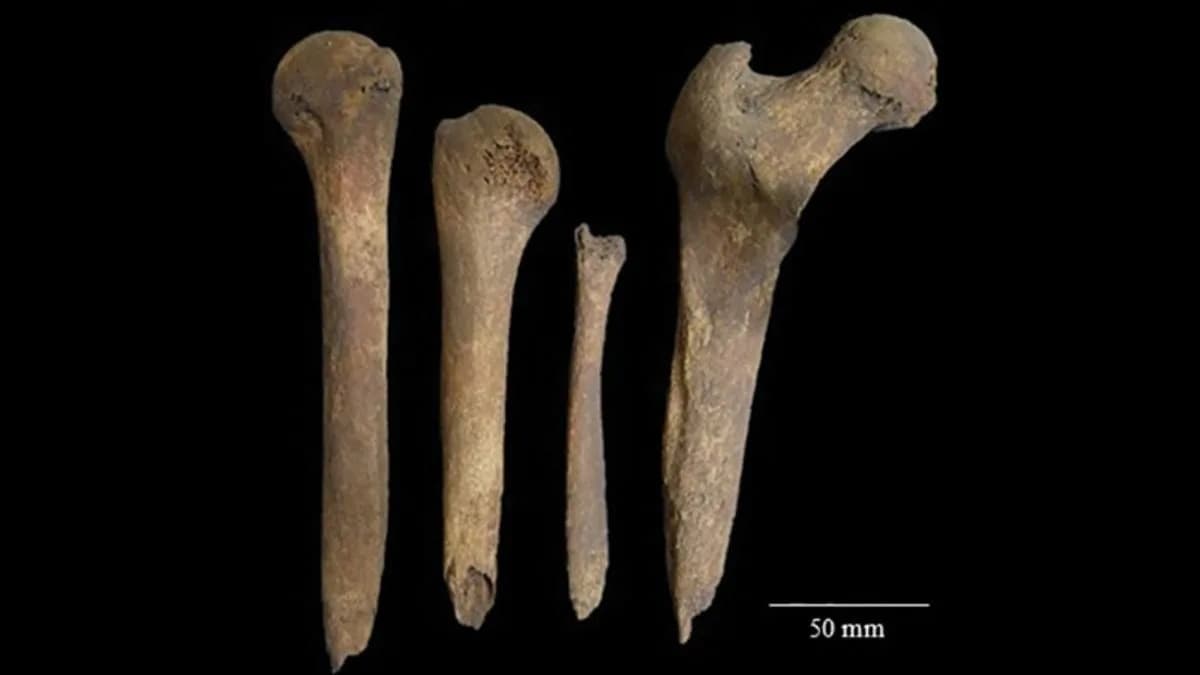
The preserved long bones (right and left humeri, left ulna and left femur) show signs of whittling or working into a point. (Castells Navarro et al., Antiquity, 2026)
An Iron Age burial uncovered on Scotland's north‑west coast has yielded one of the more unusual funerary assemblages in recent archaeological study. Excavated from a stone cairn in 2000, two skeletons were re‑examined with modern techniques, revealing deliberate postmortem manipulations that reinterpret the original find.
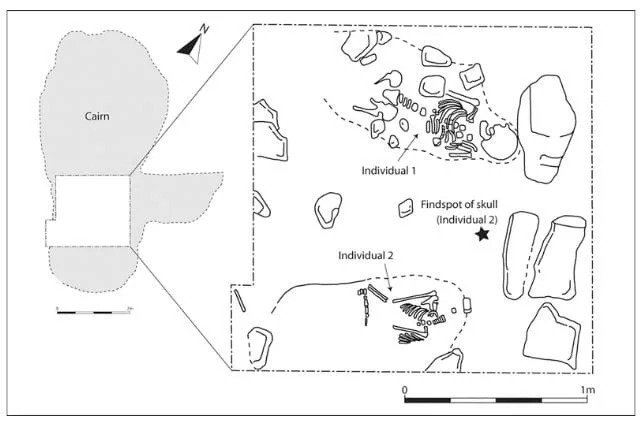
Plan of the original excavations at Loch Borralie, drawn by Lindsey Büster after MacGregor, 2003. (Castells Navarro et al.,Antiquity, 2026)
The most striking remains belong to a woman who was at least 30 years old at death. Mitochondrial DNA preserved in her petrous (inner ear) bone confirms she was related to the other interred individual: an adolescent male of roughly 15 years, possibly a cousin.
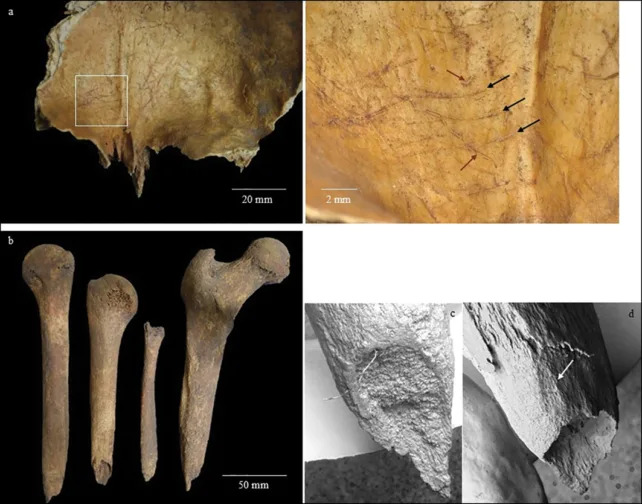
Evidence of intentional postmortem manipulation observed in Individual 1, including markings inside the cranium (a) and analysis of the long bones (b, c, and d). (Castells Navarro et al.,Antiquity, 2026)
Bones Shaped Into Pointed Implements
At least four of the woman's long bones were worked into toollike implements. The humeri and ulnae taper to single pointed ends; outer cortical layers were removed and inner bone surfaces were deliberately shaped, producing sharp edges rather than the irregular marks expected from animal gnawing. A distinct U‑shaped scar on the left humerus is consistent with being cut or worked with a sharp implement such as a knife or blade.

Subscribe to ScienceAlert's free fact-checked newsletter
Evidence Of Cranial Manipulation
In addition to modified limb fragments, striations inside the cranium—previously attributed to decay—are now interpreted as consistent with deliberate removal of soft tissue, possibly including the brain, after death. Researchers emphasize that the exact motivations are difficult to determine, but the careful reassembly and placement of the modified elements within the grave suggest ritualized treatment rather than casual mutilation.
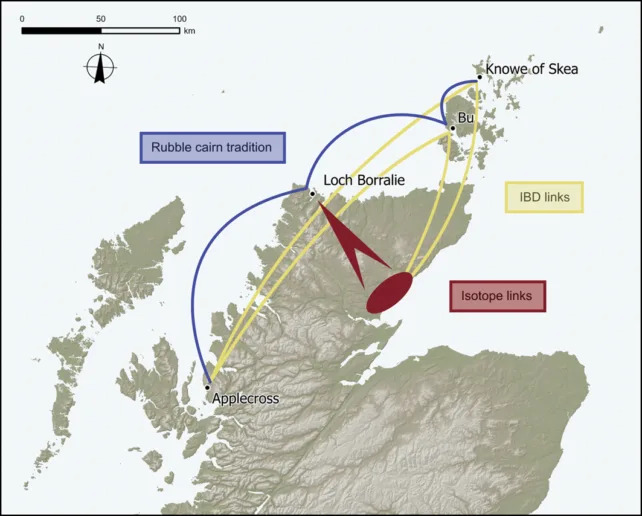
Analyses show that the two individuals found at Loch Borralie are related to communities across Scotland who also built rubble cairns. (Castells Navarro et al.,Antiquity, 2026)
"The motivation behind the extensive manipulation of the skeletal remains is very difficult to interpret," says Laura Castells Navarro, lead author and archaeologist at the University of York. "The care with which she was reassembled and deposited in the cairn possibly suggests she commanded a level of reverence and respect by her community."
Notably, the modified bone fragments were returned to their anatomical positions in the burial, an arrangement that would make repeated practical use unlikely and points to symbolic or ritual meaning.
Context And Preservation
Both burials are incomplete: most of the woman's lower body is missing, and only about a quarter of the adolescent male's skeleton remains. Some loss is attributable to natural decay and later human disturbance—stones were removed from the cairn to build a nearby field wall, and erosion exposed the boy's cranium, prompting the 2000 excavation.
Broader Connections
Ancient DNA places these two individuals within wider Iron Age maritime networks along Scotland's northern coast. Genetic links extend roughly 265 kilometres (165 miles), from Applecross in the south‑west to sites in the Orkney Islands, suggesting periodic movement of small coastal groups that helped transmit cultural practices across the region.
The reanalysis was published in the journal Antiquity. While interpretations remain cautious, the combination of deliberate bone modification, careful reassembly, and regional genetic links points to complex mortuary practices and social behaviors in this Iron Age community.
Help us improve.





















