
New Evidence of a Weak Wind From Sagittarius A* — Astronomers analyzing nearly five years of ALMA radio data, with X-ray confirmation from Chandra, report a cone-shaped cavity about 3 light-years long and ~45° wide that points back to Sagittarius A*. The cavity is best explained by a faint, hot wind from the black hole, resolving why our central black hole seemed unusually quiet. The finding offers a new way to study how supermassive black holes launch outflows even in quiet phases.
Astronomers Find Signs of a Faint Wind From the Milky Way’s Central Black Hole
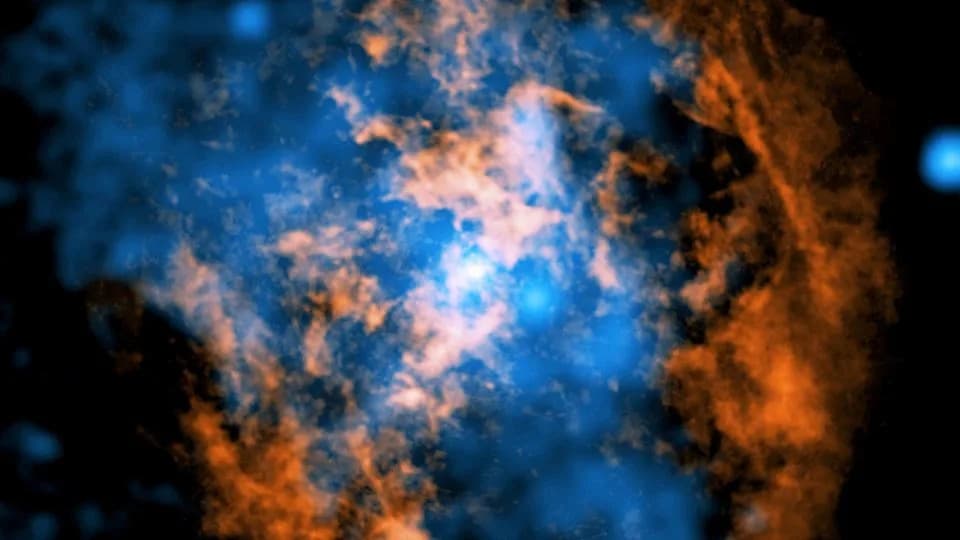
A composite image showing a wind blowing away from supermassive black hole Sagittarius A* - NASA/Handout/Reuters
Sagittarius A* — the supermassive black hole at the center of our galaxy — has long puzzled astronomers by appearing unusually quiet. New analysis of nearly five years of radio observations, confirmed with X-ray data, now reveals indirect evidence that Sgr A* has been blowing a faint, galaxy-scale wind that carved a cone-shaped cavity in nearby cold gas.
What the Team Found
Using high-resolution data from the Atacama Large Millimeter/Submillimeter Array (ALMA) in Chile, Northwestern University researchers Mark Gorski and Lena Murchikova produced the most detailed map yet of cold gas around Sagittarius A*. After carefully removing contaminating radio emission, they identified a clear, cone-shaped void roughly 3 light-years long with an opening angle near 45° pointing back toward the galactic center.
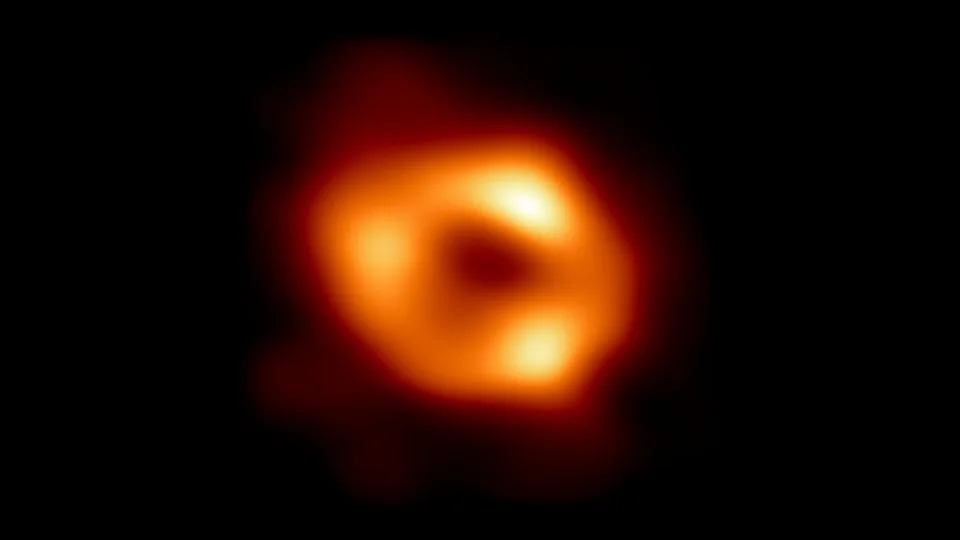
An image of Sagittarius A* captured by the Event Horizon Telescope (EHT). - Event Horizon Telescope
How They Confirmed It
The researchers then cross-checked the feature with X-ray imaging from NASA’s Chandra X-ray Observatory. The spatial correlation between hot X-ray–emitting plasma and the location of the cold-gas cavity indicates the void was sculpted by hot material pushing outward — consistent with a wind launched from the black hole’s vicinity. While the particles in the wind were not directly observed, the geometry and energy inferred from the data provide a strong case for a black hole-driven outflow.
“The black hole wind acts like a hair dryer,” said Mark Gorski. “It blows hot turbulent air into a colder, denser material… The wind is warm and strong enough to heat and blow the water out of your wet hair and move the wet hair around a bit — but not strong enough to blow the hair off your head completely.”
Why This Matters
Outflows — in the form of narrow jets or broader winds — are a key way supermassive black holes inject energy into their host galaxies and regulate growth. Although such outflows have been seen in other galaxies, detecting one from our own central black hole has been difficult because Sgr A* is currently in a relatively quiet state and any wind is weak. This detection helps reconcile theory with observations by showing that Sgr A* does produce winds, albeit faint ones during its quiescent phases.
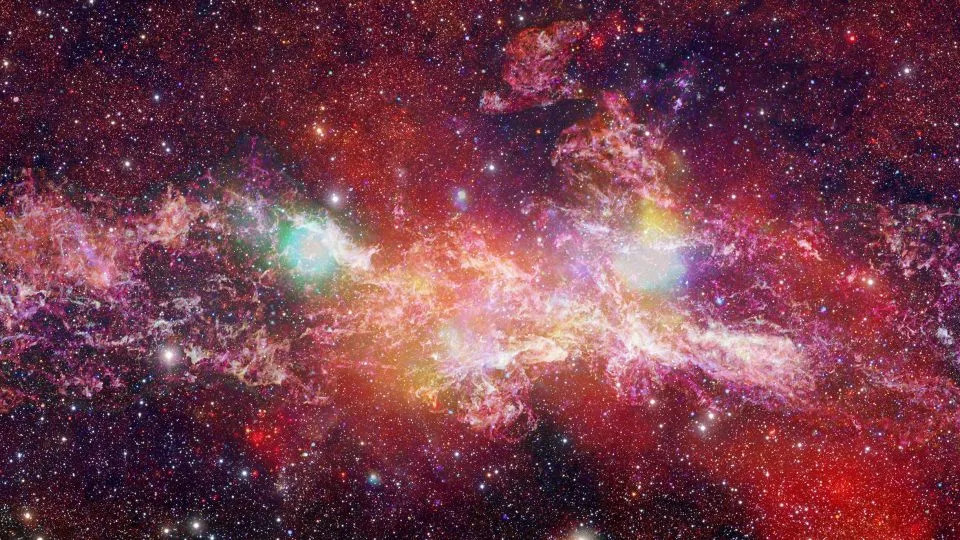
A mosaic of NASA's Chandra images centered around Sagittarius A*, which is located inside the bright white patch near the middle of the picture. - NASA/CXC/UMass/D. Wang et al.
Next Steps
The team plans to expand the cold-gas map over a larger region and build a time sequence — effectively a “movie” — of clouds moving near the black hole to measure dynamics and accretion rates. Understanding how such winds are launched remains an open question; many researchers suspect magnetic fields twisted by rotating plasma play a central role.
Study Details: The study, led by researchers at Northwestern University, was published June 4 in The Astrophysical Journal Letters and relies on almost five years of ALMA observations plus Chandra X-ray confirmation.
Help us improve.





















