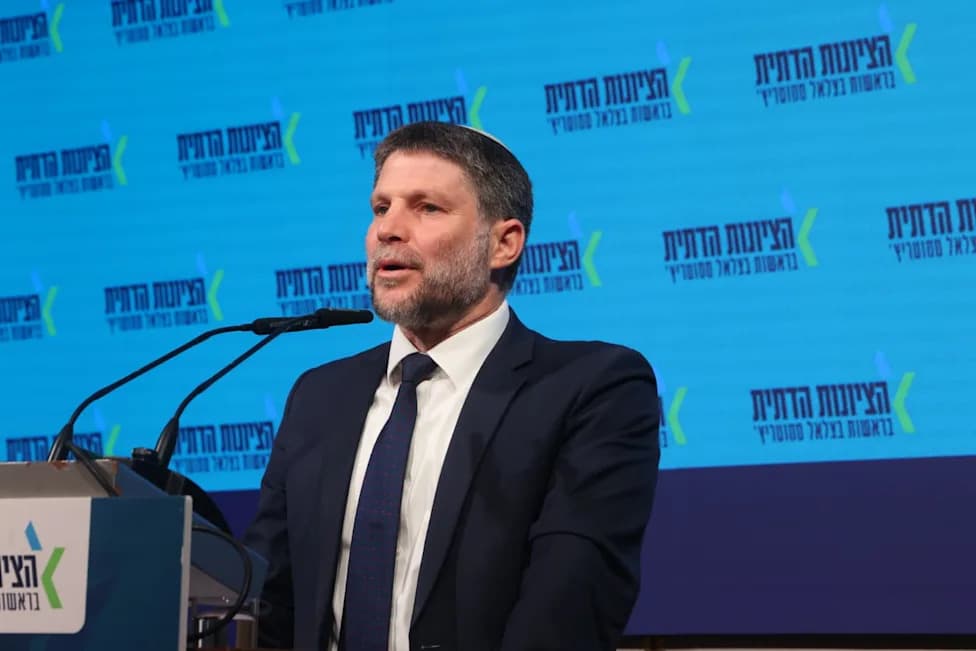
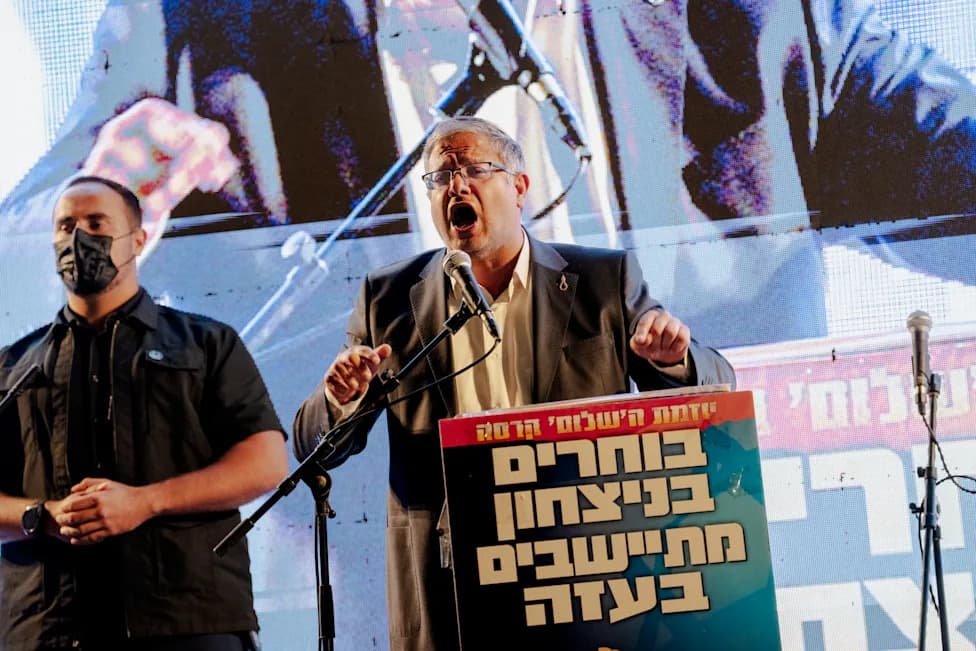
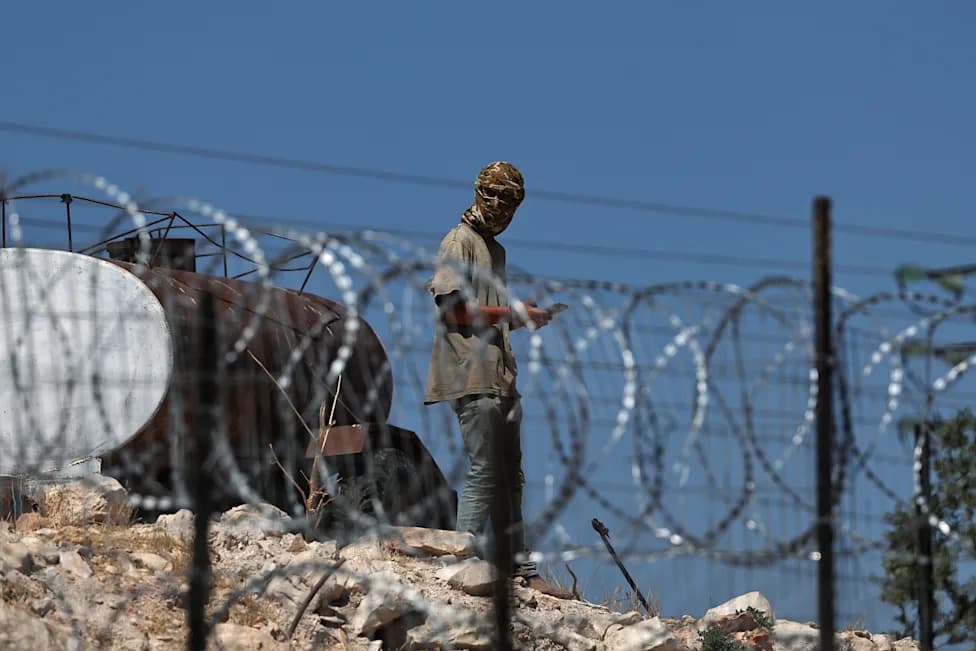
The Israeli Foreign Ministry denied Finance Minister Bezalel Smotrich's claim that he annulled the Hebron Agreement, saying the agreement remains in force. The ministry clarified that a Security Cabinet decision taken months earlier only affected planning and construction responsibilities in Hebron's Jewish quarter and at Jewish sites. Smotrich framed the move as part of a broader push to legalize settlements, prompting strong criticism from Palestinian leaders, Hamas, and Israeli group Peace Now. The 1997 Hebron Agreement divides the city and leaves Israel responsible for about one-fifth of Hebron, including the Cave of the Patriarchs.
Hebron Standoff: Foreign Ministry Says Agreement Still Stands After Smotrich's Claim
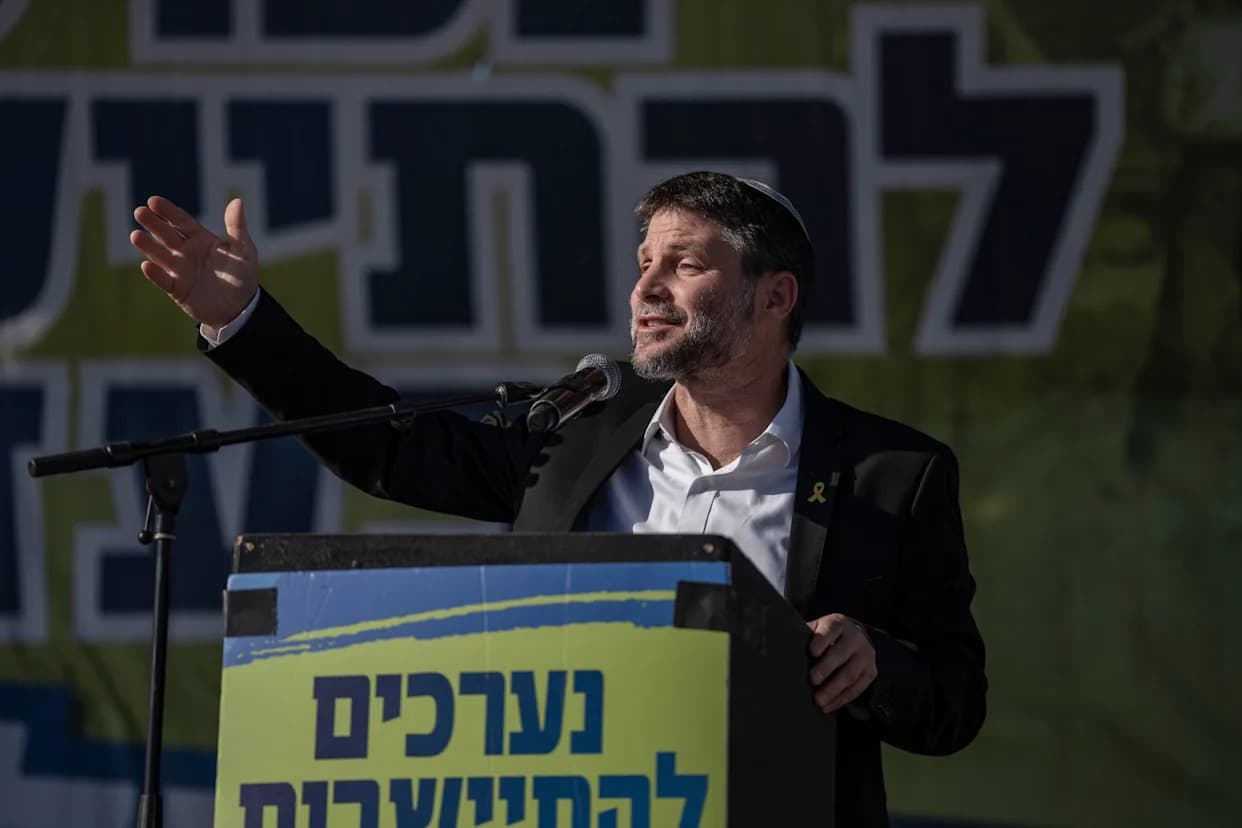
FILE PHOTO - Israeli Finance Minister Bezalel Smotrich delivers a speech during a Sukkoth gathering near the Gaza Strip, where far-right activists and members of the Israeli Knesset are holding an event titled 'Preparing to Resettle Gaza.' (is associated with: «Israeli Foreign Ministry: Hebron deal intact despite Smotrich comments») Ilia Yefimovich/dpa
Far-right Finance Minister Bezalel Smotrich announced on Tuesday that he had voided the three-decade-old Hebron Agreement with the Palestinian Authority, a claim the Israeli Foreign Ministry publicly rejected hours later.
Smotrich posted on X that several authorities in the divided West Bank city of Hebron and at its holy places — including the Cave of the Patriarchs (also called the Sanctuary of Abraham) — "would no longer be managed by the Hebron municipal authority, but will return fully to the responsibility of the State of Israel."
Foreign Ministry: "Contrary to the statement by the finance minister, the Hebron Agreement has not been annulled."
The ministry said a Security Cabinet decision taken months earlier concerned planning and construction responsibilities specifically in the Jewish quarter of Hebron and at Jewish sites. "This decision was taken after years of a complete lack of cooperation on the part of the Hebron municipality in these matters," the statement added, and emphasized that there were no other changes to the agreement.
Reactions
Smotrich described his announcement as a "historic correction," saying it formed part of a broader push to legalize settlements and "deepen Israeli sovereignty" in the West Bank.
Palestinian President Mahmoud Abbas warned of the move's gravity through the Palestinian news agency WAFA and called on the international community to press Israeli authorities to reverse what he described as a dangerous step that undermines prospects for a two-state solution.
Hamas — which governs Gaza and is designated a terrorist organization by Israel, the United States and the European Union — called the announcement an "unprecedented political and military escalation," urging Palestinians to intensify "all forms of resistance."
The Israeli advocacy group Peace Now condemned the step as "dangerous and irresponsible," accusing the government of failing on multiple fronts and warning the move risked stoking broader unrest in the occupied West Bank.
Background
The Hebron Agreement, signed in 1997 under a government led by Benjamin Netanyahu, divides the city: Israel retained control of roughly one-fifth of Hebron to protect several hundred Jewish settlers, while about 200,000 Palestinians live in the remainder of the city.
The Cave of the Patriarchs in Hebron is traditionally regarded as the burial site of Abraham, Sarah, Isaac, Rebecca, Jacob and Leah, and is sacred to Jews, Christians and Muslims. The complex is split between a synagogue and the Ibrahimi Mosque, with the synagogue under Israeli administration.
According to Israeli media reports, for nearly three decades some planning and construction measures in the Jewish quarter and at nearby holy sites required approval from the Hebron municipal authority or special political authorization. Smotrich's recent instruction would transfer those specific planning powers to Israeli planning authorities, the reports said — a change the Foreign Ministry says is limited in scope.
Wider Context
Israel captured the West Bank and East Jerusalem in the 1967 Six-Day War. Today roughly 700,000 Israeli settlers live in those areas alongside about 3 million Palestinians. The Palestinians claim the territories for a future state with East Jerusalem as its capital, making any changes to local arrangements politically sensitive and internationally consequential.
What To Watch: Whether the Security Cabinet clarifies the scope of its earlier decision, whether Smotrich presses the claim further, and how international and local actors respond in the coming days.
Help us improve.