
Summary: The United States and Iran have reportedly reached a memorandum of understanding that President Trump says will be signed in Geneva on Friday and could lead to the reopening of the Strait of Hormuz after mine removal. Pakistan's prime minister said his country will host the signing and praised lead negotiator Asim Munir. Lebanon's army urged displaced residents not to return south yet, while Israeli ministers vowed their forces would remain in captured areas. The IMO welcomed the accord as a step toward restoring maritime safety but warned that evacuations and security guarantees will take time.
US and Iran Reach MOU; Signing Expected in Geneva Friday — Israel Says Troops Will Stay in Lebanon

Kawnat Haju/AFP via Getty Images - PHOTO: A girl flashes signals from a vehicle as displaced residents cross the Bourj Rahal bridge on their way to their village in southern Lebanon on June 15, 2026.
President Donald Trump announced that the United States and Iran have reached a memorandum of understanding (MOU) that he expects to be signed on Friday in Geneva. The deal — described by Trump as a "great deal" — is said to include provisions to reopen the Strait of Hormuz and remove mines, which the president linked to a resumption of regional oil flows.
Background
On Feb. 28, President Trump said the U.S. had launched "major combat operations" against Iran, involving large joint U.S.-Israeli strikes on Iranian military, government and infrastructure targets. After an initial two-week ceasefire, early U.S.-Iran talks in Pakistan in April failed to produce a peace agreement. Trump later extended the ceasefire with no fixed end date and maintained a U.S. naval blockade while negotiations continued.
Latest Developments
Pakistan To Host Signing
Pakistan's Prime Minister Shehbaz Sharif told parliament Monday that Pakistan would host the signing ceremony for the U.S.-Iran agreement in Geneva, Switzerland, on Friday. Sharif praised Pakistan's lead negotiator, Field Marshal Asim Munir, saying the talks endured "many ups and downs" and at times looked close to collapse, but Munir "did not give up." Sharif did not provide a precise venue in Geneva.
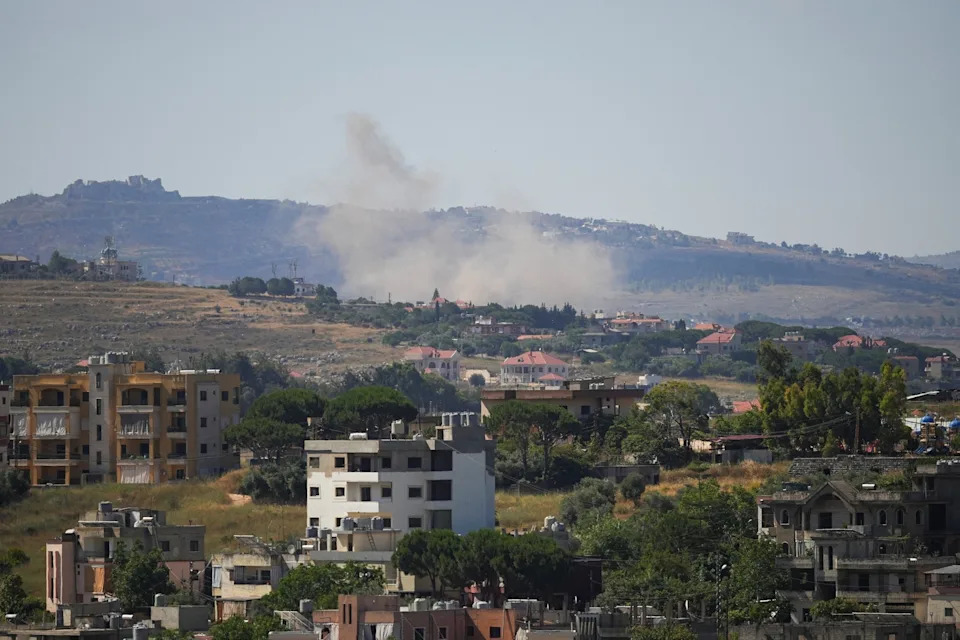
Stringer/Reuters - PHOTO: Smoke rises following an Israeli strike in Nabatieh, Lebanon, on June 15, 2026.
Lebanese Army Urges Caution
The Lebanese Armed Forces warned civilians displaced from southern Lebanon by recent Israeli military operations not to return home yet and to follow the instructions of deployed units. The army said that despite reports of a ceasefire, returning too soon could expose civilians to renewed violations or attacks. State media reported that some displaced families were beginning to move back to parts of southern Lebanon after the U.S.-Iran announcement, and local authorities had reopened roads in districts such as Tyre and Bint Habeel to facilitate returns.
Israeli Ministers Say Troops Will Not Withdraw
Following the MOU announcement, far-right National Security Minister Itamar Ben-Gvir and Defense Minister Israel Katz issued statements asserting that Israel would not withdraw from territory its forces have seized. Ben-Gvir said Israel is "an independent and sovereign state" and should not pull back from areas cleared of what he described as "terrorist infrastructure." Katz said he and Prime Minister Benjamin Netanyahu are pursuing a policy under which the Israel Defense Forces "will remain in the security zones in Lebanon, Syria and Gaza indefinitely." Netanyahu had not publicly commented as of Monday morning.
International Maritime Organization Response
Arsenio Dominguez, Secretary-General of the International Maritime Organization (IMO), welcomed the reported understanding as "an important step toward restoring safety in this vital maritime corridor for seafarers and ships, as well as safeguarding the fundamental principle of freedom of navigation." The IMO said the deal could allow it to advance plans to evacuate thousands of seafarers stranded in the area, but that such operations would take time and require robust safety and security guarantees.
Iran Confirms Draft Includes Key Positions
Iranian Deputy Foreign Minister Kazem Gharibabadi said the deal had been finalized and would be signed in Switzerland on Friday, adding that "all of our positions and important issues are included in the draft understanding."
What To Watch
Key details still remain unclear: the precise Geneva signing location, the formal text of the MOU, timelines for mine removal and Strait of Hormuz reopening, and whether Israel will accept any terms that affect its operations in Lebanon, Syria and Gaza. International and local authorities have emphasized a cautious approach for civilians and maritime traffic until security guarantees are in place.
Reporting: This summary is based on statements from U.S. and Iranian officials as reported publicly and coverage from ABC News. Developments are evolving; readers should expect updates as more details are published.
Help us improve.





















